Think of it as Yoga for the brain, we are going to stretch a bit.
A Story of Cat Stress when the Couch left
Grief is just love with nowhere to sit. A cat understands this. She is waiting for the new couch, same as you. — YNOT!
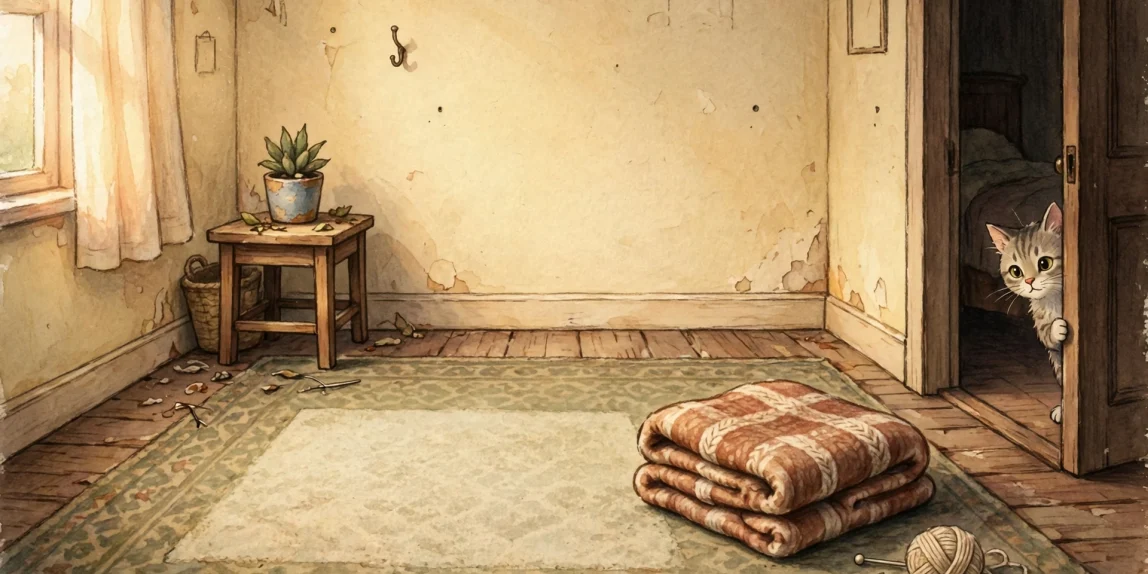
A woman in a cat group I belong to sold her couch. That is the whole beginning of the story, and if you do not have a cat, it is also the end of it. She sold a couch on one day, and by the next day her cat — a true lap cat, she said, the kind who lays with the family on that couch every single evening of her life — had gone into the bedroom and had not come out since.
The couch left, and the cat left with it. Not out the door. Into hiding. And the woman wrote to the group the way you write when you are a little bit heartbroken and a little bit bewildered: has anyone else ever seen this?
Several hundred people had. That tells you something about couches, and more about cats, and most of all about the rest of us, who keep being surprised by a thing we should have learned by now.
TO YOU IT IS FURNITURE. TO HER IT IS A COUNTRY.
Here is the difference between a human’s map of the world and a cat’s, and it explains nearly everything a cat ever does. You navigate by sight and by schedule. She navigates by scent and by routine, and her map is not drawn in miles. It is drawn in smells, in warm spots, in the exact geography of a Tuesday evening.
That couch was not furniture to her. It was the capital city. It smelled of her, because she had rubbed her face along it ten thousand times, signing it the way cats sign everything they own. It smelled of the family. It was where the lap was, every evening, at the same hour, in the same light. Her whole civilization ran on that couch the way yours runs on coffee and weekends.
Then one day some strangers came, and carried her country out the front door, and put a smell she did not know in its place.
We would call that redecorating. She calls it the fall of the empire. And an animal whose empire has fallen does the sensible thing, the thing small nations have always done: she retreats to the last province that still smells like home — the bedroom, the bed, your clothes — and she waits to see if the world is safe anymore.
IT IS NOT ALWAYS A COUCH
The couch is only the ambassador for a whole embassy of changes. A moved house can do it — the cat who was a lion in the old apartment becomes a whisper in the new one, because every scent on her map has been redrawn overnight. A new pet can do it, arriving like a foreign army with a food bowl. A lost companion can do it most of all: the other cat, the dog, the person, who was simply there every day and then was not, leaving a silence in the shape of somebody.
Even a changed schedule can do it. You take a new job, the evening lap moves three hours, and to you it is a commute. To her it is a rumor that the sun has been discontinued.
Humans are built to treat change as news. Cats are built to treat change as weather in a country where nobody has ever seen rain. Neither is wrong. But only one of them is hiding under your bed, and she is the one who needs help.
WHAT HELPS: SMELLS, CLOCKS, AND QUIET COMPANY
The good news — and there is good news, there nearly always is with cats — is that the cure is made of the same stuff as the wound. If her world is scent and routine, you rebuild it out of scent and routine, one familiar piece at a time.
First, if you can manage it, keep one thing from the old world unwashed. A blanket off the old couch, a cushion, a throw that smells of ten thousand evenings. Put it where she hides, or beside the new couch, like an embassy of the fallen country. Smell is her memory, and you are handing her back a page of it. Wash everything else to your heart’s content. Leave that one thing alone.
Second, keep the routine like a railroad timetable. Feed at the same hour. Sit down in the evening at the same hour, in the new spot, and be available for a lap that is not yet ready to arrive. Routine is how a cat spells safety, and she will read the new days letter by letter until they spell it again.
Third, visit the hiding place the way you would visit a shy neighbor — with gifts, briefly, and without dragging anyone out by the arm. Food near the refuge, not across the house, so hiding does not cost her dinner. A few quiet minutes on the floor at her level. A string toy trailed past the doorway, no strings attached, if you will forgive the expression. Let every expedition out of the bedroom be her idea, because a return she chooses is a return that lasts. Most cats measure this in days. A few measure it in a week or two. Almost none measure it in forever.
WHEN HIDING STOPS BEING A MOOD
There is a line, and a cat lover should know where it is drawn. Hiding with an appetite is a cat processing the news. Hiding without one is something else.
If she will not eat for a day, watch her like a hawk. If she will not eat for two, that is a veterinarian, not a waiting game — cats, especially round ones, can get into real trouble on an empty stomach faster than their dignity would ever admit. If the litter box goes unused, or gets used strangely, or she stops grooming, or the cat who hid from a couch starts hiding from everyone including the food bowl at day three — skip the advice columns, including this one. Bodies first. Feelings can wait in the waiting room.
THE LESSON SHE IS TEACHING, WHICH IS THE ONE WE RESIST
That same group, in the same week, carried sadder posts than the couch. An owner mourning the cat she had lost, feeling almost guilty that a new small life had arrived in the house carrying all that leftover love with nowhere to go. A rescuer who had lost kittens despite every effort, asking why life is so unfair, which is the oldest question there is and has never once been answered in a comment thread.
I noticed the answers those posts got were not really answers. They were other people’s couches. Other people’s cats under other people’s beds. Hundreds of small testimonies that the empire falls in every house eventually, and that the cat comes out anyway, and so does the person.
That, I think, is the lesson the couch cat is teaching from under the bed, and it is the lesson cats have been teaching us since they moved in out of the desert and took over the furniture: grief is not a malfunction. It is love that has lost its seat. The cure is not to stop loving the old couch. The cure is time, and routine, and one unwashed blanket — and then, some ordinary evening, a small citizen walking into the living room like a head of state returning from exile, inspecting the new country, and choosing, at last, to sit down in it.
She will come out. They nearly always do — for the food, for the lap, for the evening hour that finally smells, faintly and then surely, like home again. And when she climbs onto the new couch and turns around three times and settles, she will not be betraying the old one. She will be doing the bravest thing any of us ever manages: making room, in the same heart, for the next love that asks for a seat.