Think of it as Yoga for the brain, we are going to stretch a bit.
The Litter Box Rebellion: Why Kittens Quit the Box
A kitten who misses the litter box is rarely making a statement about you. She is making a statement about the box, and the box had it coming. — YNOT!
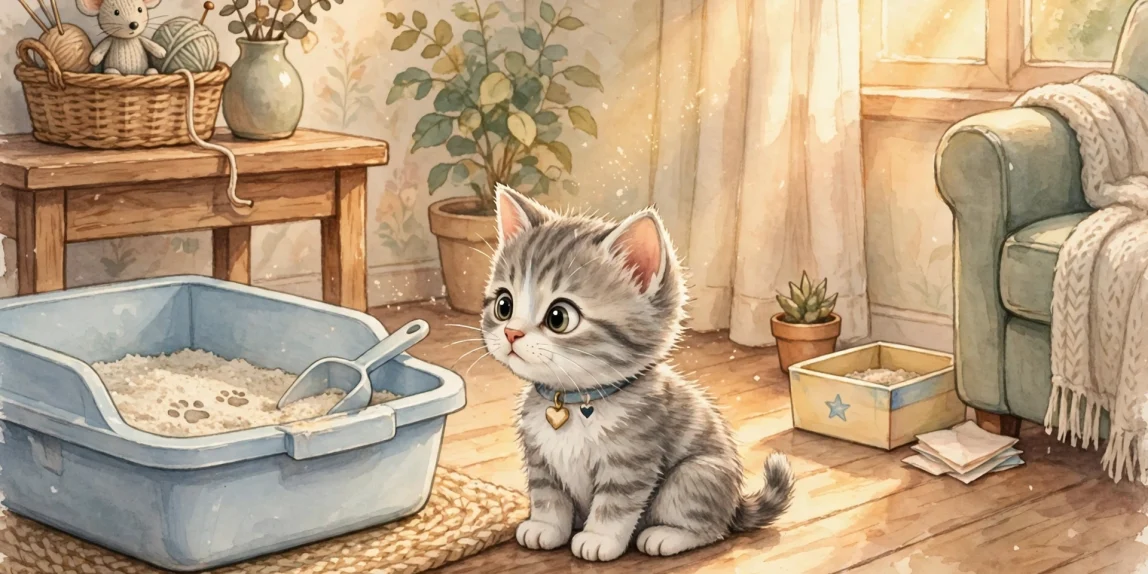
A woman in a cat group I belong to took in an abandoned kitten, four to six weeks old and no bigger than a three-week-old ought to be. She gave the little soul a big box to live in, a bed, and a small litter box, and the kitten — here is the detail that makes the story — uses that box like a champ to do her serious business. Perfect manners. And then she walks into the living room and pees in one particular corner, regular as a train schedule.
WHAT can I do to stop this behavior? the woman asked, in the capital letters of a person who has cleaned the same corner eleven times.
Another member had the sequel: a kitten who used his box faithfully until he discovered the backyard, whereupon he resigned from the indoor arrangement entirely, as if the contract had expired.
Now, I have lived long enough to recognize a message when one is delivered on my carpet. A kitten avoiding the box is almost never being spiteful. Spite requires planning, and a kitten can barely plan lunch. She is sending a report, in the only format available to her, and it is the human’s job to read it. So let us read it, suspect by suspect, in the order they usually occur.
SUSPECT ONE: THE BOX IS A MOUNTAIN, AND SHE IS A MOUSE
Start with the simplest explanation, because with kittens it is usually the right one. A four-week-old kitten is a creature the size of a teacup, with legs like matchsticks and a bladder with the range of a thimble. If the box has tall sides, or sits at the far end of the house, or requires a journey past the terrifying water heater, she may simply not make it in time — and a corner of the living room, always nearby and always available, starts to look like excellent planning on her part.
For a tiny kitten, the box should be low enough to fall into, and close enough to reach at a dead run. Shallow trays, cut-down cardboard boxes, a litter station in every room she is allowed to roam — this is not indulgence. This is plumbing sized to the customer. Kittens grow into range the way boys grow into trousers, but they grow on their schedule, not yours.
SUSPECT TWO: THE CORNER SMELLS LIKE A BATHROOM, BECAUSE IT IS ONE NOW
Here is the quiet engine under most of these rebellions. A cat’s nose is a scientific instrument compared to yours. Once a corner has been used twice, it is marked — in chemistry no ordinary soap can fully erase — as an approved facility. You may smell nothing. She smells a sign over the door.
This is why the same corner gets used again and again, and why scolding the kitten while wiping with regular cleaner is like arguing with a billboard. You need an enzymatic cleaner, the kind made for exactly this, which breaks down the scent markers themselves. Clean it like you mean it, more than once, and let it dry. Remove the sign, and half the traffic stops.
SUSPECT THREE: THE LITTER ITSELF OFFENDS
Humans choose litter by what smells pleasant to a human, which is how you end up with perfumed crystals that smell, to a kitten, like doing her business inside a scented candle factory. Some kittens hate the feel of coarse grains on small paws. Some hate a covered box, which traps the smell the way a phone booth traps a conversation.
If the rebellion started when the litter changed, you have your culprit and your cure in the same sentence. Go back to the plain, unscented, fine-grained stuff. It is not glamorous. Neither is a mop.
THE PEACE TREATY: PUT A BOX ON THE CORNER
Now for the move that ends most of these wars, and the one people resist because it feels like surrender. Put a litter box directly on the chosen corner.
It is not surrender. It is diplomacy. The kitten has told you where the bathroom is; you, the government, formally recognize the site. She will use the box there — they nearly always do, because the location was the point all along. Then, once the habit is solid, move the box a few inches a day toward where you actually want it. An inch-by-inch migration, too slow to protest. By the end of the month the bathroom has relocated and nobody lost face, which is how the best treaties work.
And keep the famous rule in mind while you negotiate: one box per cat, plus one extra. A household that asks two cats to share a single box is running a one-horse town with one outhouse and wondering about the lines.
THE BACKYARD DESERTER, AND THE ONE-ROOM RESET
The second case — the kitten who quit the box for the backyard — is a different treaty problem. The outdoors, to a cat, is one enormous litter box with superior marketing: soft earth, endless room, no cleaning crew required because there is no crew at all. Once a kitten has experienced that freedom, the indoor tray looks like a pay toilet by comparison.
The cure is an old one and it works: a confinement reset. The kitten goes back to one small room — box, bed, food, water, toys — until the indoor habit is re-established, which usually takes days, not weeks. Small territory, unmistakable facilities, no competing options. Then freedom is re-granted room by room. You are not punishing him. You are re-teaching geography to a citizen who forgot where the capital was.
WHEN IT IS NOT BEHAVIOR. WHEN IT IS THE VET.
Everything above assumes a healthy kitten with opinions. But there is a list that overrides all advice columns, including this one, and it is short: straining to pee and producing little or nothing. Crying in the box. Blood in the urine. A cat who suddenly cannot go at all. Those are not rebellion. Those are a body in trouble, and the appointment is with a veterinarian, promptly — for a male cat who cannot urinate, it is an emergency measured in hours.
Rule of the house: behavior problems get patience. Body problems get a vet. Never mix the two up to save money; it saves nothing and costs the only thing in the transaction that matters.
WHAT PUNISHMENT TEACHES, WHICH IS NOTHING USEFUL
A word about scolding, rubbing noses, and carrying the kitten to the scene of the crime for a lecture. The kitten does not connect your sermon to the corner. She connects it to you, arriving unpredictably and being frightening near the bathroom, which is a fine way to teach a cat to hide her business in worse places — behind furniture, in closets, in the laundry basket where your good shirts live.
You cannot punish a cat into a habit. You can only arrange the world so the habit is the easiest thing in it. Clean box, close box, right litter, corner treaty, enzymatic eraser. Boredom and routine are the whole strategy, and they are undefeated.
So take heart, corner-cleaners of the world. That tiny kitten in the living room is not a vandal and not a lost cause; she is a very small citizen with a very small bladder, reporting a facilities problem in the only language she has. Fix the facilities and the reports stop. Every rebel kitten in history — the corner specialists, the backyard deserters, the whole unruly regiment of them — eventually signed the treaty and used the box like a taxpayer. Yours will too. They always do. The box always wins, because in the end, the box is the only side that never sleeps, never shouts, and is always exactly where she left it.