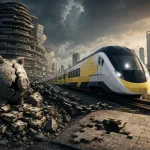
Think of it as Yoga for the brain, we are going to stretch a bit.
Where to Invest in 2026 — When Safety Is an Illusion and Movement Is Everything
"In 2026, investing won’t be about chasing returns.It’ll be about avoiding traps." --YNOT!
The old rules—diversify, buy the index, trust the numbers—were written for a world that no longer exists. This one runs on debt, denial, and emergency printing presses. So let’s talk plainly, the way uncomfortable truths prefer to be told.
First Rule of 2026: Don’t Confuse Price With Value
Most assets are expensive not because they’re good—but because money is bad.
When currencies are diluted, everything looks like it’s going up. That doesn’t mean wealth is being created. It means the yardstick is shrinking.
So the question becomes simple: What survives when the measuring stick breaks?
1. Precious Metals — Not for Profit, for Gravity
Gold and silver aren’t investments anymore.
They’re insurance policies against financial fiction.
Gold remains the quiet adult in the room—central banks know it, which is why they’re buying it.
Silver is both money and metal—scarce, industrial, volatile, and increasingly hard to source.
You don’t buy metals to get rich. You buy them so you don’t get poor quietly.
2. Energy — The Cheapest Thing Nobody Wants to Talk About
Energy stocks are unloved, under-owned, and essential. That’s a rare combination.
Oil, gas, uranium, and even coal sit at the intersection of:
Real demand
Political denial
Underinvestment
The world wants AI, electrification, data centers, and climate virtue—without admitting those things run on power. Power doesn’t care about speeches.
Energy doesn’t need optimism. It just needs reality to show up on time.
3. Mining Stocks — Volatility With a Pulse
Mining stocks are small, messy, hated, and misunderstood.
Which is exactly why they matter.
They’re not for comfort. They’re for asymmetry.
When commodities move, miners don’t tiptoe—they sprint. Not all survive, but the survivors don’t walk; they leap.
This is where patience and nerve still get rewarded. Not overnight. Not safely. But decisively.
4. Real Estate — Location Matters More Than Ever
Real estate isn’t dead—but leverage is.
Property floating on cheap debt is vulnerable. Property tied to:
Energy access
Population inflow
Capital friendliness
In 2026, real estate stops being a speculation and becomes what it was always meant to be: a place to stand, not a lottery ticket.
5. Technology — The Future, Poorly Priced Today
Technology will save the long term and punish the short term.
AI, robotics, space, nuclear—these will reshape the world. But markets love to price miracles decades early and reality all at once.
The trick in 2026 isn’t believing in tech. It’s not overpaying for the promise.
Infrastructure beats imagination in unstable decades.
6. Cash — A Tool, Not a Destination
Cash is melting. Everyone knows it.
But liquidity still matters.
Cash gives you:
Optionality
Patience
The ability to move when others can’t
Just don’t marry it. Cash in 2026 is a rental car, not a forever home.
What to Avoid (Quietly, Without Announcing It)
Long-duration bonds
Overleveraged growth stocks
Markets priced on narratives instead of cash flow
Anything dependent on permanent stability
If it only works in perfect conditions, it won’t work at all.
The Real Strategy for 2026
Don’t aim to be brilliant.
Aim to be unbreakable.
Hold assets that:
Exist in the physical world
Produce something people need
Don’t rely on trust alone
Benefit from disorder rather than fear it
Because in 2026, the winners won’t be the boldest. They’ll be the ones who stayed liquid, stayed real, and stayed flexible.
The market isn’t asking who’s smartest anymore. It’s asking who can still move when the exits get crowded.
EPILOGUE
Bitcoin, crypto, and all the shiny new inventions get sold as the future.
But the future has a habit of stress-testing its toys.
When things actually go wrong—real wrong—Bitcoin doesn’t act like a safe haven. It drops like a rock. We’ve already seen it. Economic shocks, wars, rising interest rates—anything that tightens liquidity sends crypto tumbling first, not last.
In a true global crisis, it’s not hard to imagine Bitcoin going to zero. Not because the code fails, but because the system around it does.
If the power goes out, if the internet goes dark, if networks fracture—you can’t trade Bitcoin for food. You can’t heat your house with a private key. You can’t convince a hungry neighbor to accept a QR code.
Then there’s the part nobody likes to talk about: hacks.
They happen every day. Exchanges fail. Wallets get drained. Passwords get phished. And most people holding crypto don’t really understand how it works—they just trust that it does.
That’s not ownership. That’s faith.
Crypto may have a future. But in a crisis, you don’t want your survival to depend on Wi-Fi, electricity, and perfect system uptime.