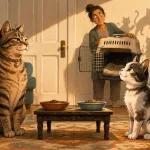
Can we trust our seafood, or is it looking suspiciously like cat food? -- YNOT!
Can we trust our seafood anymore, or has it quietly drifted into the same aisle as the stuff labeled “tuna-flavored dinner for Mr. Whiskers”?
That question would’ve sounded insane a generation ago. Fish was food. Cat food was… an apology in a can. The line between the two was bright, bold, and mercifully clear.
Today? That line is dotted. Faded. Possibly crossed during a late-night cost-cutting meeting.
Once, seafood came with a story: a boat, a net, a tired fisherman with opinions. Now it comes with a barcode, a sustainability slogan, and a texture that makes you wonder who tested it first—the chef or the cat.
Fish farms pack salmon tighter than subway cars, feed them pellets engineered by people who don’t eat fish, and medicate them just enough to keep the whole operation from turning into a floating obituary. That’s not inherently evil—but it does make you pause when the end result flakes apart like something that slid out of a can with a soft plop.
Then there’s the ocean itself. Fish swim through plastics, metals, runoff, and whatever modern civilization accidentally dropped overboard this week. They don’t complain. They just absorb. Eventually, you absorb too.
Cat food, at least, is honest. No one pretends it’s artisanal. No one calls it “heart-healthy.” It doesn’t whisper promises about brain function or longevity. It says, plainly: this is for a cat; lower your expectations.
Seafood still trades on its old reputation. Omega-3s. Clean protein. Brain food. And sometimes that’s still true—but now it comes with footnotes, sourcing questions, and a nagging sense that you should’ve brought a clipboard to dinner.
The problem isn’t that seafood is becoming cat food. The problem is that we’re processing everything until even we can’t tell who it was meant for.
And that’s the quiet punchline: When food gets cheap enough, uniform enough, and anonymous enough, it stops feeling like nourishment—and starts feeling like something designed for a creature that won’t ask questions.
Cats don’t ask where their food came from. Humans still should.

According to the ocean-conservation nonprofit Oceana, seafood may be one of the most commonly fraudulent foods we come in contact with. Your red snapper could actually be a tilapia fillet. That wild-caught salmon? It could be farm-raised. Crab, lobster, and scallops have also been victims of fraudulent swaps — some of the substitutions could harm human health. But there are also entire criminal rings smuggling seafood across the world. They often fish illegally and have been involved in human trafficking. Why is it so hard to catch bad actors in seafood supply chains? And how can we ensure we’re getting the seafood on the label.
-#seafood #food #businessinsider #bigbusiness #SeafoodQuestion #FoodQuality #ModernEating #IndustrialFood #CommonSenseEating #TrustYourFood
© 2026 insearchofyourpassions.com - Some Rights Reserve - This website and its content are the property of YNOT. This work is licensed under a Creative Commons Attribution 4.0 International License. You are free to share and adapt the material for any purpose, even commercially, as long as you give appropriate credit, provide a link to the license, and indicate if changes were made.