Think of it as Yoga for the brain, we are going to stretch a bit.
🎯 Is 2027 Just a Date… or a Deadline? China vs Taiwan and US
“The wise commander does not announce the storm — he studies the tides, positions his fleet, and lets his enemy mistake preparation for peace.” --SunTzu
Is 2027 the Year the Pacific Changes Forever?
Here’s the uncomfortable truth nobody likes to say out loud:
China doesn’t have to invade Taiwan next year. It just has to be ready to.
According to the latest U.S. Defense Department report to Congress, the People’s Liberation Army believes it could fight — and win — a war over Taiwan by the end of 2027.
That doesn’t mean war is scheduled. It means the option is being built.
And in geopolitics, having the option changes everything.
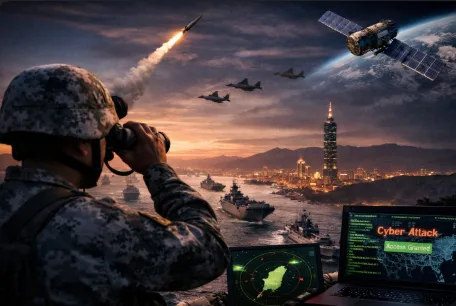
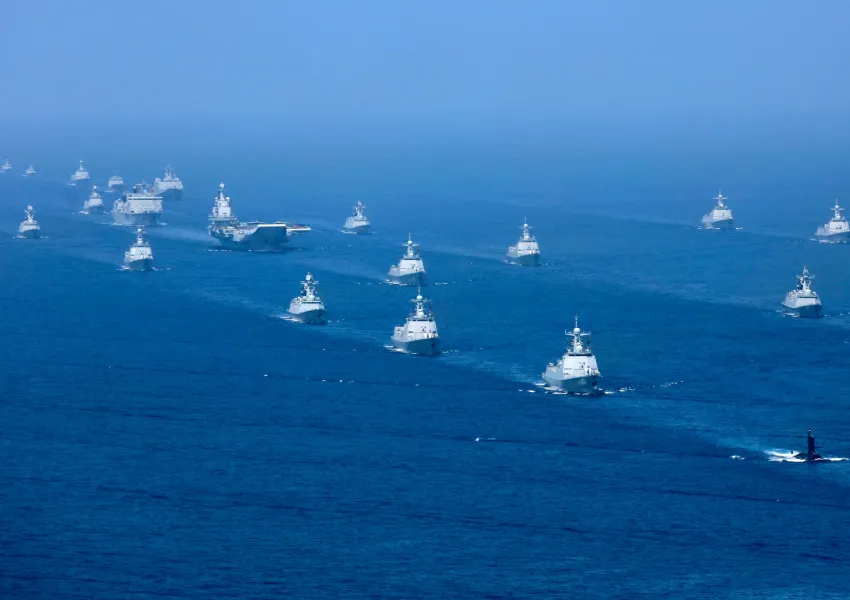
This isn’t just about ships stacking up on a horizon. It’s about a full-spectrum tool kit coming online:
Cyber access inside U.S. infrastructure
Space and counter-space capabilities
Long-range strike power reaching 1,500–2,000 nautical miles
Naval and missile modernization
Weekly pressure operations around Taiwan
Information warfare shaping global narratives
This isn’t a single lever. It’s a system.
The campaign isn’t hypothetical. Aircraft sorties increase. Coast Guard incursions normalize. Naval patrols blend into routine. The temperature rises slowly enough that people adjust to it.
Preparation doesn’t scream. It calibrates. And that’s the point most people miss. The Chinese Communist Party doesn’t need to declare a date. It needs capability, leverage, and deterrence stacked neatly in place.
When you can make intervention painful — politically, economically, digitally — you don’t need to fire the first shot to change the equation.
War may not be guaranteed. But optionality, once built, reshapes the board.
And history shows that the side building quietly is usually thinking several moves ahead.
The question isn’t whether 2027 guarantees conflict.
The question is what the world looks like when one side believes it can win.
There’s a difference between talking about war and quietly building the tools for one.
One is theater. The other is planning.
And according to the latest U.S. defense assessment, China isn’t shouting. It’s preparing.
Here’s the uncomfortable truth nobody likes to say out loud:
China doesn’t have to invade Taiwan next year.
It just has to be ready to.
According to the latest U.S. Defense Department report to Congress, the People’s Liberation Army believes it could fight — and win — a war over Taiwan by the end of 2027.
That doesn’t mean war is scheduled.
It means the option is being built.
And in geopolitics, having the option changes everything.
This isn’t just about ships stacking up on a horizon. It’s about a full-spectrum tool kit coming online:
Cyber access inside U.S. infrastructure
Space and counter-space capabilities
Long-range strike power reaching 1,500–2,000 nautical miles
Naval and missile modernization
Weekly pressure operations around Taiwan
Information warfare shaping global narratives
This isn’t a single lever. It’s a system.
The campaign isn’t hypothetical. Aircraft sorties increase. Coast Guard incursions normalize. Naval patrols blend into routine. The temperature rises slowly enough that people adjust to it.
Preparation doesn’t scream. It calibrates.
And that’s the point most people miss. The Chinese Communist Party doesn’t need to declare a date. It needs capability, leverage, and deterrence stacked neatly in place.
When you can make intervention painful — politically, economically, digitally — you don’t need to fire the first shot to change the equation.
War may not be guaranteed.
But optionality, once built, reshapes the board.
And history shows that the side building quietly is usually thinking several moves ahead.
The question isn’t whether 2027 guarantees conflict.
The question is what the world looks like when one side believes it can win.
Why 2027 Keeps Showing Up
2027 isn’t a prophecy. It’s a capability marker.
By that date, the People’s Liberation Army (PLA) believes it could:
Win a fast, decisive fight over Taiwan
Make U.S. intervention extremely painful
Deter escalation — especially nuclear
That’s not bluster. That’s project management.
Win fast. Raise the cost. Control the narrative.
That’s the blueprint.
🧠 Not Just Missiles — “Total National War”
The report uses a phrase most people skim past:
Total national war.
That doesn’t mean burning the world down. China still wants to sell you your phone charger.
It means mobilizing everything — military, civilian, cyber, economic, informational — while keeping escalation controlled.
Maximum effort.
Tight messaging.
Short timeline.
If World War II was industrial mobilization, this is systems mobilization.
And systems are quieter than tanks.
🌊 The Pressure Campaign Is Already Running
In 2024 alone:
~2,700 PLA aircraft entered Taiwan’s ADIZ (up sharply from 2023)
5–9 naval vessels routinely operate around Taiwan
Coast Guard incursions average 13 per week
This is how you normalize control.
Not with one dramatic invasion.
But with repetition. You don’t shock the system.
You redefine “normal.”
🚢 Invasion Is an Option. Blockade Is the Rehearsal.
The report outlines three primary tools:
Amphibious invasion
Firepower strikes
Maritime blockade
And here’s the part that should make planners sweat:
China is building strike capability out to 1,500–2,000 nautical miles.
That means:
U.S. bases
Ports
Logistics hubs
Ships across the Pacific
This doesn’t stay “near Taiwan.”
It expands across the theater.
War doesn’t ask permission to stay small.
💻 Cyber: The War Before the War
Here’s the part most people shrug at.
State-backed cyber actors have reportedly embedded inside U.S. infrastructure networks — energy, communications, routers, logistics.
You don’t need to sink a carrier.
You just need to:
Delay mobilization
Disrupt payroll
Hit communications
Create political chaos
Imagine 40% of workers missing a paycheck.
Not because of a strike.
Because of a cyber disruption.
No explosions. Just confusion.
And confusion slows response.
🛰 Space: Blind the Kill Chain
China now fields over 350 ISR satellites — more than triple since 2018.
They’re investing in:
Counter-space tools
Jamming systems
Cyber intrusions into space networks
Directed energy systems
If America’s strength is sensor-to-shooter integration, the counter is simple:
Blind the sensors. Jam the link. Create hesitation.
You don’t destroy the system.
You make it stumble.
☢ Nuclear Deterrence: Escalation on a Leash
China’s nuclear stockpile is expanding — projected to exceed 1,000 warheads by 2030.