Think of it as Yoga for the brain, we are going to stretch a bit.
Not EVEN Computers Are Safe From AI?
“The end won’t begin when AI beats man. It begins when AI starts hunting its own ancestors.” -- YNOT!
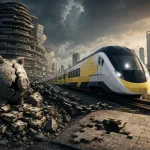
What happens when the smartest machine in the room is no longer helping the old machines — but hunting them?
Human history is not a museum. It is a graveyard of things that got replaced.
Homo sapiens took over from the ones who came before, likely because we were just a little smarter, a little more adaptable, and a little more dangerous. The world does not hand out trophies for effort. It rewards fitness. The better tool survives. The slower one becomes a footnote.
Now here we are, feeling mighty proud of ourselves, standing on top of the food chain with smartphones in our pockets and AI on our screens. But there is a problem. We built something that does not just help humans become obsolete. It also helps computers become obsolete.
And that is where the story gets interesting.
For decades, some of the world’s most important computer systems were protected by a shabby little trick called security by obscurity. That is a fancy way of saying: they were not truly secure, just old, ugly, and forgotten. Nobody remembered how they worked, so nobody bothered to attack them properly. The people who built them retired, died, or disappeared into golf carts and pension plans. The code stayed behind like a locked attic nobody had opened in forty years.
That attic door is now wide open.
In a recent experiment, Microsoft Azure CTO Mark Russinovich reportedly fed an AI coding agent a 1986 article about Applesoft BASIC programming. The AI did not just read it. It understood it. It reconstructed the programmer’s intent and even found a bug. That may sound like a neat parlor trick for programmers, but it is not. It is a warning shot.
Because once AI can read ancient code, explain it, rebuild it, and test it, then every old system that survived by being forgotten has a target painted on its back.
That includes banking systems. Industrial controls. Utilities. Corporate software. Government systems. Satellite support code. Old factory logic. The digital bones of the modern world are full of software written in languages that most young programmers would look at the way a teenager looks at a rotary phone.
But AI does not get bored. It does not retire. It does not complain that COBOL is ugly or that some dead man’s comments in 1987 make no sense. It just keeps reading, tracing, testing, and finding weaknesses.
What took a human team months may soon take an AI minutes.
That is the part people miss when they talk about AI replacing jobs. Jobs are only the first layer. AI is also replacing ignorance as a defense. It is dragging old secrets into daylight. Systems once protected by age, obscurity, and neglect are about to be audited by machines with infinite patience.
And here is the darker thought nobody wants to sit with very long:
If AI in 2026 can exploit software from 1986, then AI in 2040 may be exploiting the AI systems we built in 2026.
The predator of one age becomes the prey of the next.
That is evolution. That is fitness. That is the whole game.
We like to imagine technology as a ladder, with each step making us safer, smarter, and more civilized. But technology is often more like a knife. Every sharper version cuts better. The only question is who is holding it — and for how long.
So where do we boring little humans fit in?
Right in the middle, as usual. We are still the species building the tools, wiring the systems, trusting the dashboards, and assuming we are in control because the screen has rounded corners and a nice logo. We tell ourselves that progress is automatically good, just because it is new. That is a charming superstition. History does not support it.
The truth is simpler: every leap in intelligence changes the balance of power. First among humans. Then between humans and machines. And now, increasingly, between one generation of machines and the next.
The old computer is no longer safe because it is old.
And one day, the new computer will not be safe because it is new.
That is the joke evolution keeps telling. Nothing stays modern for long. The future does not hate you. It just has no sentimental attachment to what came before.