Think of it as Yoga for the brain, we are going to stretch a bit.
Have You Learned to Laugh—and, Most Important, to Laugh at Yourself?
When I was a kid, I loved Hogan’s Heroes. My dad hated it. Back then, I did not understand why. To me, it was just a bunch of goofy men in uniforms, silly jokes, and one more television show built to make people laugh. I did not know what stood behind those uniforms. I did not know about the Nazis, the Jews, the Holocaust, or the millions who were murdered. I was laughing at a joke without knowing the cost of the subject.
That is how life works sometimes. A child sees the surface. An adult, if he is paying attention, starts to see the weight underneath it.
Years later, I understood my father a little better. He was not wrong to hate it. Some wounds are too deep for easy laughter. But here is the twist life likes to pull on us: some of the men in that show had every right in the world to hate it too, and yet they chose to be part of it. Several actors playing Nazis were Jewish men who had fled Nazi persecution, and Robert Clary, who played LeBeau, survived the Holocaust and lost much of his family. For them, the comedy was not ignorance. It was defiance. It was their way of making monsters look foolish instead of feared.
That is a lesson worth keeping.
Some people think laughter is disrespect. Sometimes it is. But sometimes laughter is victory. Sometimes it is the last thing pain cannot steal. And sometimes the best revenge against evil is not just surviving it, but refusing to let it keep its dignity.
There is another lesson hiding in there too, and it may be the harder one: you have to learn to laugh at yourself.
Most people can laugh at a fool, provided the fool is standing across the room. That is easy work. The real test comes when the fool is in your own mirror. That takes humility. That takes maturity. That takes enough honesty to admit that you have been ignorant, arrogant, dramatic, petty, wrong, or ridiculous—and likely before breakfast.
A man who cannot laugh at himself is dangerous. He gets offended too fast, blames too easily, and spends half his life defending an image nobody else was studying in the first place. He is forever polishing a statue that was never bronze to begin with. Meanwhile, life keeps handing him lessons, and he keeps mailing them back unopened.
But the person who can laugh at himself? That person is hard to break. Pride loses its grip on him. Embarrassment cannot own him. He can learn, because he is not busy pretending he already knows. He can grow, because he is not worshipping yesterday’s version of himself.
That may be one reason comedy matters so much. Done right, it is not just entertainment. It is perspective. It reminds us that human beings are absurd creatures—proud, frightened, stubborn, vain, and forever trying to look important while stepping on their own shoelaces. The joke is not always cruel. Sometimes the joke is mercy. Sometimes it says, “Relax. You are human. Join the club.”
As a child, I laughed without understanding. As an adult, I understand more, and I still believe laughter matters. But now I know it must be paired with memory, truth, and a little humility. Otherwise, it is just noise.
So yes, learn to laugh. Life is too strange and too heavy not to. But most important, learn to laugh at yourself. Because the man who can do that has already defeated one of the most ridiculous tyrants he will ever face: his own ego.
And that tyrant, unlike the ones in old sitcoms, usually lives much closer to home.
EXTRA CREDIT:
Behind the laughs of Hogan’s Heroes lies something far deeper: a group of actors—many of them Jewish, some direct victims of Nazi persecution—who transformed pain, exile, and survival into humor.
Jewish actors who turned Nazis into comedy
One of the most striking ironies in television history is that several of the show’s Nazi characters were played by Jewish actors:
Werner Klemperer (Colonel Klink)
Fled Nazi Germany as a child. His father, conductor Otto Klemperer, was forced out by the regime.
John Banner (Sergeant Schultz)
Escaped Austria and later served in the U.S. Army during WWII, fighting the Nazis.
Leon Askin (General Burkhalter)
Lost family members in the Holocaust, including victims at Treblinka.
Howard Caine (Gestapo officer)
Jewish and served in the U.S. Navy during WWII.
For these men, the show wasn’t just entertainment—it was defiance. By portraying Nazis as incompetent fools, they flipped the power dynamic. Comedy became a weapon: humiliation instead of fear.
Klemperer even insisted his character must never be portrayed as competent or heroic—a deliberate refusal to humanize the regime that forced his family to flee.
Robert Clary: from Holocaust survivor to sitcom star
The most powerful story belongs to Robert Clary, who played Corporal LeBeau.
Born in Paris to a Jewish family of 14 children
Deported at age 16 to Nazi concentration camps, including Buchenwald
Survived partly by singing and entertaining to stay alive
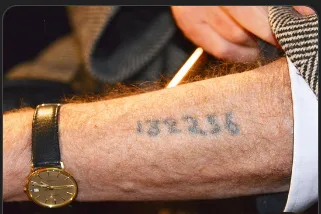
Tattooed with prisoner number A5714
Lost 12 family members in the Holocaust
After the war, Clary chose something almost unimaginable:
he acted in a comedy set in a German POW camp.
For him, this wasn’t denial—it was reclaiming control.
He later explained that laughter didn’t erase the past—it proved that the past didn’t win.
Turning trauma into humor
What made Hogan’s Heroes unique wasn’t just its setting—it was who was telling the story:
Refugees played their former oppressors
Veterans mocked the regime they fought
A Holocaust survivor found a way to laugh again
Instead of glorifying war, the show reduced tyranny to absurdity.
That’s why the humor worked. It wasn’t trivializing suffering—it was transforming it.