Think of it as Yoga for the brain, we are going to stretch a bit.
HERDR — A Game Changer for AI Work
Some people use AI. Others REALLY use AI. If you don't get the difference, I understand.But if you do… you know exactly what I'm talking about. And it's freaking AMAZING.We're not just using technology anymore. We're discovering what's possible. -- YNOT!
We are moving from talking to AI to managing AI.
For the past few years, most people have experienced artificial intelligence through a chat window. Ask a question, get an answer. Write a prompt, receive some code. Ask for an explanation, get a response.
Impressive? Absolutely.
But I believe we are entering a completely different stage of the AI revolution. The real breakthrough isn’t just what one AI can do. It’s what happens when you can coordinate dozens of AI agents working across multiple computers and projects.
And that’s why I’ve become so interested in a program called HERDR.
HERDR is a terminal-based environment that allows you to manage AI coding agents such as Claude Code and OpenAI Codex, across local and remote machines, from one interface.
That may not sound revolutionary at first.
But think about what it means.
Imagine you’re developing ten different software projects. Each project has its own code, databases, servers, configuration, and problems to solve.
Traditionally, you would work on one project, switch to another, remember where you left off, open more terminals, connect to another server, and repeat the process.
Even with AI coding assistants, you can spend an enormous amount of time simply organizing the work.
HERDR changes that experience.
I can have Codex working on one project, Claude examining another, and additional agents investigating problems on other servers. I can move between those sessions, see what they’re doing, and continue working without constantly rebuilding my environment.
In my own setup, I’m managing roughly 29 remote machine profiles, with numerous software projects and AI agents.
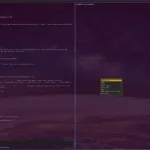
I’ve also been customizing HERDR to fit the way I work: machines on the left, active terminals in the center, and AI agents on the right. We’ve added integrated installation and update controls, machine information, SSH diagnostics, and other development tools.
The result is starting to look less like a terminal program and more like a command center for AI-driven software development.
And here’s where things get interesting.
The bottleneck is changing.
Until recently, software development was limited largely by how quickly a human could write, understand, debug, and test code.
AI has dramatically accelerated portions of that process.
But as AI agents become more capable, a different bottleneck appears: managing the agents themselves.
Which agent is working on what? Which server is it using? What has it completed? What failed? Which changes need testing? What can safely be deployed?
Suddenly, the challenge isn’t just producing code. It’s coordinating all the activity around producing reliable software.
HERDR addresses an important part of that problem.
It doesn’t eliminate the need for developers, engineering judgment, security, or testing. AI agents still make mistakes. They can misunderstand instructions, introduce bugs, and occasionally invent things that aren’t true.
Someone still needs to direct the work, verify the results, and decide what should go into production.
But the leverage is extraordinary.
Think about the implications for small businesses.
Twenty years ago, building a sophisticated software platform could require a substantial development team, considerable capital, and months or years of work.
Today, an entrepreneur with technical knowledge, AI tools, and the right infrastructure can attempt projects that would previously have been financially unrealistic.
Not because AI magically builds everything correctly, but because one person can now supervise far more development activity than ever before.
I find that possibility fascinating.
We’re beginning to move from the person who writes all the code toward the person who designs, directs, tests, and coordinates the systems that produce the code.
That is a profound change in how software can be created.
This is bigger than HERDR.
HERDR is one example of what I believe will become an increasingly important category of software: tools for managing AI workers, development environments, and complex workflows.
We already have systems for managing human employees, computer networks, projects, and business processes.
Now we need better systems for managing artificial intelligence doing actual work.
There will be winners and losers. Some tools will disappear. Others will become indispensable. And much of today’s software development process may look antiquated a decade from now.
I don’t know exactly where this leads.
But I do know that the difference between using AI occasionally and building an environment where AI agents can work together is enormous.
A single AI assistant can make you more productive. An organized collection of AI agents can change the scale of what you’re capable of attempting.
That’s why I think HERDR is a game changer.
Not because it makes AI smarter.
Because it helps us put the intelligence we already have available to work.








One Reply to “HERDR — A Game Changer for AI Work”