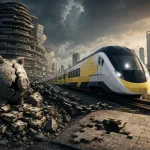
Think of it as Yoga for the brain, we are going to stretch a bit.
Where Could Iran Be Going in 2026 — And Who’s Really Holding the Match?
“Someday history will be shelved neatly in books—but 2026 won’t fit on a shelf. It will need its own bookcase, and universities will offer entire courses just to argue about what actually happened.” — YNOT!
What happens when fear finally stops working, and a government discovers it has run out of excuses?
Iran is standing at that uncomfortable moment in history where the old script no longer convinces the audience, but the curtain hasn’t fallen yet. After the dramatic capture of Nicholas Maduro, attention has swung east—toward a regime that has survived everything except prosperity, honesty, and time.
What began as a small merchant strike—almost a footnote—turned into something far more dangerous: a nationwide shrug of obedience. Over 100 cities. Young people, shopkeepers, rural towns, and even groups that once kept their heads down are now in the streets. Inflation, water shortages, blackouts, currency collapse—these aren’t talking points anymore. They’re daily life.
And when food prices jump 70%, sermons lose their persuasive power.
This Time Feels Different (And That’s What Scares the Regime)
Iran has crushed protests before. Brutally. Efficiently. But this wave isn’t loud in one place—it’s everywhere, quietly, like pressure building in a boiler with no gauge. Decentralized protests. Small groups. Constant motion. Hard to crush, harder to control.
The real danger isn’t the chants. It’s who’s chanting.
Merchants—historically conservative and regime-tolerant—have joined in. That matters. When capital starts marching instead of counting cash, governments get nervous. These are the same social forces that once helped push the Shah out. History doesn’t repeat, but it does clear its throat.
The Economy Is the Silent Revolutionary
Iran’s currency has collapsed from “bad” to “fictional.” Shops price milk in U.S. dollars—inside one of the most anti-American regimes on Earth. That’s not rebellion. That’s surrender.
GDP growth has stalled. Inflation is north of 40%. Food inflation is worse. Water reservoirs are nearly empty. Tehran evacuation is being whispered about, which is what governments do right before they panic or lie.
And the regime knows it. That’s why officials suddenly agree the protesters “have valid concerns.” This is not compassion. It’s exhaustion.
The Shadow on the Wall: America Is Watching
Here’s where the plot thickens.
Since the Maduro operation, the message has been unmistakable: Donald Trump prefers pressure without permission and outcomes without speeches. No boots. Surgical moves. Low tolerance for televised massacres.
Iran’s leadership understands this very well. They remember drone strikes. They remember precision. They remember January 2020.
When U.S. transport aircraft start moving and threats shift from vague to specific, even hardened regimes start looking over their shoulders. Especially regimes already weakened by sanctions, isolation, and failed wars by proxy.
Is This the End of the Ayatollahs? Not Yet. But…
Let’s be honest. The regime isn’t falling tomorrow. It still has guns, prisons, loyalists, and a long history of choosing violence over reform. Internet blackouts remain their favorite off-switch.
But something has changed.
The protests are broader. The fear is thinner. The population is young, secular, and tired of sacrificing its future for ideology. Even religious figures are breaking ranks. When clerics start denouncing a theocracy, you know the foundation is cracking.
And no—most Iranians don’t want the Shah back either. The appearance of old royal symbols doesn’t mean nostalgia; it means desperation for alternatives. When people start waving flags they don’t even like, it’s a signal they’ve run out of patience, not ideas.
So Where Does Iran Go in 2026?
Three paths remain:
Brutal suppression, again — possible, but costlier than before.
Slow internal decay — the most likely near-term outcome.
External acceleration — if mass killings escalate, intervention becomes more than a theory.
Iran today is not a collapsing building. It’s a cracked dam. Still standing. Still dangerous. But leaking in places that matter.
And the thing about dams is this:
they don’t fail when the water is loud—
they fail when the pressure becomes ordinary.