Think of it as Yoga for the brain, we are going to stretch a bit.
When a country is held hostage by its rulers, do you feed the people—or starve the regime?
“The only way evil rulers leave is horizontally. Because they are evil, they don’t care about anyone else. So perhaps the solution is simple!.” --YNOT!
This is the kind of question that doesn’t let you finish your coffee while it’s still hot.
Because what Cuba, Venezuela, Iran, North Korea, and Russia share isn’t ideology—it’s structure. One small group at the top lives comfortably. Everyone else pays for it in darkness, ration lines, and silence.
That’s the moral dilemma nobody likes to say out loud:
Do you help the people with food, oil, and aid—knowing it props up the same regime that oppresses them?
Or do you choke off the system and hope the pain finally reaches the people in charge?
There’s no clean answer. Only consequences.
Cuba’s Long Slow Collapse
Cuba didn’t fall off a cliff. It’s been sliding downhill for sixty years, hitting rocks along the way and calling them victories.
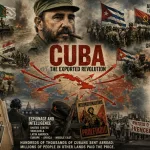
Once, the island exported revolution, intelligence services, and “security expertise.” Today, even that brand is fading. When elite Cuban forces failed abroad—men once considered untouchable—it wasn’t just a military loss. It was symbolic. A reminder that the regime’s muscle memory is older than its muscles.
Look at the leadership now: men in their 80s and 90s clinging to a revolution that no longer produces electricity, fuel, or belief. It’s less “government” and more “retirement home with uniforms.”
Oil Is Power (Literally)
Cuba runs on imported oil. No oil means:
No electricity
No water
No transportation
No hospitals that function
For decades, the island survived by borrowing energy from friends: first the Soviets, then Venezuela. When that pipeline cracked, the lights started going out—sometimes for days.
Now comes the squeeze.
Washington’s strategy—driven by people like Donald Trump and Marco Rubio—isn’t bombs or invasions. It’s oil. Turn the tap off slowly enough to avoid chaos, but tight enough to force negotiations.
And here’s where it gets uncomfortable.
Mexico’s “Humanitarian Aid”
Mexico stepped in, sending subsidized oil and calling it humanitarian aid. On paper, it sounds noble. In practice, it keeps the Cuban state alive just long enough to avoid collapse—while ordinary Cubans remain trapped.
The quid pro quo?
Cuban doctors sent abroad, often paid through the regime, not to the doctors themselves. Aid that looks compassionate from afar but quietly reinforces the same system it claims to soften.
That’s the trick of modern authoritarian survival: Let someone else pay the bill.
The Regime’s Bet
Cuba has survived worse—the “Special Period” after the Soviet collapse nearly destroyed the economy, and yet the regime endured. They’re betting they can do it again.
But this time is different.
No oil cushion.
Tourism down nearly 70%.
Power outages so severe even state TV runs out of diesel.
Hotels rising like empty monuments to denial.
A country can survive many things.
It cannot survive long without electricity and water.
At some point, fear runs out before hunger does.
So… What Do We Do?
Here’s the part nobody escapes.
If you send aid, you help real people—but you also extend the life of the system that made them desperate.
If you cut everything off, you hurt innocents first and hope the pain finally reaches the palace.
One path is morally comforting.
The other is strategically brutal.
History suggests this:
Regimes rarely fall because leaders starve.
They fall when the people stop believing—and the enforcers stop enforcing.
And that only happens when the illusion breaks.
The Uncomfortable Truth
Humanitarian aid feels good. Sanctions feel cruel.
But long-term oppression thrives on short-term compassion that never reaches the root.
The real moral failure isn’t choosing the wrong tool.
It’s pretending there’s a painless one.
So the question isn’t just should we help the people or choke the regime?
It’s whether we’re willing to accept that every choice has blood on it—just in different places.
And the worst choice of all?
Doing just enough to feel virtuous… while nothing ever changes.
Oh, and same applies in Iran, Venezuela, Russia, China, North Korea.