Think of it as Yoga for the brain, we are going to stretch a bit.
Has the Time Come to Take Military Action in Cuba — and What Would That Really Mean?
America can win Cuba in a week. The question is whether it can win the morning after. That is up to the people -- YNOT!
Has the time come to take military action in Cuba, or are we standing at the edge of another fine American habit — winning the fight and losing the bill?
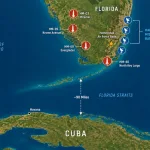
Cuba is only 90 miles from Florida, which is close enough to make Washington nervous and far enough away for politicians to speak bravely from air-conditioned rooms.
The island is breaking down in real time. The power grid is failing. Fuel is scarce. Hospitals struggle. Water pumps stop. Food spoils. People sit in the heat waiting for the lights to come back on, and nobody in Havana can honestly say when that will be.
That kind of misery does not need a bomb to become a crisis. It already is one.
But this is no longer just about communism, exile politics, or old Cold War grudges kept warm like leftovers nobody wants to throw away. Cuba now sits at the center of something bigger: Russian and Chinese intelligence activity, U.S. national security, oil pressure, sanctions, property claims, regime survival, and the question every empire eventually asks itself:
Can we force history to move faster?
Washington’s concern is not imaginary. Chinese-linked intelligence sites in Cuba are a serious problem. Russian influence is a serious problem. A hostile intelligence network sitting that close to Florida is not just a diplomatic annoyance. It is the kind of thing that makes generals stop smiling at lunch.
Then there is the money. There are billions of dollars in old U.S. property claims tied to assets nationalized after the Cuban Revolution. Oil assets. Ports. Hotels. Land. Companies do not forget confiscated property any more than a dog forgets where you hid the steak.
So when people say this is only about freedom, be careful. Freedom may be in the room, but money usually has the better chair.
The U.S. has already turned the screws hard. The blockade pressure on oil is meant to do what armies often do badly: make the regime collapse before the shooting starts. That is the clean version of pressure. Clean, of course, depending on whether you are the one applying it or the one trying to refrigerate medicine with no electricity.
Now the question becomes: how would military action happen?
Not like the movies. There would probably be no grand beach landing, no dramatic flag-raising, no easy little war with a neat ending and a soundtrack. Real life has a nasty habit of refusing the script.
There are three broad paths.
The first path is the inside deal.
This is the path Washington would prefer if it can get it. Find people inside the Cuban power structure who understand the old machine is running on fumes. Offer them survival, money, legitimacy, and a chair at the new table. In return, they help manage a transition.
This is how nations avoid invasion while still losing power.
Everybody calls it diplomacy because “controlled collapse with paperwork” does not sound as noble.
If the right insiders decide the Castro system has become a dead mule in the road, they may try to move it before Washington brings in the tow truck. That would mean a transitional government, economic opening, prisoner releases, foreign investment, and a whole lot of men who spent their lives defending socialism suddenly discovering the beauty of private property.
Human nature is a wonderful comedian. The second path is collapse first, troops later.
This may be the most likely scenario.
The pressure keeps building. Fuel disappears. Blackouts spread. Protests grow. Local officials stop obeying Havana because Havana can no longer provide electricity, food, or fear in reliable quantities.
That is when governments become hollow. They still have flags, speeches, uniforms, and television anchors saying everything is fine. But underneath, the floorboards are gone.
At that point, the U.S. does not need to invade in the old-fashioned sense. It can come in under the language of humanitarian relief, stabilization, embassy protection, evacuation, or restoring order.
That sounds softer than invasion, but ask the people on the ground and they may notice the boots are made of the same leather.
The danger is that Cuba is not just a government. It is a country of more than 10 million people with neighborhoods, families, grudges, loyalties, fears, and memories. You can topple a government faster than you can convince a grandmother that foreign soldiers in her street are there for her own good.
The third path is direct military force.
This is the path everybody talks about and nobody should speak of casually.
Could the United States defeat Cuba’s conventional military?
Yes.
That part is not the hard question.
Cuba’s air force is old. Its navy is limited. Its equipment is aging. Its fuel supply is weak. Against the U.S. military, Cuba would not win a conventional war. That is not courage talking. That is arithmetic.
But countries do not always fight the war you want. They fight the war they can afford.
Cuba’s real strength is not tanks, planes, or ships. Its real strength is the ability to make an occupation painful. Urban resistance. Local militias. Intelligence networks. Neighborhood informants. Armed loyalists. National pride. Fear of revenge. Fear of foreign control.
That is where the problem begins.
America has learned this lesson before, though learning a thing and remembering it are two different talents. Iraq taught it. Afghanistan taught it. Vietnam taught it. The first phase of a war is often won by the people with better aircraft. The second phase is judged by mothers, markets, funerals, and whether the lights come on after the speeches are over.
And Cuba is not across the world. Cuba is 90 miles from Florida.
If things go badly, the consequences do not stay neatly on the island. Refugees come north. Politics explode in Miami. China and Russia get their propaganda gift wrapped. Latin America turns hostile. The United Nations fills up with speeches. And every bad actor on earth says, “See? Rules only matter when Washington likes the outcome.”
Now, does that mean America should do nothing?
No.
Doing nothing is not wisdom. It is just cowardice wearing slippers.
The Cuban people have lived under a system that has controlled speech, crushed opposition, exported labor, rationed misery, and blamed every failure on someone else. The regime has spent decades turning a beautiful island into a prison with beaches.
But military action should never be sold like pest control.
You do not “remove a regime” the way you remove termites. Regimes live inside institutions, families, police stations, bank accounts, schools, habits, and fear. Blow up the top and the roots may still be there, tangled in the plumbing.
The real question is not whether the U.S. can break the Cuban regime.
It can.
The real question is whether the U.S. can help build something better afterward without creating another long, angry, expensive mess.
That means any serious plan must answer five questions before the first soldier moves:
Who governs the day after?
Who controls the police?
Who keeps food moving?
Who prevents revenge killings?
Who makes sure Cuba does not trade one gang of bosses for another gang with better suits?
If those questions do not have answers, then “liberation” becomes a slogan, and slogans are cheap because they are usually paid for by somebody else’s children.
So has the time come?
Maybe the time has come for the regime to end.
Maybe the time has come for Cuba to breathe.
Maybe the time has come for the world to stop pretending that blackouts, prisons, hunger, censorship, and party loyalty are some noble little experiment.
But the time for military action?
That should be the last door opened, not the first one kicked in.
Because the easiest part would be defeating Cuba’s military.
The hard part would be not defeating Cuba itself.
And history has a cruel sense of humor: sometimes the people who arrive promising freedom discover they brought a landlord’s clipboard instead.
Has Washington Already Chosen the Cuba Plan — and Is the Invasion the Part They Hope They Never Need?
The most likely plan for Cuba does not begin with Marines storming Havana like a movie trailer made by a defense contractor with too much coffee.
No, the smarter plan is quieter. It begins with fuel. Cut the oil. Tighten the sanctions. Make every country, tanker, bank, insurer, and middleman decide whether helping Havana is worth angering Washington.
That is not war in the old sense. That is pressure with a necktie on.
Cuba already runs on fumes. The electric grid is weak. The fuel supply is thin. The hospitals, water pumps, food storage, transportation system, and police state all depend on energy. A dictatorship can survive angry citizens. It can survive bad press. It can even survive hunger longer than decent people like to admit.
But it cannot survive forever without fuel. So the first phase is simple: squeeze the regime until the machine starts coughing.
Not the people — though the people always end up paying first, because governments have a special talent for sending the bill downstairs.
The second phase is political. Washington would start looking for insiders who know the old system is dying. Not necessarily heroes. History rarely gives us those in bulk. More likely generals, security officials, party operators, businessmen in uniform, and well-connected survivors who can smell tomorrow before their boss does.
The message to them would be plain:
Help manage the transition, and you may keep a future.
Fight to the end, and you may only keep a cell.
That is how regimes often fall. Not when every citizen rises at once, but when the men with guns stop believing the old boss can still protect them.
The third phase is the “humanitarian door.”
As blackouts spread and shortages worsen, protests grow. The regime arrests people, but the arrests do not fix the lights. It sends police, but police cars need gasoline. It gives speeches, but speeches do not pump water.
At some point, Washington says the magic words: humanitarian crisis, evacuation, stabilization, protection of civilians, regional security.
Those words matter. They are the difference between “invasion” and “intervention,” and governments love changing the label after they have already opened the package.
Then comes the military shadow.
Guantánamo becomes the obvious staging point. Not because anyone needs to say it out loud, but because geography already said it first. It is on Cuban soil, it has a port, it has an airfield, and it gives Washington a foothold without needing to kick open the first door.
From there, the U.S. does not need to conquer every inch of Cuba. That would be the dumb version, and America has already bought that lesson twice at full retail.
The likely goal would be limited and political:
Secure American personnel.
Prevent a mass migration crisis.
Protect key routes for aid.
Force or support a leadership transition.
Keep rival powers from filling the vacuum.
Recognize a transitional authority.
Then call it stabilization.
That is the plan if things go the way Washington wants.
But plans have a way of meeting real people and embarrassing themselves.
Because Cuba is not just a regime. It is neighborhoods, families, exiles, informants, old loyalties, fresh anger, military officers, black-market operators, political prisoners, hungry mothers, proud old communists, young people with no patience left, and millions who have been trained for decades to suspect anything wearing an American flag.
That is where the easy part ends.
The U.S. could defeat Cuba’s conventional military quickly. That is not the real question. The real question is what happens after the statues come down and everybody starts asking who owns the hotels, ports, farms, factories, houses, and bank accounts.
That is when liberation can turn into a family argument with international lawyers.
There would be exiles demanding justice. Insiders demanding immunity. Corporations demanding property. Citizens demanding food. China demanding compensation. Russia demanding attention. Latin America demanding explanations. And Washington demanding that everyone please remain calm while history tries to reload.
So the likely plan is this:
First, choke the regime economically.
Second, split the insiders politically.
Third, wait for collapse to become visible.
Fourth, enter under a humanitarian or stabilization banner.
Fifth, install or recognize a transition government.
Sixth, open the economy fast.
Seventh, hope the Cuban people accept the new order before the old ghosts organize themselves.
That last part is the gamble. Because removing a dictatorship is one thing.
Replacing the habits it planted in the soil is another.
And if Washington forgets that, it may discover the same old truth with a Cuban accent:
You can win the airport in a day, the capital in a week, and still spend years trying to win the street corner where everybody knows who betrayed whom.
Bottom Line
Against the United States, Cuba loses the conventional fight quickly. Its main value is not defeating a U.S. force. Its value is making occupation, stabilization, and political control painful afterward.
Iran is a much more dangerous military opponent. Iran has strategic depth, missile forces, drones, proxy networks, a larger military, a domestic arms industry, and the ability to hit regional U.S. partners and energy infrastructure. CSIS describes Iran as having the largest and most diverse missile arsenal in the Middle East, with thousands of ballistic and cruise missiles. (Missile Threat)
In plain English: Cuba is a knife fight in a small room. Iran is a warehouse full of matches, gasoline, and angry neighbors.
Cuba Military Assessment
Cuba’s formal military is the Revolutionary Armed Forces, with army, navy, air and air-defense forces, plus territorial militia and reserve structures. Older World Bank-linked data puts Cuba’s armed forces personnel around 76,000 in 2020, while Global Firepower ranks Cuba 65th of 145 militaries in 2026. (Trading Economics)
Cuba’s defense strategy is not built around defeating the United States in a clean, conventional war. It is built around survival, delay, dispersion, and political cost. Reuters recently noted Cuba’s “War of All the People” doctrine, which is embedded in Cuban defense law and tied to broad military training and mobilization. (Reuters)
Cuba’s strengths
Area
Assessment
Geography
Island geography helps defense, smuggling control, and bottlenecking movement, but also makes blockade easier.
Urban resistance potential
Strong. Havana, Santiago, and dense neighborhoods could become difficult to control.
Militia/reserve doctrine
Strong on paper. Cuba has long prepared for decentralized resistance.
Air defense
Moderate but aging. Soviet-derived systems can still be dangerous, especially against careless or low-altitude operations.
Political/intelligence control
Strong domestically. The Cuban state has deep internal surveillance habits.
Nationalist narrative
Strong. Any foreign intervention could be framed as imperial invasion, even by people who hate the regime.
Cuba’s weaknesses
Area
Assessment
Air force
Weak. Old Soviet aircraft, low readiness, spare-parts problems.
Navy
Weak. Coastal defense force, not a blue-water navy.
Missile force
Limited. Nothing like Iran’s ballistic missile threat.
Logistics
Very weak. Fuel, electricity, transportation, maintenance, and parts shortages are serious vulnerabilities.
Defense industry
Weak. Cuba depends heavily on foreign suppliers and old inventories.
Strategic depth
Limited. It is a long island close to U.S. bases and surveillance assets.
The most important point: Cuba’s most dangerous military capability is not its equipment. It is the possibility of prolonged resistance after the regime falls.
That is where the bill gets ugly.
Iran Military Assessment
Iran is a different animal.
OpenFactBook data lists Iran at up to about 600,000 active armed forces personnel, including the regular armed forces, IRGC, and active Basij paramilitary forces. Global Firepower ranks Iran 16th of 145 in 2026, compared with Cuba at 65th. (OpenFactBook)
Iran’s doctrine is built around deterrence by punishment. It knows it cannot beat the U.S. in a traditional air-and-naval war, so it invests in missiles, drones, mines, fast boats, proxies, hardened facilities, and regional escalation.
CSIS says Iran’s missile forces give it a credible ability to threaten U.S. and partner forces in the region. (Missile Threat) IISS has also assessed that Iran expended a significant part of its medium- and intermediate-range ballistic missile inventory during the 2025 Twelve-Day War, but replacement depends on manufacturing repair and propellant supply. (IISS)
Side-by-Side Comparison
Category
Cuba
Iran
Advantage
Global military ranking
~65th
~16th
Iran
Active personnel
~76,000 historical estimate
Up to ~600,000 active
Iran
Air force
Old, weak, low readiness
Larger but aging/mixed
Iran
Air defense
Aging Soviet-derived network
Larger, denser, more modern/mixed
Iran
Navy
Coastal defense
Asymmetric Gulf threat
Iran
Missile force
Limited
Largest in Middle East
Iran
Drone force
Limited
Significant
Iran
Defense industry
Weak
Substantial domestic production
Iran
Strategic depth
Low
Very high
Iran
Ability to resist occupation
High for size
Extremely high
Iran
Ability to threaten U.S. mainland
Low
Limited direct, higher indirect/cyber/regional
Iran
Ability to disrupt world economy
Low/moderate through migration/regional politics
High through Gulf oil routes
Iran
Scorecard
Capability
Cuba
Iran
Conventional ground force
4/10
7/10
Air force
2/10
4/10
Air defense
4/10
7/10
Missile force
1/10
10/10
Navy
2/10
6/10
Drone capability
1/10
8/10
Cyber / electronic warfare
2/10
6/10
Logistics resilience
2/10
6/10
Defense industry
1/10
8/10
Occupation resistance potential
7/10
9/10
Overall military problem for U.S.
4/10
9/10
Cuba’s likely defense logic
Cuba would probably try to:
Preserve regime leadership as long as possible.
Keep internal security units loyal.
Use air defenses selectively.
Avoid wasting aircraft in hopeless fights.
Shift quickly into militia, urban, and guerrilla resistance.
Frame the conflict as national survival against foreign invasion.
Encourage international condemnation and regional political pressure.
Cuba’s best hope is not battlefield victory. It is making the aftermath so politically expensive that Washington regrets touching the problem.
Iran’s best hope is not defeating the U.S. Navy or Air Force. It is making the war too expensive, too wide, and too economically dangerous to continue.
The Big Strategic Difference
Cuba’s danger is proximity.
It is 90 miles from Florida. A crisis there means migration, political shock in Miami, intelligence concerns, humanitarian pressure, and possible confrontation with Chinese or Russian interests. Cuba is close enough that America cannot ignore it.
Iran’s danger is escalation.
It can hit regional bases, threaten Israel, activate proxies, disrupt shipping, and rattle energy markets. Iran is far away geographically but close to the world’s oil arteries. That makes it dangerous in a different way.
Final Assessment
If the U.S. fought Cuba, the conventional military result would likely be quick. The hard part would be what comes after: civil order, revenge, refugees, guerrilla resistance, property disputes, and legitimacy.
If the U.S. fought Iran, the opening would be far more dangerous. The U.S. could still dominate the air and sea over time, but Iran could impose serious costs through missiles, drones, proxies, cyber actions, and energy disruption.
So the blunt version is this:
Cuba can make America bleed politically after losing militarily. Iran can make America bleed regionally while still fighting militarily.