Think of it as Yoga for the brain, we are going to stretch a bit.
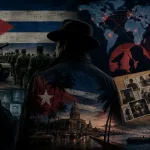
Cuba Is Next — When?
The clock is ticking on the Castro revolution like a time bomb. After nearly seven decades of communism, economic collapse, and American frustration, is Cuba about to become Donald Trump's next foreign-policy project -- YNOT!
There is an old saying that history repeats itself, first as tragedy and then as farce.
In Cuba’s case, history has been repeating itself for nearly seventy years, and the Cuban people are still waiting for the comedy to begin.
Since Fidel Castro marched into Havana in 1959, American presidents have come and gone. Some threatened Cuba. Some negotiated with Cuba. Some sanctioned Cuba. Others tried to ignore Cuba, rather like a troublesome neighbor whose lawn has not been mowed since the Eisenhower administration.
Through it all, the communist government survived.
The Soviet Union collapsed. The Berlin Wall fell. China embraced capitalism while keeping its communist political system. Vietnam opened its economy. Even Venezuela’s political order has been dramatically shaken.
Yet Cuba remains, a revolutionary museum in which the exhibits are alive, the electricity is optional, and the admission price is paid by the population.
But something is changing.
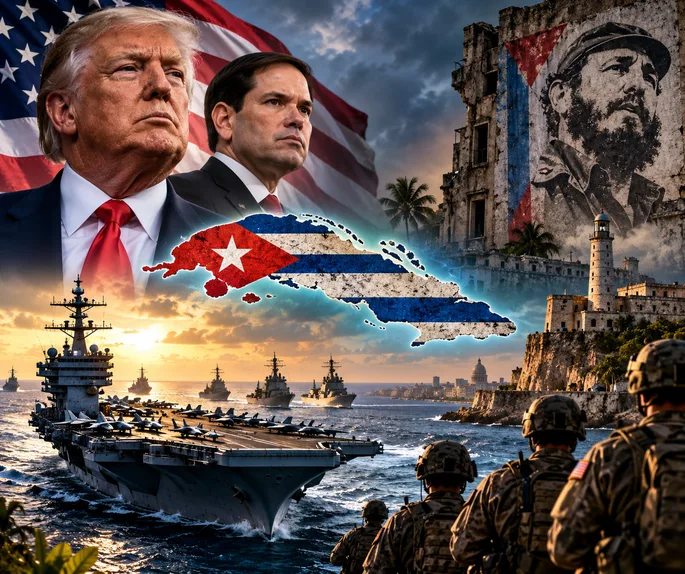
Donald Trump is talking openly about taking Cuba. The Pentagon is examining military preparations that officials have linked to the island. Washington is tightening its grip on Cuba’s fuel supplies. And Secretary of State Marco Rubio, the son of Cuban immigrants, occupies a position from which he can influence what happens next.
The interesting question is no longer simply whether Cuba needs to change.
The question is whether the United States is preparing to force that change — and whether it might happen before the end of 2026.
And if so, how?
The Four-Month Question
Let us begin with something considerably more interesting than another politician’s speech.
The United States military is making plans.
On September 25, CBS News reported that the U.S. Army Reserve was examining whether it could provide military police, medical personnel, engineers, and logistical support units to U.S. Southern Command within approximately 90 to 120 days.
The internal military message did not specifically name Cuba.
However, multiple American officials told CBS that the planning was connected to possible operations involving the island.
The document did not order an invasion. It did not authorize troop deployments. And it did not establish that President Trump had decided to attack Cuba.
But the requested capabilities were revealing.
Military police. Medical support. Transportation. Fuel. Engineering. Logistical units capable of supporting sustained military operations.
These are not merely the supplies one orders for a weekend cruise.
They are the kinds of resources a military requires when it expects to remain somewhere, manage substantial operations, and potentially stabilize territory.
The 90-to-120-day readiness window points toward late December 2026 or January 2027.
That is not proof of an invasion timetable. Military planners prepare for contingencies that never happen.
Nevertheless, when a government starts asking whether its military can support an operation in four months, it is reasonable to ask what the politicians intend to do four months from now.
And that brings us to Donald Trump.
Trump Has a Habit of Saying the Quiet Part Out Loud
Most politicians practice the ancient diplomatic art of saying absolutely nothing while using an extraordinary number of words.
Donald Trump has a different approach.
He often announces his ambitions before anyone has finished writing the official explanation for them.
In March 2026, discussing Cuba with reporters, Trump openly contemplated having the honor of taking the island.
He described Cuba as economically weakened and suggested that American action could take different forms, including liberation or some other kind of American intervention.
These were not the words of a president promising another fifty years of patient diplomatic correspondence.
They were the words of a president who believed Cuba’s circumstances created an opportunity.
Now, Trump’s statements are not always policy decisions. Sometimes they are negotiating tactics. Sometimes they are political theater. Sometimes they are simply Trump thinking aloud.
But dismissing them entirely would be a mistake.
The man has already demonstrated a willingness to employ military force against foreign governments, most notably in Venezuela and Iran.
When someone with that record openly discusses taking Cuba, perhaps we ought to listen.
Not because every statement is a prediction.
But because sometimes a president tells the world what he would like to do, and the world makes the mistake of assuming he is joking.
First Venezuela, Then Iran, Then Cuba?
There is a theory circulating that once the United States winds down its military operations against Iran, some American naval forces could be redirected toward Cuba.
According to the original commentary behind this speculation, an unnamed White House source suggested that aircraft carriers returning from operations involving Iran might be used to pressure Havana.
It is an intriguing theory. It is also unverified.
There is no reliable public confirmation that American carrier strike groups have received orders to surround Cuba.
In fact, the military situation involving Iran remains unsettled.
As of October 8, Washington is considering further military action against Iran, and the Pentagon has been preparing for a substantial naval presence in the Middle East. The USS Abraham Lincoln is returning home after an exceptionally long deployment, while other carriers are supporting or preparing to support operations in the region.
Consequently, we should not mistake an attractive geopolitical theory for an established military schedule.
But the broader strategic question remains fascinating.
Could Washington apply the lessons of Venezuela and Iran to Cuba? Absolutely.
Would that necessarily require an invasion? Not at all.
A naval demonstration, an intensified economic blockade, diplomatic ultimatums, covert pressure, or negotiations backed by military force could all form part of a broader strategy.
There is a substantial difference between having enough military power to destroy a government’s defenses and possessing the political wisdom to build a functioning society afterward.
History has supplied several expensive demonstrations of that difference.
Iraq comes to mind. Afghanistan would probably like a word.
The Oil Is Running Out — And Washington Is Tightening the Valve
On October 7, American authorities announced the seizure of 90 shipments of biodiesel destined for Cuba.
The shipments contained more than 600,000 gallons of fuel and were valued at approximately $2.8 million.
According to federal authorities, the shipments were destined for a sanctioned Cuban state-controlled fuel company.
The shipments were intercepted at Port Everglades in South Florida and the Port of Houston.
This was not a hypothetical military exercise. It happened.
And it was part of a much larger American campaign to restrict fuel reaching the Cuban government.
Washington argues that the enforcement measures target sanctioned entities and government interests rather than legitimate humanitarian assistance.
Cuba argues that American economic pressure amounts to economic warfare against its population.
Both governments have their arguments.
Unfortunately, ordinary Cubans have to live with the consequences.
Fuel shortages mean fewer buses, interrupted food distribution, struggling businesses, and electricity that sometimes seems to operate on a system of personal favors.
The Cuban government has demonstrated a remarkable ability to survive economic hardship. The Cuban people have demonstrated an even more remarkable ability to endure it. But endurance is not prosperity.
And surviving a failed system is not the same as defending its success.
Marco Rubio: The Man Who Has Been Waiting for This Moment
Few American politicians have a more personal connection to Cuba than Marco Rubio.
The son of Cuban immigrants, Rubio grew up in South Florida surrounded by the political consequences of the Cuban Revolution.
For decades, Cuban-American families have discussed the same questions.
Will the government ever fall?
Will confiscated property ever be returned?
Will relatives separated by politics and geography ever be reunited in a genuinely free country?
Will Cuba become a prosperous Caribbean nation rather than a monument to revolutionary nostalgia?
Rubio now serves as America’s secretary of state.
That places him at the center of decisions that could determine Cuba’s political future.
But there is an important distinction between wanting change and possessing a workable plan to achieve it.
Rubio’s political history makes him a powerful advocate for democratic change in Cuba.
It does not establish that a military invasion has been approved.
Indeed, recent reporting indicates that some members of South Florida’s Cuban exile community have grown frustrated by the slow pace of developments, even as Rubio continues to play a central diplomatic role.
For Cuban Americans who have waited generations for change, patience has become something of an inherited family business.
And patience, unlike property, cannot be confiscated. It can only be exhausted.
Cuba Says It Will Fight to the Last Drop of Blood
Cuban President Miguel Díaz-Canel has repeatedly presented resistance to American pressure as a defense of national independence and sovereignty.
Cuban officials say the country is preparing for the possibility of American military action.
They insist that Cuba’s political system is not something Washington has the right to dismantle.
On one point, they have a legitimate argument. Cuba is a sovereign country.
Its people have the right to determine their political future without having another nation’s government imposed upon them.
But there is another question, one that the Cuban leadership seems considerably less enthusiastic about answering.
Do the Cuban people have the right to replace their own government?
That is where the conversation becomes uncomfortable.
A government cannot convincingly claim to defend national self-determination while denying its citizens meaningful opportunities to exercise political self-determination themselves.
The Cuban Revolution promised dignity, independence, equality, and a better life.
It delivered some genuine achievements, particularly in education and public health.
Those accomplishments should not be erased simply because the political system has failed in other respects.
But Cuba’s economic deterioration, political restrictions, mass emigration, and infrastructure crisis represent an enormous indictment of the system.
The Cuban leadership points to American sanctions.
But sanctions alone cannot explain decades of centralized economic mismanagement, restrictions on private enterprise, political repression, and a system that has repeatedly struggled to produce the prosperity it promised.
If the achievements of the revolution are so extraordinary, why have so many Cubans risked their lives trying to leave them behind?
There is a difference between loving your country and loving the government that controls it.
The Strange Diplomacy of WhatsApp
Meanwhile, Washington and Havana are talking.
Sort of. On October 5, Reuters reported that Cuba and the United States were maintaining communication through meetings, telephone calls, and even WhatsApp messages.
However, Cuban diplomat Lianys Torres Rivera said the two governments were not engaged in formal negotiations.
Washington disputed that characterization, insisting that talks were ongoing.
Apparently, the two governments are communicating but cannot agree on whether communication constitutes communication.
After nearly seventy years of hostility, perhaps this qualifies as progress.
The Cuban government says it remains open to respectful dialogue.
But it also considers outside demands for changes to its political system unacceptable.
Washington, meanwhile, wants meaningful reforms and concessions from Havana.
Here lies the central contradiction.
The United States wants the Cuban system fundamentally changed.
The Cuban leadership wants to negotiate while preserving the system.
It is rather like two men negotiating over a condemned building when one insists that the building must be demolished and the other demands that nobody touch the wallpaper.
There may be a compromise somewhere. But nobody has found it yet.
Could America Actually Take Cuba?
Militarily, the United States possesses overwhelming advantages.
Its air power, naval forces, intelligence capabilities, technological resources, and logistical capacity vastly exceed those of Cuba.
But military superiority is not the same as political success.
There are several possible outcomes worth considering.
This is perhaps the most attractive outcome for Washington because it might achieve substantial political change without a major military confrontation.
Increasing shortages, economic pressure, and political dissatisfaction could force Havana into negotiations over reforms or a political transition.
But economic desperation does not automatically produce democracy.
Sometimes it merely produces more desperate people.
Scenario Two: A Negotiated Political Transition
The Cuban government could eventually accept a negotiated transition involving political reforms, guarantees for existing officials, expanded economic freedom, and a pathway toward competitive elections.
This would likely be the least destructive outcome.
Unfortunately, political systems built around maintaining control rarely volunteer to surrender it.
Scenario Three: A Limited American Military Operation
Washington might conduct limited military operations or demonstrations of force designed to compel concessions or weaken the government’s ability to resist political change.
Such actions would carry substantial risks.
Cuban casualties, American casualties, international condemnation, regional instability, and unintended escalation could follow.
A limited military operation can also become considerably less limited when events refuse to cooperate with the original plan.
Scenario Four: A Full-Scale Invasion and Occupation
This is the most dramatic possibility.
It is also potentially the most expensive.
Defeating Cuba’s conventional military defenses would be only the beginning.
Who would govern the island afterward?
Who would maintain electricity and water services?
Who would distribute food?
Who would rebuild infrastructure?
Who would police the streets?
Who would prevent political retaliation?
And, perhaps most importantly, how would the United States ensure that Cuba’s next government was chosen by Cubans rather than installed by Americans?
These questions are not minor details.
They are the difference between removing a dictatorship and creating another historical disaster.
What Happens the Morning After Communism Ends?
Let us imagine that the Cuban communist government falls tomorrow.
The celebrations in Miami would probably register on seismographs.
Champagne would flow. Flags would wave. Families would embrace. People who had spent decades dreaming of returning to Cuba would suddenly begin making travel arrangements.
But what happens the following morning?
Cuba would still have aging power plants.
Its water systems would still need repair.
Its hospitals would still need medicines and equipment.
Its transportation infrastructure would still be deteriorating.
Its economy would still require enormous investment.
Removing the government would not magically fix these problems.
A successful transition would require the restoration of private property rights, predictable laws, independent courts, freedom of expression, competitive elections, and an economy in which people could establish businesses without navigating a maze of political permissions.
It would also require substantial investment.
And Cuba has something enormously valuable to offer. Geography.
Located approximately ninety miles from Florida, Cuba possesses natural harbors, agricultural potential, tourism opportunities, and a population with considerable skills and international family connections.
Imagine a Cuba where entrepreneurs could establish businesses, farmers could sell their products freely, families could invest in property, and international companies could operate under transparent rules.
Imagine American, Canadian, European, and Latin American investment flowing into Cuban infrastructure.
Imagine Cuban expatriates returning with capital, experience, and ideas.
Imagine Cuba becoming a commercial and cultural bridge between North America, Latin America, and the Caribbean.
None of this would happen overnight.
And it would be foolish to pretend that capitalism automatically eliminates corruption, inequality, or poverty.
But giving people the freedom to build their own futures would be a revolutionary change in a country that has spent generations defining revolution as a permanent condition.
The greatest achievement of a new Cuba would not be replacing communist slogans with corporate advertisements.
It would be allowing ordinary Cubans to decide for themselves what kind of lives they want.
The Danger of Confusing Liberation With Conquest
Here is where I must disagree with anyone who believes that parking three American aircraft carriers offshore would automatically produce freedom.
An aircraft carrier can deliver tremendous military power.
It cannot deliver democracy in a cardboard box.
Freedom requires functioning institutions, protection of individual rights, economic opportunity, and the consent of the governed.
And if the United States genuinely wishes to help liberate Cuba, then it must distinguish between removing a government and taking possession of a country.
Cuba should not become an American territory by military conquest.
It should become a country in which Cubans can govern themselves.
There is also a humanitarian consideration.
The Cuban people have already endured decades of economic hardship.
They do not deserve to become the collateral damage of an effort supposedly intended to rescue them.
Destroying a country’s remaining infrastructure and then announcing that its people have been liberated would be a peculiar definition of freedom.
The objective should not merely be to end communism.
It should be to create the conditions under which Cubans can enjoy greater freedom, security, and prosperity.
Otherwise, we will have changed the management while leaving the customers locked inside the building.
So, When Will It Happen?
Now we arrive at the question that started this discussion.
Will the United States invade Cuba before the end of 2026? Possibly.
But the available evidence does not establish that an invasion has been ordered, much less that it has a fixed date.
What we do know is significant.
The United States has intensified economic pressure on Cuba.
American military planners have examined whether support units could be available within 90 to 120 days.
President Trump has openly discussed the possibility of taking Cuba.
Marco Rubio remains deeply invested in the question of Cuba’s political future.
The Cuban government is preparing for the possibility of military confrontation.
And diplomatic contacts have yet to produce a meaningful breakthrough.
Taken together, these developments suggest that Washington is seriously considering its options.
But there is another consideration.
The United States remains heavily committed to the conflict involving Iran.
The American midterm elections are scheduled for November 3.
A new military conflict in the Caribbean could create enormous political, diplomatic, humanitarian, and economic complications.
Therefore, my assessment is that late 2026 through early 2027 represents a plausible period for heightened American pressure or a potential confrontation, not a confirmed invasion window.
It is equally possible that military preparations are intended to strengthen Washington’s negotiating position.
Indeed, sometimes the best way to persuade an opponent to negotiate is to convince him that the alternative is considerably less pleasant.
The trick, of course, is knowing when to stop threatening and start talking.
The Final Question: Are Cubans Willing to Die for the Revolution?
Cuban leaders have invoked the language of sacrifice and national resistance.
They speak of defending the revolution, sovereignty, and national achievements.
But the leaders of revolutions have a habit of expecting ordinary citizens to make sacrifices that the leaders themselves are not always required to endure.
It is easy to deliver speeches about dying for a cause.
It is considerably harder to explain why people should continue suffering for it.
The Cuban people have demonstrated extraordinary resilience.
But that resilience should not be confused with unlimited enthusiasm for the political system governing them.
Some Cubans sincerely support the revolution. Most oppose it.
Many are undoubtedly more concerned with electricity, food, medicine, family, and economic survival than with ideological arguments between Washington and Havana.
And all of them deserve better than being treated as pieces on a geopolitical chessboard.
There is a profound difference between being willing to die for one’s country and being expected to die for one’s government.
The former can be an act of patriotism.
The latter may simply be the final demand of a political system that has already taken too much.
Final Thoughts
I would like to see the Cuban dictatorship end. I would like to see Cuba become a free, prosperous, democratic country.
I would like to see the day when Cubans living in Miami can return to Havana without fear, when Cuban entrepreneurs can build businesses without political interference, and when a Cuban child can grow up believing that the future offers more than the past.
But I would prefer that future to arrive without another war.
The United States has the military power to defeat Cuba.
That has never been the most interesting question.
The more important question is whether America and the Cuban people can create something better afterward.
And that takes considerably more than aircraft carriers.
As for the Cuban leadership, after nearly seventy years in power, perhaps it is time to consider a revolutionary new idea.
Let the people choose.
If the revolution is as beloved as its leaders claim, they should have nothing to fear from genuinely free elections.
And if it isn’t? Well, there is always the possibility of retirement.
So, is Cuba next? Perhaps.
When? The next four months deserve close attention, but no one outside the decision-making circle can reliably give us a date.
How? That is the question that matters most.
Because history will not judge the United States simply by whether it can bring down another government.
It will judge what follows.
And after seventy years of revolution, Cuba deserves something considerably more original than another generation of suffering.