Think of it as Yoga for the brain, we are going to stretch a bit.
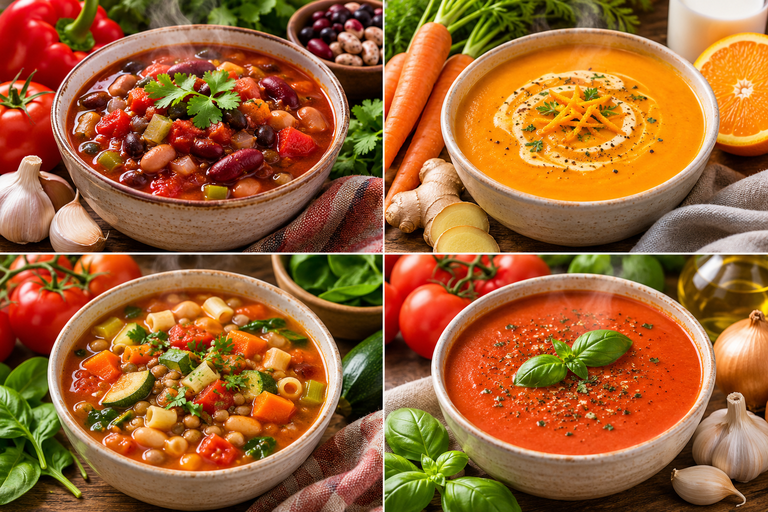
Four Simple Soups That Are Good for You
You are what you eat! -- Said someone
Eating Healthy Doesn’t Have to Be Expensive, Complicated, or Taste Like Cardboard
Sometimes the simplest things in life are the best things for us.
Take soup, for example.
For thousands of years, people have been throwing vegetables, beans, meat, and whatever else they had available into a pot of water and cooking it. Every culture has its version. The Italians have minestrone, the Cubans have their black bean soup, the French have their vegetable soups, and just about every grandmother in the world has a soup recipe she swears will cure whatever is wrong with you.
Well, Grandma might have been onto something.
Modern nutritional research tells us that certain soups can be excellent for cardiovascular health, particularly when it comes to managing blood pressure, cholesterol, and maintaining a healthy weight.
And here’s the best part. You don’t need expensive ingredients, exotic supplements, or a degree in nutrition to make them.
You need a pot, some vegetables, a few spices, and about 30 minutes.
Today, I want to share four simple soups that are inexpensive, relatively easy to prepare, and packed with nutrients your body needs. I try to eat soup two or three times a week for dinner.
But first, let’s understand why they are good for you.
WHY SOUP CAN BE GOOD FOR YOUR HEART
High blood pressure is one of the most common health problems in America.
According to the American Heart Association, nearly half of American adults have high blood pressure under current U.S. guidelines.
The problem is that high blood pressure often has no obvious symptoms. You can feel perfectly fine while elevated pressure gradually damages your arteries, heart, kidneys, and brain.
That’s why doctors sometimes call hypertension the silent killer.
Now, eating soup isn’t going to magically cure high blood pressure.
But what you eat every day can make a significant difference.
Four nutritional components are particularly important.
1. POTASSIUM — Helps Your Body Manage Sodium
Potassium helps regulate fluid balance and supports normal blood vessel function.
For many people, getting enough potassium through food can help counteract some of sodium’s effects on blood pressure.
Beans, tomatoes, spinach, carrots, and many other vegetables contain potassium.
2. FIBER — Good for Your Heart and Digestive System
Fiber helps lower LDL cholesterol, supports digestive health, and can improve blood sugar regulation.
Beans and lentils are particularly good sources.
And here’s something interesting.
Most Americans don’t consume nearly enough fiber.
A simple bowl of bean soup can provide a substantial portion of your daily needs.
3. MAGNESIUM — Supports Normal Blood Vessel Function
Magnesium is involved in hundreds of processes in the body.
One of those processes involves regulating the contraction and relaxation of blood vessels.
Beans, leafy vegetables, and legumes are excellent sources.
4. ANTIOXIDANTS — Help Protect Your Cells
Tomatoes contain lycopene.
Carrots contain beta-carotene.
Onions, garlic, and leafy greens contain various beneficial plant compounds.
These substances can help protect cells from oxidative damage and are associated with healthier dietary patterns.
The important thing to understand is that these nutrients work together.
And soup happens to be an easy way to get several of them into one meal.
BUT THERE IS ONE BIG CATCH: SALT
You can take the healthiest vegetables in the world, put them in a pot, and ruin much of the blood-pressure benefit by adding excessive amounts of sodium.
Many commercial soups contain surprisingly large quantities of sodium.
Some canned soups can provide a substantial share of your recommended daily sodium intake in a single serving.
And remember, a can may contain more than one serving.
The solution? Make your own soup whenever possible.
Use water or unsalted broth, garlic, onions, herbs, spices, lemon juice, and vegetables to build flavor.
If you use canned beans, drain and rinse them.
You don’t necessarily need to eliminate every grain of salt. The objective is to control how much sodium you’re consuming.
Now, let’s get cooking.
SOUP #1 — THREE-BEAN CHILI
The Protein and Fiber Powerhouse
If I had to choose just one of these soups for convenience, nutrition, and cost, three-bean chili would be near the top of the list.
Why?
Because beans are among the most nutritious and economical foods you can buy.
Black beans, kidney beans, and pinto beans contain plant-based protein, fiber, potassium, magnesium, and iron.
They’re filling, inexpensive, and surprisingly versatile.
And unlike many meat-heavy meals, beans contain very little saturated fat.
WHAT YOU NEED
1 can black beans, drained and rinsed
1 can kidney beans, drained and rinsed
1 can pinto beans, drained and rinsed
1 can no-salt-added diced tomatoes
1 medium onion, chopped
1 bell pepper, chopped
3 cloves garlic, minced
1 tablespoon olive oil
1 tablespoon chili powder
1 teaspoon cumin
1 teaspoon smoked paprika
1 cup water or unsalted vegetable broth
Optional: Fresh cilantro, jalapeños, spinach, or a squeeze of lime.
HOW TO MAKE IT
Heat the olive oil in a large pot.
Add the onions and bell pepper and cook for about five minutes.
Add the garlic and spices.
Stir for another minute to release the flavors.
Add the beans, tomatoes, and broth.
Bring everything to a gentle simmer.
Cook for approximately 20 minutes, stirring occasionally.
That’s it.
You have a hearty, filling meal with plenty of fiber and plant protein.
For additional nutrition, throw in a handful of spinach during the last few minutes.
WHY IT’S GOOD FOR YOU
Beans provide potassium and magnesium, which support healthy blood pressure.
Their soluble fiber can help reduce LDL cholesterol.
They also digest relatively slowly, helping you feel full longer and supporting better blood sugar control.
And here’s another advantage.
Bean chili usually tastes even better the next day.
Make a large pot, refrigerate the leftovers, and you’ve got several inexpensive meals ready to go.
SOUP #2 — CARROT, ORANGE, AND GINGER SOUP
The Sweet, Spicy Soup That’s Surprisingly Healthy
This one is a little different.
Most people don’t think about combining carrots, oranges, and ginger in soup.
But the flavors work remarkably well together.
Carrots provide natural sweetness.
Orange adds brightness.
Ginger brings a little warmth and spice.
And together they create a creamy soup without requiring heavy cream.
WHAT YOU NEED
5 or 6 medium carrots, chopped
1 small onion
1 tablespoon freshly grated ginger
2 cloves garlic
1 tablespoon olive oil
2 cups unsalted vegetable broth
1/2 cup orange juice, preferably without added sugar
1/2 cup low-fat milk or unsweetened soy milk
Black pepper to taste
Optional: A pinch of turmeric or cinnamon.
HOW TO MAKE IT
Heat the olive oil in a pot.
Add the onion and garlic and cook until softened.
Add the carrots and ginger.
Pour in the vegetable broth.
Simmer for approximately 20 minutes, until the carrots are soft.
Add the orange juice.
Blend the soup until smooth using an immersion blender or a regular blender.
Stir in the milk and gently reheat.
Do not boil aggressively after adding the milk.
The result is a naturally sweet, smooth, flavorful soup.
WHY IT’S GOOD FOR YOU
Carrots contain beta-carotene, which the body can convert into vitamin A.
They’re also a source of potassium and fiber.
Oranges contain vitamin C and flavonoids, including hesperidin, which researchers have studied for their potential cardiovascular benefits.
Ginger contains compounds with antioxidant and anti-inflammatory properties.
Some studies suggest ginger may modestly influence blood pressure, although the evidence is not strong enough to treat it as a blood-pressure medication.
The milk adds calcium and protein.
I prefer recommending low-fat milk here because it provides calcium and protein with less saturated fat than whole milk.
And don’t forget something important.
The vegetables are providing most of the nutritional value, not the orange juice.
You don’t need to add a lot of juice or sugar to make this soup taste good.
SOUP #3 — MINESTRONE
The Italian Soup That Turns Leftovers Into a Healthy Meal
Minestrone may be one of the smartest dishes ever invented.
Why?
Because there really isn’t one fixed recipe.
Historically, Italian cooks made versions of this soup using whatever vegetables, beans, and other ingredients were available.
Have carrots?
Throw them in.
A zucchini in the refrigerator?
Add it.
Some leftover spinach?
Perfect.
A handful of beans?
Even better.
Minestrone is basically the culinary art of turning inexpensive ingredients into something delicious.
And nutritionally, it’s hard to beat.
WHAT YOU NEED
1 onion, chopped
2 carrots, chopped
2 celery stalks, chopped
1 zucchini, chopped
1 can no-salt-added diced tomatoes
1 can cannellini beans, drained and rinsed
1/2 cup dry lentils, rinsed
4 cups unsalted vegetable broth
2 cloves garlic
1 tablespoon olive oil
1 teaspoon dried oregano
1 teaspoon dried basil
1 handful fresh spinach
Black pepper to taste
Optional: A small amount of whole-grain pasta.
HOW TO MAKE IT
Heat the olive oil in a large pot.
Add the onion, carrots, and celery.
Cook for approximately five minutes.
Add the garlic, zucchini, and seasonings.
Stir for another minute.
Add the tomatoes, lentils, beans, and vegetable broth.
Simmer for approximately 25–30 minutes, or until the lentils are tender.
If necessary, add a little extra water.
Add the spinach during the final few minutes.
Finish with a squeeze of lemon.
That’s all there is to it.
WHY IT’S GOOD FOR YOU
Minestrone offers a broad combination of nutrients.
The beans and lentils provide protein and fiber.
Carrots, tomatoes, and spinach contribute vitamins, minerals, and antioxidants.
And because the soup contains so much water and fiber, it can be quite filling without being excessively calorie-dense.
There’s another benefit people often overlook.
Minestrone is a practical way to increase vegetable consumption.
Most Americans don’t eat the recommended amount of vegetables.
But put several vegetables into a good soup, and suddenly eating them becomes much easier.
One of the best things about minestrone is that you can make a large pot using whatever vegetables are on sale.
Healthy food doesn’t have to be expensive.
SOUP #4 — TOMATO BASIL SOUP
Simple Ingredients, Serious Nutritional Value
Tomato soup is something most of us grew up eating.
Unfortunately, many commercial versions contain more sodium than you might expect.
Some also contain added sugar or cream.
But homemade tomato basil soup is another story.
Tomatoes, garlic, onions, olive oil, and fresh basil make a remarkably flavorful combination.
And it takes very little effort to prepare.
WHAT YOU NEED
2 cans no-salt-added crushed tomatoes
1 medium onion, chopped
3 cloves garlic, minced
1 tablespoon olive oil
1 cup unsalted vegetable broth
1 handful fresh basil leaves
Black pepper to taste
Optional: A little low-fat milk for creaminess, or a handful of spinach.
HOW TO MAKE IT
Heat the olive oil in a pot.
Add the onion and cook until translucent.
Add the garlic and cook for another minute.
Add the tomatoes and vegetable broth.
Simmer for approximately 15–20 minutes.
Add the basil.
Blend until smooth.
Finish with freshly ground black pepper.
If you prefer a creamier soup, add a little low-fat milk.
That’s it.
A delicious homemade tomato soup without relying on excessive sodium.
WHY IT’S GOOD FOR YOU
Tomatoes contain lycopene, a carotenoid antioxidant that has been studied extensively for its relationship to cardiovascular health.
Interestingly, cooking tomatoes can make lycopene easier for the body to absorb.
Adding a little olive oil may further improve its absorption.
Tomatoes also provide potassium and vitamin C.
Garlic contains sulfur compounds that have been investigated for cardiovascular benefits.
And basil adds flavor without requiring much salt.
You can also add mushrooms, spinach, or other vegetables.
One word of caution about substitutes for salt: coconut aminos and many commercial seasoning sauces still contain sodium. Always read the nutritional label rather than assuming a product is low-sodium.
THE SECRET ISN’T THE SOUP. IT’S WHAT YOU PUT INTO IT.
Here’s what I find interesting about these four recipes.
They come from completely different culinary traditions.
One is essentially a Southwestern-style chili.
One combines carrots, citrus, and ginger.
One is a traditional Italian vegetable soup.
And one is a classic tomato soup.
Yet nutritionally, they share several characteristics.
They emphasize vegetables.
They contain potassium and other important minerals.
Many provide substantial fiber.
They use relatively inexpensive ingredients.
And they don’t need excessive salt, butter, or heavy cream to taste good.
This is essentially the philosophy behind the DASH eating plan — Dietary Approaches to Stop Hypertension.
The DASH approach emphasizes vegetables, fruits, whole grains, beans, nuts, and appropriate low-fat dairy foods while limiting sodium and saturated fat.
Clinical studies have shown that following a DASH-style eating pattern can significantly reduce blood pressure.
No single soup is responsible for those results.
It’s the overall eating pattern that matters.
And that’s the point.
You don’t have to completely change your diet overnight to start eating healthier.
Sometimes you just need to replace one less nutritious meal with a better one.
FIVE SIMPLE RULES FOR MAKING HEALTHIER SOUP
RULE #1 — WATCH THE SODIUM
Use unsalted broth when possible.
Choose no-salt-added canned vegetables.
Drain and rinse canned beans.
And remember that reduced-sodium doesn’t necessarily mean low-sodium.
RULE #2 — USE MORE VEGETABLES
Carrots, onions, celery, tomatoes, spinach, zucchini, mushrooms, and bell peppers all work well in soup.
The more variety, the broader the range of nutrients.
RULE #3 — DON’T BE AFRAID OF BEANS
Beans and lentils are inexpensive sources of protein and fiber.
They can also replace some of the meat in traditional soup recipes.
RULE #4 — MAKE ENOUGH FOR SEVERAL MEALS
One pot of soup can provide lunch or dinner for several days.
Refrigerate cooked soup promptly in shallow containers and generally use refrigerated leftovers within three to four days, or freeze portions for later.
RULE #5 — BUILD FLAVOR WITH SPICES, NOT JUST SALT
Garlic, black pepper, cumin, paprika, oregano, basil, ginger, lemon juice, and lime can transform an ordinary soup.
Experiment.
You may discover that you don’t miss much of the salt at all.
ONE IMPORTANT MEDICAL CAUTION
Potassium is beneficial for blood pressure in many people, but more potassium is not always better.
People with kidney disease or those taking medications that affect potassium levels — including certain blood-pressure medications — may need to monitor or limit their potassium intake.
And while these soups can be part of a healthy diet, they don’t replace prescribed medication or medical treatment.
If you have hypertension, work with your healthcare professional on an appropriate nutritional plan.
MY FINAL THOUGHT
We live in a world where people spend enormous amounts of money trying to become healthier. Expensive supplements. Special diets. Miracle drinks.
Products promising everything from weight loss to eternal youth.
Meanwhile, some of the healthiest foods you can eat have been sitting in your grandmother’s kitchen for generations.
Beans. Carrots. Tomatoes. Onions. Garlic.
A few vegetables, some herbs, and a pot of water.
Nothing exotic.
Nothing particularly expensive.
And nothing complicated.
Of course, eating soup every day isn’t a guarantee that you’ll avoid heart disease, high blood pressure, or any other health problem.
Genetics, exercise, sleep, smoking, alcohol consumption, body weight, and many other factors matter.
But nutrition is one of the things we can actually control.
And making small, sustainable improvements to what we eat is often more practical than attempting some radical diet that we abandon after two weeks.
So here’s a suggestion.
Pick one of these four soups.
Make a big pot this weekend.
Eat some for dinner.
Save the rest for lunch during the week.
Next weekend, try a different one.
You’ll spend relatively little money, eat more vegetables, and probably discover that eating healthier doesn’t have to mean sacrificing flavor.
And you might even make Grandma proud.
Mark My Twain:
“Sometimes the healthiest thing you can do isn’t buying something new. It’s remembering something simple that people have been doing right for centuries.”
Eat well. Live well. And don’t underestimate the power of a good bowl of soup.