Think of it as Yoga for the brain, we are going to stretch a bit.
Collapse or Cold War: China in 2026
It’s always good for a Monday laugh, and China has delivered one. Beijing, solemn as a judge in borrowed robes, is now lecturing the world about international law. The same China that treats the South China Sea like a private swimming pool with no lifeguard, no rules, and a very large stick. Hearing them condemn the U.S. over Venezuela is like a pickpocket giving a TED Talk on ethics.
Yes, the official line is outrage. “Sovereignty.” “Hegemony.” “UN Charter.” All the right words, carefully ironed and neatly folded. Of course, those words were nowhere to be found when Russia rolled tanks into Ukraine. Funny how international law only matters when the bill comes due to someone else.
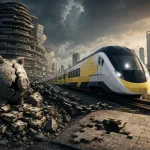
Used to be a Sand Bar that was mostly underwater. Now China uses them to claim area hundred of miles away.
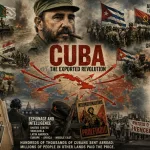
But strip away the moral theater and this isn’t really about Venezuela. It’s about loss. China didn’t just lose a friendly regime; it lost leverage, oil, and face. Roughly $60 billion in oil-backed loans, years of diplomatic courtship, and a strategically placed partner—gone in a weekend. That stings. Especially when the replacement may swing decisively toward Washington, bringing U.S. oil companies closer to roughly 17% of the world’s proven oil reserves.
That’s the part Beijing can’t spin away.
China still runs on oil, no matter how many solar panels it installs or speeches it gives about green transitions. Discount Venezuelan crude—sometimes direct, sometimes sneaking in through back doors—was a pressure valve. Regime change slams that valve shut. And nothing makes a paper dragon angry like watching its energy security get yanked out from under it.
Inside China, the reaction tells an even better story. Nationalist commentators are openly fantasizing about Taiwan, asking whether Venezuela is a “model.” The keyword is fantasizing. Beijing talks tough because talk is cheap. Action is expensive, risky, and irreversible. Taiwan isn’t Caracas, and China knows it. This is less a plan than a stress dream.
And stress is the keyword for 2026.
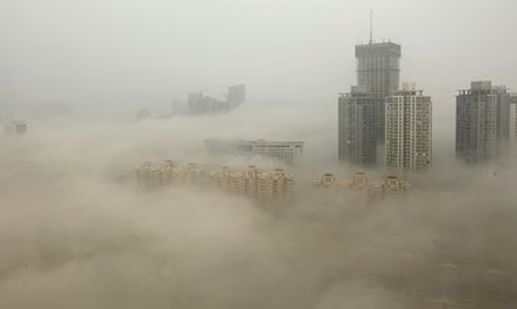
While Beijing is busy condemning Washington, its own house is sagging. The property crisis—now entering its fifth year—has gone from “manageable correction” to “structural rot.” Home prices keep sliding. Confidence is shattered. Developers once treated as untouchable are being fed to creditors like leftovers. Household wealth losses are counted in the tens of trillions. Unsold apartments stretch into the hundreds of millions of square meters, ghost cities waiting for people who can’t afford to exist in them.
Real estate was not just an industry; it was the savings account, the growth engine, and the political glue. When that breaks, everything else starts making strange noises. Banks wobble. Local governments starve. Consumers retreat. Deflation creeps in quietly, like mold behind the walls.
All Empty
So here’s the uncomfortable truth beneath all the shouting: China’s outrage over Venezuela is less about law and more about fear. Fear of losing influence abroad while control at home gets harder. Fear that decades of debt-fueled growth have painted them into a corner with no clean exit. Fear that the world is no longer willing to pretend.
China in 2026 isn’t marching confidently toward dominance. It’s deciding between two bad options: manage a slow internal collapse, or distract the public with an external cold war. History suggests regimes under pressure rarely choose silence.
The irony, of course, is this: the louder Beijing lectures about sovereignty, the more it reveals how fragile its own position has become. Power that is secure doesn’t need to shout. Power that’s nervous always does.
Here’s from the best available, sourced estimate of how much money China has effectively lost or is at risk of losing in Venezuela given the country’s economic collapse and defaults:
1. China’s outstanding loans to Venezuela:
Venezuela currently owes China roughly $59 billion to $60 billion in loans extended since the mid-2000s, making it one of the largest bilateral creditors to Caracas. (Bloomberg Línea)
Independent historical records show over $62 billion in loans and financing flows from China to Venezuela overall (loans + investments) since relations deepened. (Transparencia Venezuela)
2. What’s actually lost vs. owed:
A significant share of Chinese loans were structured as oil-for-loan deals, meaning Venezuela has repaid part of the debt with oil shipments rather than cash. (Transparencia Venezuela)
Because Venezuela’s economy has collapsed and it has long been in default on sovereign obligations, a large portion of that ~$60 billion is likely unrecoverable or severely impaired unless restructured. Analysts estimate that only a fraction of repayment is certain under any realistic scenario.
3. Historical nominal figures (for context):
China extended about $67 billion in financing to Venezuela between 2007 and the late 2010s. (Harvard International Review)
Much of this was repaid in oil, but the underlying debt burden still shows up in official estimates.
Summary:
Total financial exposure: ~$59-60 billion as of the latest available data. (Bloomberg Línea)
Actual cash losses: Not precisely disclosed, but much of that exposure is impaired because Venezuela has defaulted and can only pay in heavily discounted oil or via restructurings that reduce principal.
Some loans have been repaid in kind (oil) and others have been restructured repeatedly, meaning apparent losses may be significantly less than the gross exposure, but the risk of loss remains very high.