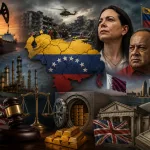
People love tidy villains. They love a single motive. Oil is neat. Oil fits on a protest sign. Oil makes a good chant. But Venezuela didn’t fall apart because someone wanted its oil. It fell apart because a country treated oil like a magic trick instead of a business—and then fired the magicians.
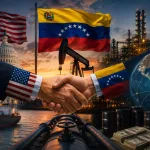
Let’s start with the part nobody argues about: Venezuela has a staggering amount of oil. More than Saudi Arabia, on paper. The catch is that Venezuelan crude is thick, heavy, stubborn stuff—closer to asphalt than gasoline. You don’t just pour it into a refinery and whistle. You need specialized refineries, most of which sit on the U.S. Gulf Coast. This wasn’t an accident; it was a marriage of convenience built over decades.
Back in the 1920s, Venezuela was poor, rural, and agricultural. Coffee and cacao. That was the whole show. American oil companies arrived with engineers, machines, and know-how Venezuela didn’t have. By 1928, the country was exporting oil and cashing checks big enough to make a nation dizzy. For a while, it worked. Too well.
Then came the 1970s. The Arab oil embargo sent prices into the stratosphere, and Venezuela suddenly found itself rich without having to work any harder. That’s when the country learned a dangerous lesson: money can feel like competence. In 1975, Venezuela nationalized its oil industry and created its state oil company. National pride swelled. Cash flooded in. And the quiet assumption settled in that oil would always forgive bad decisions.
It doesn’t.
Here’s the part that gets rewritten for political convenience: the collapse didn’t start with sanctions. It started with purges. Hugo Chávez didn’t “kick out” American oil companies in some dramatic showdown. He kept selling oil to the U.S. because he had to. What he did do was purge the national oil company of professionals—engineers, managers, people who knew which valve to turn and which one not to. They were replaced with loyalists. Loyalty is a fine trait in a dog. In an oil company, it’s a slow leak.
Production fell. Corruption bloomed like algae in warm water. Equipment broke and stayed broken. Refineries idled. By the time Chávez died, the system was already wobbling. His chosen successor inherited a machine with no maintenance manual and a growing pile of IOUs.
By 2017—before the major oil sanctions—most of the oil infrastructure was effectively paralyzed. Production had collapsed to a fraction of capacity. The economy followed it down the stairs, one painful step at a time. When sanctions finally came, they landed on a structure that was already hollow. Sanctions didn’t break the house; they exposed that the beams were rotten.
Now fast-forward to the present chapter—the loud one. After Operation Absolute Resolve, satellite images made the rounds. They showed the destruction of military command centers and air defense systems. The operation was fast, surgical, and overwhelming. The military backbone of the regime didn’t collapse heroically; it folded. Command systems were blinded. Communications went silent. The capture itself took minutes, not days. That wasn’t about oil fields. That was about control.
People say, “They don’t care about the dictator, they want the oil.” If that were true, the solution was sitting right there. The regime offered everything—oil, minerals, even distance from rival powers—in exchange for survival. If oil were the prize, the deal would have been signed before the ink dried. It wasn’t.
Because this wasn’t about barrels. It was about a state that had become a criminal enterprise, surviving on trafficking, corruption, and paralysis, while holding a population hostage with the last scraps of a once-functional economy.
Here’s the uncomfortable truth that never trends: oil doesn’t destroy countries by itself. Bad incentives do. Venezuela treated oil revenue as permanent, expertise as optional, and accountability as negotiable. When the money was flowing, nobody noticed the screws loosening. When the flow slowed, the whole thing rattled apart.
So no—it’s not “all about oil.” Oil is just the mirror. What it reflected was a system that confused wealth with wisdom and power with competence. And oil, like gravity, eventually tells the truth—whether you’re ready to hear it or not.