Think of it as Yoga for the brain, we are going to stretch a bit.
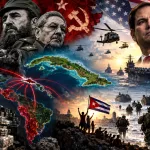
What Happens Next? Venezuela Falls, Cuba Trembles, and the Caribbean Becomes the Chessboard – Is the Snake Dead?
"Maduro Is Gone. The Oil Is Cut. Old Sheriff is back in Town - Now the Hemisphere Has to Decide What It Wants to Be." -- YNOT!
History rarely announces itself with trumpets. More often, it clears its throat, shifts a chair, and waits to see who’s paying attention.
Maduro is gone. Not negotiated away. Not eased out with speeches and promises. Gone—removed like a bad tooth that had already poisoned the jaw. And now the region is doing what it always does after a strongman falls: pausing, blinking, and asking the same nervous question in different accents.
What happens next?
Let’s start with what already happened.
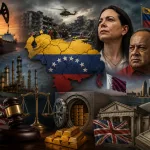
Venezuela didn’t collapse overnight. It was dismantled slowly, the way termites work—quiet, patient, and total. A country sitting on oceans of oil and mountains of gold somehow ended up poor, hungry, and ruled by men who spoke endlessly about justice while stealing everything not nailed down.
Maduro wasn’t just a dictator. He was the cork in the bottle. The moment he was pulled out, pressure began escaping in every direction—political, economic, and psychological. Dictators don’t just rule with force; they rule with myth. The myth is now broken.
And myths, once broken, don’t glue back together.
Now look north, just ninety miles off Florida’s coast.
Cuba.
Cuba has survived for decades not because its system works, but because someone else kept paying the electric bill. First the Soviets. Then Venezuela. Oil flowed one way, repression flowed the other. A tidy little arrangement, if you’re a regime and don’t care much for people.
But here’s the problem: Venezuela’s oil is no longer propping anyone up.
When the oil slows, the lights flicker. When the lights flicker, people talk. When people talk long enough, regimes fall—not with explosions, but with exhaustion. Hunger is persuasive. Darkness even more so.
Cuba today is not strong. It is brittle. A quarter of its population has already voted with their feet or is trying to. That’s not confidence; that’s an evacuation plan.
And then there’s the Caribbean itself—the overlooked middle of the board.
People talk about Venezuela as if it’s the prize. It isn’t. It’s the lever.
The real game is control of the Caribbean Sea. Shipping lanes. Energy routes. Gulf access. Most of America’s imports and exports pass through waters that can be pinched, blocked, or threatened from Cuba. This has been true since the missile crisis and remains true now—just quieter and more technical.
Russia knows it. China knows it. Iran knows it. That’s why they showed up in Venezuela in the first place. Not out of charity. Not out of ideology. Out of positioning.
You don’t park yourself in someone else’s hemisphere unless you plan to matter there.
With Maduro gone, that entire axis loses its anchor. The question is whether the region drifts—or realigns.
This is where Americans tend to get nervous. The word intervention starts floating around. People imagine endless wars, occupations, flags planted in foreign soil. But that’s yesterday’s mistake, not today’s reality.
This wasn’t a war. It was an arrest.
No occupation. No nation-building crusade. No grand speeches about staying forever. Just the removal of a criminal regime and the reopening of a door that had been welded shut.
What happens next shouldn’t be decided by generals or pundits. It should be decided by ballots.
Free elections. Real ones. Not the kind where the winner is announced before breakfast. Venezuela doesn’t need saving—it needs choosing. And if it chooses markets over Marxism, trade over theft, law over loyalty, it will recover faster than almost any country on earth. Resources do that when they’re allowed to work instead of being looted.
Cuba, meanwhile, faces a harsher mirror.
Without Venezuelan oil, without the illusion of invincibility, and without an external benefactor willing to bleed indefinitely, the Cuban regime has a decision to make. Reform—or fracture. History suggests they’ll resist until they can’t.
That’s usually how it ends.
This moment isn’t about empire. It’s about gravity. Weak systems collapse under their own weight when the props are kicked away. Strong ones don’t need force—they just need time.
Maduro was a symptom. Cuba is the test. The Caribbean is the terrain.
And the quiet truth, the one nobody likes to say out loud, is this:
The Western Hemisphere is deciding whether it wants to be a neighborhood—or a battlefield.
History has reached the fork in the road. It has paused, looked both ways, and is waiting to see who has the nerve to choose.
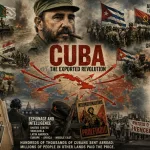
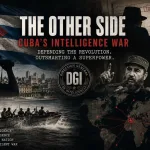
Cuba the Pain in the American Back Yard
Here is a clean, comprehensive, and historically grounded list of countries where Cuba has been militarily involved or has actively meddled in government, insurgencies, intelligence, or political control, followed by brief context for each.
No slogans. No romance. Just the record.
Latin America & the Caribbean
Venezuela
Cuba effectively co-ran the state. Cuban intelligence, military advisers, and internal security forces embedded themselves in Venezuela’s government, military, and police. Oil flowed to Havana; repression flowed back to Caracas.
Nicaragua
Direct support of the Sandinista revolution and later deep intelligence and security cooperation under Daniel Ortega.
Grenada
Cuban military personnel and engineers were present during the Marxist coup. Their presence helped trigger the 1983 U.S. intervention.
El Salvador
Arms, training, and logistical support to Marxist guerrillas during the civil war.
Guatemala
Support for leftist insurgent movements in the 1960s–1980s.
Honduras
Used as a transit and staging area for Cuban-backed revolutionary movements in neighboring states.
Bolivia
Che Guevara’s failed insurgency was Cuban-directed. It ended badly—for him and his movement.
Colombia
Political, logistical, and diplomatic support for FARC and other Marxist insurgents, including safe haven and negotiations hosted in Havana.
Dominican Republic
Early post-revolution attempts at armed intervention and subversion.
Africa (Major Cuban Military Deployments)
Angola
One of Cuba’s largest foreign wars. Over 300,000 Cuban troops rotated through Angola to support the Marxist MPLA government.
Ethiopia
Cuban forces fought alongside the Derg regime in the Ogaden War against Somalia.
Somalia
Indirect involvement opposing Somali forces during the Ogaden conflict.
Mozambique
Military advisers and internal security support to Marxist leadership.
Algeria
Early post-revolution military and intelligence cooperation.
Guinea-Bissau
Support for Marxist liberation movements and post-independence regime security.
Middle East & Eurasia (Strategic Alignment)
Syria
Intelligence cooperation and political alignment with the Assad regime.
Libya
Military cooperation and ideological alignment with Muammar Gaddafi.
Iran
Intelligence, security, and ideological cooperation—particularly anti-U.S. coordination.
Russia (formerly USSR)
Host to Soviet forces during the Cold War; today renewed intelligence and military cooperation.
How Cuba Operates (The Pattern)
Cuba rarely invades outright anymore. That’s expensive.
Instead, it exports four things:
Intelligence officers
Internal security advisers
Political indoctrination
Counter-dissident repression models
It doesn’t conquer countries.
It captures governments from the inside.
The Quiet Conclusion
Cuba is not a small country with big opinions.
It is a small regime with a long memory and a practiced hand at subversion.
It survived not by building prosperity, but by renting itself out as a specialist in control.
And now—without Venezuelan oil, without Soviet money, and with the Caribbean tightening—it faces the one truth it has avoided for sixty years:
You can export revolution for only so long before you run out of fuel.