Think of it as Yoga for the brain, we are going to stretch a bit.
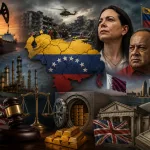
Delcy Rodríguez vs. Cilia Flores: Who Is Worse — and What Comes Next for Venezuela?
It’s hard to tell exactly how the fight started or ended—but for now, it looks like Delcy won. And if that’s true, it only reinforces what many already suspect: she isn’t just dangerous. she is deadly.
Two Faces, One System
History has a funny habit of pretending villains wear horns.
In real life, they wear tailored suits, issue press releases, and speak the language of liberation while emptying the vault behind your back.
Venezuela’s tragedy was never the work of one man. It was a system—lubricated by oil money, enforced by loyalty, and defended by ideology. Nicolás Maduro was the front man. But behind every failing strongman stands a quieter, more important question:
Who actually ran the machine?
Was it Delcy Rodríguez, the operator with her hands on the levers of state power?
Or Cilia Flores, the ideological enforcer—the inner-circle gatekeeper many Venezuelans whisper about but rarely name aloud?
This is not a soap opera.
It is an autopsy.
The Long Road to Collapse (Context Matters)
Hugo Chávez came to power in 1999 through a democratic landslide, riding a populist message that resonated deeply in a country rich in resources yet scarred by inequality. Oil money flooded the state. Institutions weakened. Loyalty replaced competence. Corruption metastasized.
By 2013, Venezuela was 97% dependent on petroleum. The rest of the economy had been hollowed out. Chávez, dying of cancer, chose Nicolás Maduro not for brilliance or leadership, but for loyalty. Venezuelans hoped things could not get worse.
They did.
Maduro proved incapable of governing a complex nation. Shortages exploded. Hyperinflation erased savings. Repression hardened. And slowly, a realization spread inside Venezuela: Maduro was not the brain of the operation.
Cilia Flores — The Inner Sanctum
Cilia Flores was a politician before she was First Lady. In Caracas, she earned a reputation as harder, colder, and more ideological than her husband. While Maduro stumbled through speeches and basic arithmetic, Flores was widely viewed as disciplined, strategic, and ruthless.
To many Venezuelans, she embodied the family-state fusion—where power, ideology, and impunity merged. The conviction of her nephews in the United States on drug-trafficking charges cemented her international notoriety. While those convictions were not hers, politically they became inseparable from her name.
In Venezuela, she was often described as the true believer—the one who did not doubt the revolution even as the country starved.
Delcy Rodríguez — The Operator
Delcy Rodríguez is a different animal.
Where Flores represents ideology and internal control, Rodríguez represents execution. She rose through the regime as a disciplined apparatchik—sanctioned internationally, deeply embedded in the machinery of power, and trusted to keep the system functioning under pressure.
If Flores shaped the worldview, Rodríguez ran the operations.
Today, with Maduro removed and Rodríguez serving as interim leader while liaising with Washington, that distinction matters more than ever. She is not a symbol. She is the person at the controls.
So… Who Is Worse?
That depends on how you define worse.
If worse means direct responsibility for outcomes, then Delcy Rodríguez bears the heavier weight. Operators own results.
If worse means moral architecture and ideological ruthlessness, then Cilia Flores stands out as the conscience—or lack thereof—behind the system.
If worse means what the regime truly was, then the answer is uncomfortable: you cannot separate them.
One enforced belief.
The other enforced reality.
Together, they formed the spine of the regime.
Was Trump Right — and What Comes Next?
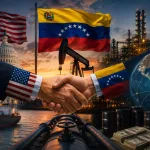
With Maduro gone, the United States now holds unprecedented leverage over Venezuela. Oil, sanctions, diplomacy, and reconstruction are all on the table. But leverage is not liberation.
History is littered with nations that mistook regime disruption for system change.
Six months from now, Venezuela could be:
Negotiating partial normalization while elite networks remain intact
Sliding into nationalist backlash framed as foreign occupation
Or—least likely, but most necessary—opening a genuine path to institutional renewal
Changing Faces Is Not the Same as Changing Fate
Tyrannies rarely collapse all at once.
They shed skin.
Remove the strongman and the system remains. Replace the voice and the script stays the same. Many nations have celebrated too early—only to discover that the prison doors were merely repainted.
So who is worse: Delcy Rodríguez or Cilia Flores?
The operator who keeps the machinery running while the country bleeds quietly?
Or the true believer who believes cruelty is justified so long as the revolution survives?
America now stands at a familiar temptation: confusing leverage with victory.
Venezuela stands at a more dangerous one: believing justice has arrived simply because the faces at the podium have changed.
If Venezuela becomes free, it will not be because one person fell.
It will be because the system that protected them all was dismantled.
History is watching.
And unlike propaganda, it does not forget.