Think of it as Yoga for the brain, we are going to stretch a bit.
Was Che Guevara a Hero of the Poor— or the Most Successful Revolutionary Brand Ever Sold?
Che Guevara was a rich kid turned executioner, rebranded as a hero by distance and time. Che was the original socialist influencer and 60 years later his T-shirts outsell the Nike Swoosh.” -- YNOT!
The face on the T-shirt is clean, defiant, and timeless. The man behind it was anything but.
Ernesto “Che” Guevara has been frozen in pop culture as a rebel saint—doctor, poet, freedom fighter, martyr. The trouble is, that version of Che exists mostly in posters, dorm rooms, and marketing decks. The real Che lived in prisons, firing ranges, labor camps, and mass graves. And the difference between the two tells you more about how revolutions market themselves than how they actually work.
Let’s start at the beginning—because childhood matters, even for icons.
Che was born in 1928 in Rosario, Argentina, into a relatively privileged, educated family. He wasn’t poor. He wasn’t oppressed. He read constantly, argued obsessively, and suffered from severe asthma, which gave him a lifelong relationship with pain and endurance. His early journals show empathy—but also contempt. He didn’t just want to help the poor; he despised weakness. Suffering, in his mind, was something to be overcome or purged, not necessarily relieved.
Medical school didn’t soften him. His famous motorcycle journey across Latin America didn’t turn him into a humanitarian—it radicalized him. He saw inequality and concluded that compassion was insufficient. What was needed, he believed, was violence applied scientifically. By the time he met Fidel Castro in Mexico, Che was already convinced that executions were not tragic necessities, but moral tools.
That belief didn’t stay theoretical for long.
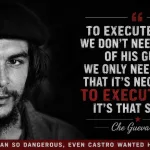
After the Cuban Revolution, Che was placed in charge of La Cabaña prison. This is where the mythology and the record part ways. Che personally oversaw firing squads. He signed execution orders. He bragged about it in letters. Trials were often summary. Evidence was thin. Guilt was assumed. Estimates vary, but hundreds were executed under his authority—some historians argue more. Che didn’t deny it. He defended it. “To send men to the firing squad,” he wrote, “judicial proof is unnecessary.”
This is the part you don’t see on the shirts.
As Minister of Industries and head of the National Bank—yes, a man who hated money signed Cuba’s currency “Che”—his economic experiments were catastrophic. He rejected incentives, dismissed expertise, and believed ideology could replace competence. Productivity collapsed. Skilled workers fled. Rationing spread. Che blamed human nature. When people failed to meet quotas, he called them morally defective.
Labor camps followed. Forced labor for dissidents, homosexuals, religious believers, artists, and anyone deemed insufficiently revolutionary. Che defended this too. Re-education, he said, required suffering. The revolution needed “new men,” and old ones could be broken or discarded.
So why did he leave Cuba?
Here is the part most people don’t know.
Fidel Castro wanted Che gone.
By the mid-1960s, Che was a liability. Too radical for Moscow. Too critical of the Soviets. Too admired by true believers. Too unpredictable. Fidel, for all his rhetoric, was a pragmatist. He wanted power, stability, and survival. Che wanted endless revolution. Those two paths don’t run together for long.
So Fidel did what skilled rulers do. He praised Che publicly, encouraged him privately to export revolution, and quietly made sure the right people knew where Che was going. Bolivia wasn’t destiny—it was a suggestion. And intelligence leaks are a language all their own.
Che entered Bolivia isolated, unsupported, and exposed. The CIA knew. The Bolivian army knew. His guerrilla fantasy collapsed into hunger, betrayal, and radio silence. When he was captured in 1967, his final words weren’t heroic slogans. They were practical. He asked to live. He didn’t.
Castro mourned him loudly. The problem had solved itself.
And before Che, there was Camilo Cienfuegos—the man who truly frightened Fidel. Charismatic, loved by the troops, independent. The kind of leader soldiers follow without needing speeches. When Camilo’s plane vanished in 1959, there was no wreckage, no bodies, no convincing explanation. Another rival removed. Revolutions speak of brotherhood; power prefers solitude.
So where does that leave Che’s “benefits to humanity”?
To be fair—because honesty demands it—Che inspired resistance movements worldwide. He gave language to anti-imperial anger. He helped topple a corrupt dictatorship in Cuba. He embodied sacrifice in a way that moved millions. His critique of exploitation resonated—and still does—especially in places where elites remain untouched by consequences.
But inspiration without results is theater. And revolution without restraint is slaughter.
The uncomfortable truth is this: Che was not a freedom fighter who lost his way. He was a true believer who followed his beliefs to their logical conclusion. And that conclusion included executions, camps, and economic ruin. He failed not because he wasn’t committed—but because he was too committed to an idea that treated human beings as raw material.
What people think they know about Che is wrong because they confuse symbolism with outcomes. A photograph is not a record. A slogan is not a balance sheet. And a man who dies young is easy to forgive—especially when he leaves behind a face that fits on a poster.
Che Guevara didn’t die for the poor. He died because revolutions eventually devour the men who believe in them too purely. And the greatest trick of the 20th century wasn’t capitalism or communism—it was convincing the world that a man who loved firing squads became a global icon of compassion.
That’s not history rewritten. That’s history remembered without filters.