Think of it as Yoga for the brain, we are going to stretch a bit.
A Conversation somewhere between Ronald Reagan, José Martí, and Fidel Castro
I cleaned only the duplicated and out-of-order sections from your pasted draft, keeping the same story, tone, and argument.
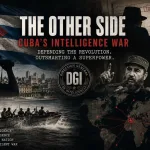
Somewhere beyond time, in a quiet room with no guards, no microphones, and no revolutionary slogans painted on the walls, three men sat across from one another.
Ronald Reagan sat upright, calm but firm, with that old actor’s stillness that made silence feel like a speech waiting to happen.
José Martí sat beside him, thinner, sharper, his eyes full of both poetry and pain. He looked like a man who had carried a country inside his chest and never once put it down.
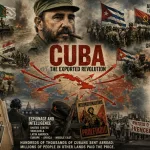
Across from them sat Fidel Castro, dressed in olive green, his beard gray, his face heavy with the confidence of a man who had spent his life explaining why other people had to suffer for history.
Martí spoke first. “Tell me, Fidel,” he said, “what became of the Cuba I dreamed of?”
Fidel leaned back. “We saved her from imperialism.”
Reagan raised an eyebrow. “Saved her? That’s an interesting word.”
Martí’s voice remained soft. “I dreamed of a republic with dignity. A nation where men could speak, worship, work, organize, argue, and build their own lives. I did not die so one flag could replace another prison.”
“I have been watching Cuba,” Martí said.
Fidel lifted his chin. “Then you have seen what we built. You have seen unity.”
Martí did not answer right away. He walked slowly to the table and sat down. His voice was soft, but it carried more weight than shouting. “I have seen men afraid to speak.”
Fidel’s expression hardened. “You have seen discipline.”
“I have seen churches watched,” Martí said. “I have seen young people told what profession they must serve, where they may go, what future they are allowed to have.”
“You have seen protection against foreign influence,” Fidel said.
Marti “I have seen workers forbidden to organize freely.”
Fidel’s eyes narrowed. “You speak like a poet. I governed a real country. Cuba needed discipline. Unity. Sacrifice.”
Reagan leaned forward. “Freedom always sounds messy to men who want control. That’s why tyrants call liberty dangerous. They say the people are not ready. They say dissent is treason. They say religion is a threat. They say unions, clubs, newspapers, and private voices must all be approved by the state.”
Fidel scoffed. “Liberty. Always liberty. A beautiful word used by empires.”
Martí’s eyes sharpened. “No, Fidel. Liberty is not an imperial word. It is a human word.”
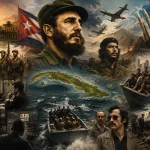
Outside the window, the island seemed to breathe. Havana’s old buildings stood in faded color. The countryside stretched green and worn. The sea rolled against the shore like history refusing to be silent.
Martí placed his hand on the table. “I did not dream of Cuba merely changing masters. I did not die so one tyrant could be replaced by a committee, one dictator by a party, one plantation by a state.”
Fidel’s voice rose. “You compare me to Batista?”
Martí looked at him with sadness. “I compare any man to tyranny when he tells the people they are not allowed to be free.”
Reagan leaned back. “That’s the part dictators never understand. Freedom is not proven by how loudly a government talks about the poor. Freedom is proven by whether the poor can criticize the government and go home safely afterward.”
Fidel slammed his palm against the table. “You both speak as if Cuba existed in a vacuum. Batista sold Cuba. The Americans controlled it. The rich owned it. The peasants suffered. We gave the people dignity.”
“Dignity?” Martí asked.
Marti voice was no longer soft. “Can a Cuban today form a political club without government permission?”
Fidel said nothing.
Marti “Can he publish a newspaper that disagrees with the state?”
Silence.
Marti “Can he watch independent television?”
Silence.
Marti “Can he browse the internet without censorship?”
Fidel looked away.
Marti “Can he move freely inside his own country without asking permission from bureaucrats?”
Fidel’s jaw tightened.
Marti “Can a doctor, an engineer, a professional, leave the island freely if his conscience calls him elsewhere?”
Still nothing.
Martí stood. “Then do not call it dignity.”
Reagan nodded. “A prison with free slogans is still a prison.”
Fidel rose from his chair now, his old fire returning.
Fidel “You are both sentimental fools. You think nations are built on pretty speeches. I built hospitals. Schools. Armies. I stood up to the United States. I gave Cuba pride.”
Martí stepped closer to him. “No, Fidel. You confused pride with obedience.”
Reagan’s voice became firmer. “You built a system where the state became God, employer, landlord, teacher, censor, and judge. And then you called that liberation.”
Fidel pointed toward Reagan. “You have no right to speak of Cuba. You were the enemy.”
Reagan did not flinch. “I was the enemy of communism, yes. But this conversation is not about me. It is about the Cuban mother who cannot protest. The Cuban worker who cannot organize. The Cuban believer who cannot worship without suspicion. The Cuban child who is told his life belongs to the revolution before it belongs to himself.”
Martí turned again to the window. Below them, he could see children in uniforms walking through streets where the paint had peeled from the walls. He could see families waiting in lines. He could see old men whispering politics only behind closed doors. He could see young people staring at the sea, not because it was beautiful, but because it was an exit.
Then Martí whispered: “The saddest prison is the one built in the name of the poor.”
Fidel’s face changed.
For a moment, just a moment, the revolutionary vanished. The commander vanished. The speeches vanished. There was only an old man who had won power and lost the soul of the thing he claimed to love.
“I protected Cuba,” Fidel said, quieter now.
Martí turned back. “No. You protected your revolution from Cuba.”
The words hung in the air.
Reagan stood and walked beside Martí. “There comes a time when a government must be judged by a simple question,” Reagan said. “Does it fear its own people?”
Martí nodded. “And if it fears them, then it does not represent them.”
Fidel sat down again. He looked smaller now. “You think freedom would save Cuba?”
Martí answered immediately. “No. Freedom does not save a nation overnight. Freedom is difficult. It is noisy. It is full of disagreement, mistakes, ambition, pride, and conflict.”
Reagan smiled faintly. “That’s democracy.”
Martí continued. “But freedom gives a people the right to correct themselves. Tyranny only gives them the right to endure.”
Fidel stared at the table. “And what of the revolution?”
Martí’s face hardened. “A revolution that cannot tolerate a free citizen has become the very thing it claimed to destroy.”
Outside the window, the Cuban flag moved in the wind.
Martí walked toward it as if he could step through the glass and return to the island. He placed his hand against the window. “I wanted a Cuba where no man had to kneel to Spain, to America, to Batista, to Moscow, to a party, or to a bearded commander. I wanted a Cuba where the farmer, the priest, the teacher, the worker, the poet, the merchant, and the child could all say: this country is mine too.”
Reagan joined him. “That’s the real test. Not whether the government says the people are free. Whether the people can say the government is wrong.”
Fidel remained seated. For once, he had no speech long enough to escape the truth.
Martí looked back at him one final time. “You took the language of justice and used it to build a cage. You took the hunger of the poor and used it to excuse the hunger of the whole nation. You took Cuba’s pain and made yourself its owner.”
The room began to fade.
The table disappeared first.
Then the chairs.
Then the window.
But Martí’s voice remained. “One day Cuba will belong again to Cubans. Not to exiles alone. Not to generals. Not to parties. Not to foreign powers. Not to ghosts. To Cubans.”
Reagan’s voice followed. “And when that day comes, no censor, no prison, no secret police, no propaganda, and no fear will be enough to stop it.”
Fidel said nothing.
Far below, the island waited.
Waiting for the day when a church bell could ring without suspicion.
Waiting for the day when a worker could organize without fear.
Waiting for the day when a student could choose his own future.
Waiting for the day when a citizen could speak in the open air and not lower his voice.
Waiting for the day when Cuba would no longer be treated like property of the state.