Think of it as Yoga for the brain, we are going to stretch a bit.
Twenty Years of the Secret CIA War for Cuba 1959–1980
A Timeline From Castro's Revolution to the CIA, the Exile Armies and the Underground War, 1959–1980
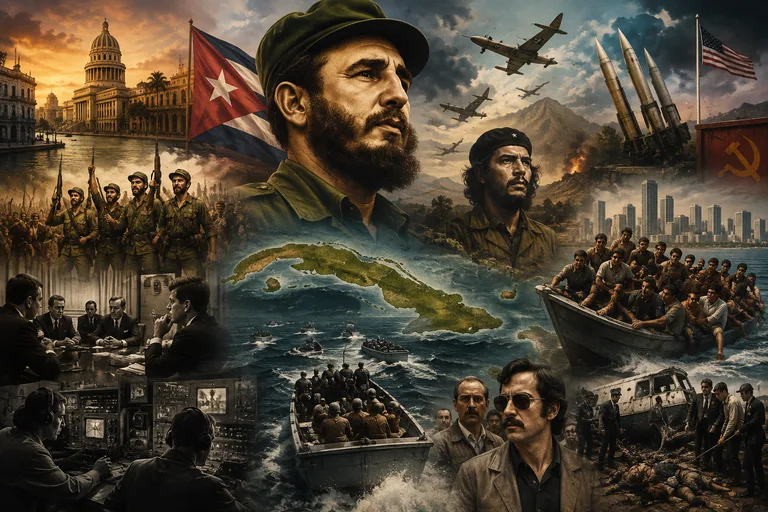
When Fidel Castro entered Havana in January 1959, almost nobody could have predicted that the Cuban Revolution would produce a secret war lasting decades. Within two years, Cuban exiles would be training under the CIA. Within three, American intelligence officers would be planning sabotage and resistance operations against the new Cuban government. Within four, independent exile commandos would be attacking Cuba from small boats. Within eight, a Cuban exile working alongside the CIA would stand in a Bolivian schoolhouse with Che Guevara shortly before Che was executed. Within thirteen, veterans of the Cuban covert-action world would reappear in Watergate.
And by the late 1970s, some militant exile organizations were conducting bombings and assassinations that the FBI treated as terrorism. The conflict evolved continuously. What began as an attempt to reverse the Cuban Revolution became an invasion.
The invasion became a covert war. The covert war became an exile war.
And eventually the exile war fragmented into politics, intelligence, militancy, terrorism and memory. This is how it happened.
1959 The Revolution Wins
January 1, 1959
Fulgencio Batista flees Cuba. Fidel Castro’s revolutionary forces enter the cities and take control of the country. Castro had not presented his movement simply as a communist revolution.
It included liberals, nationalists, students, reformers, socialists, workers, middle-class professionals and people united primarily by opposition to Batista. That coalition would not survive victory.
Many of the people who later became Castro’s enemies had themselves participated in the revolution. This point is essential. The anti-Castro movement was never merely a Batista restoration movement.
Some of Castro’s future enemies had helped put him in power.
January–February 1959
The revolutionary government begins restructuring Cuba.
Executions of officials associated with Batista become highly controversial.
Property confiscations and political consolidation begin transforming Cuban society.
The revolutionary coalition starts breaking apart.
José Miró Cardona briefly becomes prime minister. He resigns.
Fidel Castro assumes the office. It is an early sign of where power is concentrating.
Throughout 1959
Cubans opposed to the direction of the revolution begin leaving the country.
Florida—particularly Miami—becomes the natural destination.
At first many believe their exile will be temporary. They expect Castro to fall.
Some keep the keys to their houses. Others leave businesses behind.
Families separate. The first pieces of what would become the enormous Cuban exile community are now assembling ninety miles from the island.
1960 Washington Enters the War
The relationship between Castro and Washington deteriorates rapidly.
Cuba draws increasingly close to the Soviet Union.
American-owned businesses are nationalized.
The Cold War has arrived in the Caribbean.
March 17, 1960
President Dwight Eisenhower approves a CIA covert-action program directed against Castro’s government.
The strategy is remarkably ambitious.
It calls for:
a unified Cuban opposition outside Cuba,
propaganda,
a clandestine intelligence and action network inside the island,
and a paramilitary capability capable of eventually moving against Castro.
This is the beginning of the institutional American secret war.
Spring 1960 -The CIA Starts Recruiting Cubans
CIA officers travel to South Florida looking for Cuban exiles willing to fight.
The Agency works with exile political factions and begins assembling what becomes the:
Frente Revolucionario Democrático — FRD.
The goal is to create a Cuban political organization that can publicly represent opposition to Castro.
Behind it, however, the CIA is building something more dangerous.
An army.
May 1960 -The FRD Takes Shape
The Democratic Revolutionary Front becomes the principal early political umbrella for the American-backed exile movement.
The CIA deals with its leaders through covert arrangements, including Americans operating under commercial-style cover.
Washington wants the opposition to appear Cuban rather than American.
That requirement becomes central to everything that follows.
1960 -Brigade 2506 Is Born
The CIA begins recruiting Cuban exiles for paramilitary training.
Approximately 1,400 men eventually become Brigade 2506.
They are trained in weapons, infantry tactics, navigation, amphibious warfare, guerrilla operations and parachuting.
Training occurs at locations including Useppa Island in Florida and facilities in Guatemala.
The CIA itself now acknowledges openly that it recruited the exile force with a multimillion-dollar covert-action budget.
The operation is no longer merely political opposition.
Washington is preparing Cubans for war.
1961 -Diplomatic Relations Collapse
January 3, 1961
The United States breaks diplomatic relations with Cuba.
The conflict is now unmistakable.
President John F. Kennedy takes office only weeks later and inherits the invasion plan developed under Eisenhower.
He must decide whether to proceed.
He does.
March 1961 – The Cuban Revolutionary Council
The United States pushes competing exile factions toward greater political unity.
The Cuban Revolutionary Council is formed under José Miró Cardona.
Its members include major exile political figures with different ideological backgrounds.
The Council is intended to present a credible Cuban political alternative to Castro.
If the invasion succeeds, it may provide the nucleus of a new Cuban government.
The structure is now essentially:
CIA > Cuban exile political leadership > Brigade 2506 > Cuba
The Americans provide the machinery. Cubans are expected to provide the public face and the fighting force.
The aircraft are disguised to support a cover story that they are Cuban government pilots who have defected.
The operation is supposed to destroy Castro’s air power before the invasion.
It fails to destroy enough aircraft. That will become disastrous.
April 17, 1961 – The Bay of Pigs
Brigade 2506 lands on Cuba’s southern coast at the Bay of Pigs.
The invasion is underway. The plan depends upon several assumptions:
The Brigade can establish a beachhead. Castro’s air force can be neutralized.
Resistance inside Cuba will emerge. The population may rise against Castro. A provisional exile government may eventually be introduced.
None develops as hoped. Castro responds quickly.
His remaining aircraft attack the invasion fleet.
Supplies are lost. The expected nationwide uprising does not occur.
Kennedy refuses to convert the operation into an open American military invasion.
The brigade becomes trapped.
The CIA describes more than a thousand exiles storming the beaches in an attempt to ignite an uprising; the State Department’s historical record describes the operation explicitly as a CIA-planned, CIA-funded invasion using Brigade 2506.
April 19, 1961 – The Invasion Collapses
After roughly three days of fighting, organized resistance at the beachhead collapses.
Most surviving Brigade members are captured. Some are killed.
American pilots covertly involved in the operation also die.
Four American airmen later receive the CIA’s Distinguished Intelligence Cross for missions flown during the battle.
The operation is an international humiliation for the United States.
For the exile community, it becomes something deeper.
A betrayal. Many brigade veterans believe Washington allowed them to land and then abandoned them.
That belief shapes Cuban-American politics for generations.
1961 – Kennedy Decides the War Is Not Over
The Bay of Pigs fails. But the objective of removing Castro does not disappear.
Kennedy orders a review. The conclusion is not: Stop. It is essentially: Try differently.
November 1961 – Operation Mongoose
The Kennedy administration authorizes a new covert campaign.
Its codename is: Operation Mongoose.
The program goes considerably beyond preparing another invasion.
It includes:propaganda, intelligence collection, political action, economic pressure, sabotage, support for internal resistance, and planning for a potential uprising against Castro.
Operation Mongoose is overseen at senior levels of the Kennedy administration and coordinated operationally by General Edward Lansdale.
The State Department’s historical record describes it as the direct successor to the failed Bay of Pigs strategy.
1962 -The Secret War Becomes Enormous
Inside the CIA, the Cuba campaign is concentrated substantially in: Task Force W.
William K. Harvey becomes its best-known chief. In Miami, the massive CIA station known as: JMWAVE becomes the operational center of the war.
The Miami exile community is now intertwined with an enormous American intelligence operation.
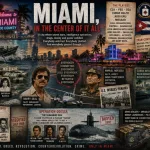
Miami, 1962 – The Other City
The visible Miami contains: restaurants, hotels, new neighborhoods, refugee families, businesses, and people rebuilding their lives.
The invisible Miami contains: CIA case officers, safe houses, weapons, boats, radio operators, agents, informants, front companies, training facilities, and plans for Cuba.
The two cities coexist. Sometimes the people living in one do not know that the other exists.
1962 – Refugees Become Intelligence Sources
Every Cuban arriving in Florida potentially possesses information.
Where are Soviet military personnel?
Where are Cuban units stationed?
What factories are operating?
What is happening inside government ministries?
Who has disappeared?
Who has been promoted?
Where are missiles or aircraft being moved?
The refugee community becomes an enormous intelligence reservoir.
Washington is simultaneously receiving refugees from Castro’s Cuba and mining that refugee population for intelligence about Castro’s Cuba.
1962 – The Assassination Question
Operation Mongoose and related CIA programs include discussions and schemes aimed at eliminating Castro and other senior Cuban leaders.
Some concepts are bizarre. Others are deadly serious.
The historical record eventually reveals attempts to use organized-crime figures and Cuban insiders. Removing Castro physically becomes one possible route to regime change.
The secret war has moved far beyond propaganda leaflets.
October 1962 – The Cuban Missile Crisis
Then everything changes. American U-2 reconnaissance photographs reveal Soviet nuclear missile installations under construction in Cuba.
Washington concludes that Moscow is placing nuclear weapons ninety miles from Florida.
Kennedy announces a naval quarantine. For thirteen days, the United States and Soviet Union move terrifyingly close to nuclear war.
The State Department records that Soviet Premier Nikita Khrushchev and Castro had secretly agreed earlier in 1962 to deploy Soviet nuclear missiles to deter another invasion. U.S. reconnaissance photographed the missile sites on October 14.
The shadow of the Bay of Pigs hangs directly over the crisis.
Castro has reason to fear another American invasion.
Khrushchev sees an opportunity to protect Cuba and alter the strategic nuclear balance.
October 28, 1962 – The Crisis Ends
Khrushchev agrees to withdraw the Soviet missiles. The United States publicly commits not to invade Cuba and secretly agrees to remove Jupiter missiles from Turkey.
Castro remains in power. And exile strategy now confronts an enormous new problem.
A Cuban exile raid is no longer merely a Cuban exile raid.
If Soviet personnel are killed, Moscow might become involved.
A handful of men aboard a fast boat could potentially trigger an international crisis.
Washington becomes increasingly determined to control unauthorized operations.
1963 – The Exiles Begin Fighting Their Own War
This is the major transition. The CIA remains deeply involved in operations against Castro.
But some Cuban militants are no longer willing to wait for Washington.
Organizations such as: Alpha 66 and Second National Front of the Escambray conduct their own operations.
March 1963
Alpha 66 Raids Cuba
Alpha 66 and allied militants attack targets around Cuba.
One operation involves firing upon Soviet-associated shipping.
Washington is furious. Think about the contradiction.
The United States government is secretly conducting covert operations against Castro.
At the same time, it is publicly and privately attempting to stop Cuban exiles from conducting unauthorized covert operations against Castro.
The contradiction disappears once we identify the real issue: control.
Washington wants operations it can manage. The exiles want Castro removed.
Those objectives are no longer identical.
1963 – Kennedy and the Exiles Drift Apart
Exile leaders become increasingly frustrated. José Miró Cardona resigns from leadership of the Cuban Revolutionary Council.
The idea of a united exile political government supported by Washington begins collapsing. Cuban militants increasingly conclude that the United States may never again make a serious attempt to overthrow Castro.
For many, the emotional lesson of Bay of Pigs is reinforced:
America will help us only until helping us becomes inconvenient.
November 22, 1963 – Kennedy Is Assassinated
President John F. Kennedy is murdered in Dallas.
Lee Harvey Oswald is arrested. Within days, Oswald himself is murdered by Jack Ruby.
Almost immediately, connections between Oswald and the Cuban political world begin attracting attention. Oswald had distributed pro-Castro literature.
He had attempted to travel through Mexico to Cuba.
He had clashed publicly with members of the anti-Castro Directorio Revolucionario Estudiantil — DRE in New Orleans.
These facts later produce an enormous body of conspiracy literature.
Some names from the CIA’s Cuba operations also appear repeatedly in assassination investigations and theories.
But an important rule must be maintained: Overlap is not proof.
Cuban exile organizations were politically active across the United States.
The CIA was conducting extensive Cuba operations.
Oswald publicly involved himself with Cuban political issues.
Those connections deserve investigation.
They do not automatically establish a conspiracy.
1964 – The Autonomous Strategy
Washington experiments with supporting exile organizations that are supposed to exercise greater independence.
Manuel Artime and Manuel Ray receive forms of covert financial and technical assistance.
The theory is attractive. Let Cubans run Cuban organizations.
Maintain enough American support to make operations possible.
Keep enough distance to preserve deniability.
In practice, “autonomy” remains ambiguous.
If Washington supplies the money, boats or communications, how independent is the organization?
Nobody ever develops a completely satisfactory answer.
December 1964 Che Guevara Comes to New York
Che Guevara addresses the United Nations. Outside, Cuban exile opposition is intense.
The political war surrounding Cuba has become international.
One of the most extraordinary incidents of the era occurs when Cuban exile militants fire a weapon toward the United Nations complex while Che is speaking.
It misses. The incident shows how far the Cuban conflict has traveled.
The revolution is no longer contained within Cuba.
Vietnam increasingly dominates American foreign policy.
The giant anti-Castro machinery of the early Kennedy period gradually diminishes.
Castro remains in power. But the men trained during the earlier covert war remain active.
Some join American institutions. Some enter foreign intelligence services.
Some continue exile politics. Others continue clandestine operations.
The structure is weakening. The network survives.
1966 – Rolando Cubela Goes on Trial
Rolando Cubela Secades is arrested and prosecuted in Cuba for plotting against Castro.
Cubela is particularly important because he had been inside the revolutionary establishment.
The CIA had maintained contact with him while exploring whether Castro could be eliminated from inside his own government.
The dream of an internal coup also fails. Castro survives again.
1967 – Che Goes to Bolivia
Che Guevara attempts to export revolution into Bolivia.
The United States assists Bolivia’s counterinsurgency effort.
A special Bolivian Ranger battalion receives American training and equipment, and CIA-linked personnel provide intelligence and technical assistance.
Among the Cuban exiles assisting the effort is: Félix Rodríguez.
The secret Cuban war has now moved into South America.
October 8, 1967 – Che Is Captured
Bolivian troops capture Guevara near La Higuera. Some say Castro himself told them where Che was since he want Che out of the way.
He is taken to a small schoolhouse. Félix Rodríguez gains access to him.
The two speak. The symbolism is extraordinary.
One man helped export Castro’s revolution.
The other emerged from the exile movement created to destroy it.
October 9, 1967 – Che Guevara Is Executed
The Bolivian authorities order Che killed.
CIA-linked personnel reportedly attempt unsuccessfully to prevent the immediate execution because Washington would have preferred interrogation.
Official American records confirm both the capture and the subsequent execution.
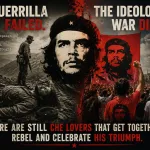
Che is thirty-nine years old. His death becomes an international revolutionary icon. Millions of T-Shits printed.
For anti-Castro exiles, it represents something else: one of the most important leaders of Castro’s revolutionary project is gone.
1968 – Orlando Bosch and the Increasingly Independent Militant War
Orlando Bosch and other exile militants continue attacking targets associated with Cuba or countries trading with Cuba.
In September 1968 a Polish ship in Miami is attacked with a recoilless weapon.
Bosch is arrested and eventually imprisoned. By now American law enforcement is increasingly dealing with anti-Castro militants not as covert allies but as criminal defendants.
That transformation is one of the defining features of the 1960s.
1969–1970 – The CIA War Becomes the Exile War
Richard Nixon enters the White House. American hostility toward Castro remains.
But the organizational relationship with exile militancy has fundamentally changed.
Alpha 66 continues attempting operations.
A 1970 National Security Council memorandum characterizes one Alpha 66 infiltration attempt as spontaneous rather than U.S.-sponsored.
The distinction is now official: The exiles are still fighting. Washington is no longer necessarily directing them.
1971 – The Networks Remain
By now, many of the individuals trained or recruited during the early 1960s have moved into completely different lives.
Yet they still know one another. Former CIA personnel know former Cuban operatives.
Former brigade members know boat captains. Businessmen know political organizers.
Intelligence contacts survive. This network will unexpectedly reappear in American domestic politics.
June 17, 1972 – Watergate
Five men are arrested inside the Democratic National Committee headquarters in Washington’s Watergate complex.
Among them are Cuban veterans connected with the old anti-Castro world.
Bernard Barker., Eugenio Martínez., Virgilio González. ,Frank Sturgis.
E. Howard Hunt, the former CIA officer involved in earlier Cuban political operations, is connected to the burglary team.
The significance is enormous but often misunderstood.
Watergate was not another Bay of Pigs operation. It was not an invasion of Cuba.
What survived was the personnel network.
People who had learned clandestine operations during the Cuban struggle were available years later for another secret political operation.
The secret war had created a human infrastructure that outlived the mission for which it was originally created.
1972 – Washington’s Position Has Reversed
By the early 1970s, U.S. assessments state that Cuban exile organizations are no longer receiving the type of government support characteristic of the early 1960s.
American authorities now attempt to prevent unauthorized military expeditions from departing U.S. territory.
Consider what has happened in only eleven years.
1961: The United States launches Cuban exiles toward Cuba.
1972: The United States tries to stop Cuban exiles from launching themselves toward Cuba.
Washington has changed. The exiles have not necessarily changed with it.
1973–1974 – The War Becomes More Fragmented
Castro remains firmly in power. A new generation of Cuban exiles is growing up in the United States.
The possibility of another American-sponsored invasion looks increasingly remote.
Some militants conclude that only independent action remains.
The operational structure becomes smaller and more secretive.
September 11, 1974 -Omega 7 Is Formed
Eduardo Arocena forms Omega 7 from a small group of anti-Castro militants, drawing in part from established exile factions in the New York-New Jersey area.
The organization never needs an army. It needs only a handful of dedicated people.
That itself tells us how much the war has changed.
Brigade 2506 required approximately 1,400 men.
Omega 7 reportedly operated with fewer than twenty.
Its weapons are not landing craft and bombers. They are bombs, pistols and clandestine cells.
The FBI later identifies Omega 7 as one of the prominent domestic terrorist threats of the 1970s and 1980s.
1975 – A Different Kind of Battlefield
Omega 7 begins claiming bomb attacks.
Its targets include institutions and governments seen as accommodating Castro.
The battlefield is no longer primarily Cuba.
It is: New York. New Jersey. Miami. Diplomatic missions. Businesses. Individuals.
The counterrevolution has moved into American cities.
1976 – CORU Is Created
Several militant Cuban exile organizations attempt to coordinate their efforts through:
Coordinación de Organizaciones Revolucionarias Unidas — CORU.
Orlando Bosch becomes a central figure.
This coalition represents almost the opposite of the Cuban Revolutionary Council created fifteen years earlier.
The 1961 Council was organized under heavy American influence.
CORU is built by militants attempting to coordinate themselves.
Some participants have historical relationships with American intelligence.
But that does not make CORU a CIA organization. That distinction is essential.
October 6, 1976 – Cubana Flight 455
A Cubana de Aviación DC-8 departs Barbados. Bombs explode aboard the aircraft.
The plane crashes. All seventy-three people aboard die.
It becomes the deadliest event associated with the militant anti-Castro exile struggle.
Venezuelan authorities arrest suspects. Luis Posada Carriles and Orlando Bosch become central figures in the investigations and long-running legal controversy.
The event marks a moral turning point. Whatever political justification someone may attach to armed resistance against a government, the destruction of a civilian airliner forces a completely different question.
Where does resistance end? Where does terrorism begin?
And can hatred of a dictatorship justify killing people who are not fighting you?
1976 – Washington Faces the Consequences of Its Own History
American officials confront a difficult problem.
Some suspects in the new militant world have documented earlier relationships with American intelligence.
That makes American denials of involvement difficult for Havana to believe.
The United States has created a problem common to covert warfare: You may stop employing an operative. You cannot erase the fact that you once employed him.**
The shadow of the CIA follows some exile militants long after their formal relationships with the Agency have ended.
1977 – Carter Changes the Atmosphere
Jimmy Carter enters the White House.
The administration seeks a degree of accommodation with Cuba and opens Interests Sections in Havana and Washington.
For militant anti-Castro organizations, this is another sign that Washington is abandoning the objective of overthrowing Castro.
The political exile community increasingly channels its influence into American elections and lobbying.
The militant fringe continues independently. The two paths are separating.
1978 – The Underground War Continues
Bombings and attacks associated with militant exile organizations continue.
Federal investigators devote increasing attention to groups such as Omega 7.
American intelligence agencies that once helped organize anti-Castro covert warfare are no longer the principal American institutions dealing with these groups.
The FBI and federal prosecutors increasingly are.
That says almost everything about how the war has evolved.
1979 – Castro Comes to New York
Fidel Castro visits New York to address the United Nations.
For militants, his presence creates an irresistible target.
Plots and threats surround the visit. Federal authorities protect the same man whom American intelligence had once considered removing from power by covert action.
Again, the historical irony is extraordinary. The United States once organized secret operations against Castro.
Now American law enforcement has a duty to protect him while he stands on American soil.
1980 – Omega 7 Escalates
Omega 7 conducts a series of violent operations.
FBI records for 1980 attribute multiple bombings and attempted bombings to the organization, including incidents in New York, Miami and Puerto Rico.
By now, the institutional connection to the American-sponsored anti-Castro war of 1961 is almost completely gone.
But the historical lineage remains. The same central grievance survives: Castro is still there.
April 1980 – The Mariel Boatlift
Thousands of Cubans crowd into the Peruvian Embassy in Havana seeking asylum.
Castro announces that Cubans wishing to leave can depart through the port of Mariel.
Boats begin crossing from Florida. More than 100,000 Cubans eventually arrive in the United States during the Mariel Boatlift.
The FBI’s Miami history describes the exodus as bringing more than 100,000 Cuban refugees to the United States between April and October 1980.
Twenty-one years after Castro takes power, Cubans are still fleeing the Revolution.
But something has fundamentally changed.
In 1961, boats traveled south carrying men who intended to invade Cuba.
In 1980, boats travel north carrying people trying to leave it.
The Twenty-Year Transformation
The entire period can be understood as five different wars.
1959–1960 The Political War
Cubans argue over what the Revolution will become.
Opponents begin going into exile.
Washington begins organizing them.
1960–1961 The Invasion War
The CIA creates Brigade 2506.
The objective is direct:
return armed Cuban exiles to the island and overthrow Castro.
It ends at the Bay of Pigs.
1961–1963 The CIA Secret War
Operation Mongoose.
Task Force W.
JMWAVE.
Sabotage.
Intelligence networks.
Propaganda.
Assassination plotting.
Resistance operations.
This is the high-water mark of American covert action against Castro.
1963–Early 1970s The Independent Exile War
Alpha 66.
Second Front of the Escambray.
Autonomous organizations.
Small maritime raids.
Former CIA-trained operatives working elsewhere in Latin America.
The CIA’s direct role declines.
The exile network survives.
Mid-1970s–1980 The Militant Underground War
CORU. Omega 7. Bombings. Assassinations. International attacks. FBI investigations.
The remaining militant struggle becomes increasingly detached from official American policy. Some of it crosses unequivocally into terrorism.
Watch the Same Men Move Through History
A timeline becomes particularly revealing when we follow individuals rather than organizations.
Manuel Artime Revolutionary opponent of Batista.
Opponent of Castro. Exile political leader. Brigade 2506. Prisoner after Bay of Pigs. Later anti-Castro commando activity.
Félix Rodríguez Young Cuban exile.
Bay of Pigs generation. CIA-associated operative. Bolivia. Che Guevara’s final hours.
Later Latin American counterinsurgency. Central America in the 1980s.
Luis Posada Carriles
Cuban exile. American paramilitary training. CIA relationship. Venezuelan intelligence.↓
International anti-Castro militancy. Cubana Flight 455 investigation.
Cuba operations. Leaves CIA. Nixon political operations. Watergate.
The institutions change. The people keep resurfacing.
The Geography Changes Too
The war begins in: Havana.
Then moves to: Miami. Then: Guatemala. Then: the Bay of Pigs. Then back to: Miami.
Then into: the Florida Straits. Then: Bolivia. Venezuela. the Dominican Republic. New York. Washington. Central America.
The Cuban Revolution created a conflict whose battlefield eventually extended across much of the Western Hemisphere.
What Never Happened
And yet the most extraordinary fact is what did not happen.
Fidel Castro did not fall. Not after the Bay of Pigs. Not after Mongoose.
Not after the assassination plots. Not after the exile raids.
Not after Che died. Not after decades of economic pressure.
By 1980, Castro had survived five American presidents since taking power:
Eisenhower. Kennedy. Johnson. Nixon. Ford. And he was still there during Carter.
He would survive many more.
The Young Men Became Old Men
In 1961 they stood on beaches carrying rifles. Some were teenagers.
Others were in their twenties. They believed they might be back in Havana within weeks.
Instead, many would spend the remainder of their lives in Florida.
They married. Built businesses. Raised children who spoke English better than Spanish.
Became Americans. Voted. Argued about Cuba. Attended Brigade reunions.
Remembered friends who had died.
And watched Fidel Castro remain in power year after year.
That may have been the most psychologically difficult part of exile. Not merely losing your country. But believing for decades that you were about to recover it.
Miami Becomes the Monument
No monument could completely represent these twenty years.
But Miami itself became one. Little Havana. Calle Ocho. Brigade 2506 memorials. Cuban restaurants. Radio stations. Political organizations.
Old men drinking coffee and discussing operations nobody else at the table knew had ever happened.
Every generation added another layer. The children often knew only fragments of their fathers’ stories. The grandchildren sometimes knew almost nothing.
And some stories were deliberately never told.
Four Versions of the Same History
By 1980, four competing versions of this history had developed.
Havana’s version:
The Revolution survived decades of American imperialism, CIA terrorism and mercenary invasion.
Washington’s version:
The United States attempted covertly to remove a Soviet-aligned government that threatened American interests during the Cold War, abandoned unsuccessful methods and later attempted to control independent violence.
The exile version:
Cubans attempted to liberate their country and were repeatedly encouraged, used and ultimately abandoned by Washington.
The participants’ version:
Often much stranger than any of the official histories.
That final version lives in memories. Aliases.
Stories told after midnight. Photographs without names.
People who suddenly admit: “I knew him.”
Or:
“That isn’t what really happened.”
And Somewhere Between Them Is the Truth
No single version explains everything. The CIA really did organize Cuban exiles.
The exiles really did possess motives independent of the CIA. Castro really did have reason to fear American intervention. Washington really did later attempt to suppress unauthorized exile violence.
Cuban intelligence really did penetrate exile organizations.
Some militants really did cross from political resistance into terrorism.
And many ordinary Cuban exiles had nothing whatsoever to do with clandestine warfare.
All of those things can be true simultaneously.
That complexity is precisely what makes this history worth preserving.
1960 — Eisenhower authorizes CIA covert action; FRD organized; Brigade 2506 recruitment and training begin.
January 1961 — United States breaks diplomatic relations with Cuba.
March 1961 — Cuban Revolutionary Council formed under José Miró Cardona.
April 17–19, 1961 — Bay of Pigs invasion and defeat of Brigade 2506.
November 1961 — Operation Mongoose authorized.
1962 — Task Force W and JMWAVE conduct extensive covert activities against Cuba.
October 1962 — Cuban Missile Crisis; Soviet missiles removed and American strategy toward uncontrolled exile attacks changes dramatically.
1963 — Alpha 66 and allied exile groups conduct independent raids; Washington begins actively restraining unauthorized operations.
November 22, 1963 — President Kennedy assassinated; Oswald’s contacts with Cuban political organizations become part of subsequent investigations.
1964 — CIA continues supporting selected nominally autonomous exile groups.
1964 — Che Guevara addresses the United Nations amid intense anti-Castro exile hostility.
1966 — Rolando Cubela tried in Cuba for conspiracy against Castro after secret CIA contacts.
October 1967 — Che Guevara captured and executed in Bolivia; CIA-linked advisers, including Cuban exile Félix Rodríguez, are involved at the scene.
1968 — Orlando Bosch imprisoned after militant anti-Castro activity in the United States.
1970 — Alpha 66 continues independent infiltration attempts; U.S. documents distinguish these from government-sponsored operations.
June 1972 — Watergate burglars include veterans of the Cuban anti-Castro covert world.
1974 — Omega 7 formed by Eduardo Arocena.
1975–76 — Omega 7 bombing campaign develops.
1976 — CORU formed as an umbrella coalition of militant exile organizations.
October 6, 1976 — Cubana Flight 455 destroyed; seventy-three killed.
1977–79 — Federal law enforcement increasingly targets violent exile organizations.
1979 — Castro visits the United Nations amid militant threats.
1980 — Omega 7 attacks continue; FBI records multiple incidents.
April–October 1980 — Mariel Boatlift brings more than 100,000 additional Cubans to the United States.
Twenty-One Years Later
On January 1, 1959, Fidel Castro’s movement celebrated victory.
The men who opposed him thought his government might last months.
By April 1961 they believed an invasion might remove him.
By 1962 the CIA believed covert operations might destabilize him.
By 1963 independent exiles believed continued raids might eventually ignite resistance.
By 1967 the war had followed Cuban revolutionaries and counterrevolutionaries to Bolivia.
By the 1970s some militants had abandoned the idea of conventional liberation altogether and moved toward bombs, assassinations and clandestine cells.
Then came Mariel. Another generation of Cubans sailed north.
That may be the most powerful image with which to end these first twenty years.
In 1961, Cuban exiles crossed the Florida Straits carrying weapons because they wanted to return to Cuba.
In 1980, more than 100,000 Cubans crossed the same water because they wanted to leave Cuba. And Fidel Castro was still standing in Havana. The invasion had failed. The secret war had failed. The exile raids had failed.
The assassination plots had failed.
But the Revolution had paid a price of its own. It had created an exile nation only ninety miles away— a second Cuba that would spend generations remembering the first.
Next Article we talk about what Cuba did about it.