Think of it as Yoga for the brain, we are going to stretch a bit.
The Cuban Regime Cannot Be Reformed – The present Cuban regime has to end.
Cuba does not need more hotels built on top of prisoners. It needs the regime that destroyed its faith, family, culture, and future to finally end. --YNOT!
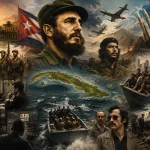
No negotiation. No cosmetic reform. No pretending that opening Cuba as a travel destination is the priority when you are dealing with a regime built on murder, repression, exile, fear, and the destruction of a people’s soul. A true Genocide of CUBA And some people will ask, “What do you mean by that?” Let me explain. Cuba was not just an island. Cuba was a civilization of its own. It had its own culture, its own music, its own food, its own history, its own heroes, its own humor, its own faith, its own family structure, and even its own animals and countryside traditions. Family and religion were at the center of Cuban life. It was a unique island with a unique identity. Then came Fidel Castro, his brother Raúl, and the revolutionary machine around them. They did not simply take over a government. They tried to take over the Cuban soul. They destroyed culture and replaced it with Marxism. They attacked religion and replaced it with the worship of the state. They rewrote history and hijacked Cuba’s heroes. They made loyalty to the revolution more important than loyalty to your mother, your father, your children, your church, or your conscience. They taught children to spy on parents. They made Marxism more important than family. They made atheism and communism the official religion of the Cuban state. Musicians, writers, religious people, independent thinkers, business owners, farmers, students, soldiers, and ordinary citizens were jailed, tortured, silenced, exiled, or broken if they did not fit the regime’s view of the world. They did not just control politics. They controlled memory. They controlled language. They controlled opportunity. They controlled hunger. They controlled fear. And I am telling you this because I lived it — not in Cuba, but in Miami. Miami became the other Cuba. The Cuba that survived outside the island. The Cuba that carried the memories, the stories, the wounds, and the warnings. I had a small construction company, and many of my workers were Cuban. They were good workers. Hard workers. They did not complain about work. They did not look for excuses. They showed up. They worked. They had pride. And I heard their stories. Over time, I learned something. I could tell who had been raised in Miami and who had been raised in Cuba. The Cubans raised in Miami looked different. They were taller, healthier, more confident, more open. Many looked like the older Cuban generations I remembered — people raised with more food, more family stability, more freedom, more chance. But the ones raised under the regime in Cuba often carried something else. Not always visible at first, but it was there. The caution. The fear. The survival instinct. The habit of measuring every word. The instinct to look around before speaking. The quiet understanding that the government could ruin you. They were small, tiny, barely 5 feet tall. And if they had been connected to the government, you could feel that too. And they were fatter, you could tell they were not starving most of their lives. They would tell you whatever you want to here, you could not trust them. There was a difference between the Cuban who escaped the system and the Cuban who learned to survive inside it. That is what communism does. It does not only make people poor. It makes people careful. It makes people suspicious. It makes people afraid to tell the truth. It makes people trade dignity for rice, silence for survival, and conscience for permission. This is why the Cuban regime cannot simply be “opened up” like a tourist market. Cuba does not need more hotels while Cubans are still prisoners. Cuba does not need more foreign investment while the same military and political elite controls the economy. Cuba does not need more photo opportunities for outsiders while Cuban families are still divided, censored, hungry, and afraid. Cuba needs liberation. The regime has to end because it did not just steal money. It stole generations. It stole history. It stole faith. It stole families. It stole the future from millions of Cubans. And no, this is not hatred of Cuba. This is love for Cuba. Because loving Cuba means telling the truth about what destroyed it. And the truth is simple: The Cuban people are not the problem. The Cuban regime is the problem. And that regime cannot be negotiated into decency. It has to end.
——-
Cuba no necesita más hoteles construidos encima de prisioneros. Necesita que el régimen que destruyó su fe, su familia, su cultura y su futuro finalmente llegue a su fin. Sin negociación. Sin reformas cosméticas. Sin fingir que abrir Cuba como destino turístico es la prioridad cuando estás tratando con un régimen construido sobre el asesinato, la represión, el exilio, el miedo y la destrucción del alma de un pueblo. Un verdadero genocidio de Cuba.
Y algunos preguntarán: “¿Qué quieres decir con eso?”
Déjame explicar. Cuba no era solamente una isla. Cuba era una civilización propia. Tenía su propia cultura, su propia música, su propia comida, su propia historia, sus propios héroes, su propio humor, su propia fe, su propia estructura familiar, e incluso sus propios animales y tradiciones campesinas. La familia y la religión estaban en el centro de la vida cubana. Era una isla única, con una identidad única.
Entonces llegaron Fidel Castro, su hermano Raúl y la maquinaria revolucionaria que los rodeaba.
No simplemente tomaron el control de un gobierno. Intentaron tomar el control del alma cubana.
Destruyeron la cultura y la reemplazaron con el marxismo.
Atacaron la religión y la reemplazaron con la adoración al Estado.
Reescribieron la historia y secuestraron a los héroes de Cuba.
Hicieron que la lealtad a la revolución fuera más importante que la lealtad a tu madre, tu padre, tus hijos, tu iglesia o tu conciencia.Enseñaron a los niños a espiar a sus padres. Hicieron que el marxismo fuera más importante que la familia.
Hicieron del ateísmo y del comunismo la religión oficial del Estado cubano.
Músicos, escritores, personas religiosas, pensadores independientes, dueños de negocios, campesinos, estudiantes, soldados y ciudadanos comunes fueron encarcelados, torturados, silenciados, exiliados o destruidos si no encajaban con la visión del mundo del régimen.
No solamente controlaron la política. Controlaron la memoria. Controlaron el lenguaje. Controlaron las oportunidades.
Controlaron el hambre. Controlaron el miedo.
Y digo esto porque lo viví — no en Cuba, sino en Miami.
Miami se convirtió en la otra Cuba. La Cuba que sobrevivió fuera de la isla. La Cuba que cargó con los recuerdos, las historias, las heridas y las advertencias.
Yo tenía una pequeña compañía de construcción, y muchos de mis trabajadores eran cubanos. Eran buenos trabajadores. Trabajadores fuertes. No se quejaban del trabajo. No buscaban excusas. Llegaban. Trabajaban. Tenían orgullo. Y escuché sus historias.
Con el tiempo, aprendí algo. Podía distinguir quién había sido criado en Miami y quién había sido criado en Cuba.
Los cubanos criados en Miami se veían diferentes. Eran más altos, más saludables, más seguros, más abiertos. Muchos se parecían a las generaciones cubanas mayores que yo recordaba: personas criadas con más comida, más estabilidad familiar, más libertad y más oportunidades.
Pero los que fueron criados bajo el régimen en Cuba muchas veces cargaban con otra cosa. No siempre era visible al principio, pero estaba ahí. La cautela. El miedo. El instinto de supervivencia. La costumbre de medir cada palabra. El instinto de mirar alrededor antes de hablar. El entendimiento silencioso de que el gobierno podía destruirte. Eran pequeños, diminutos, apenas de cinco pies de altura.
Y si habían estado conectados con el gobierno, también se podía sentir. Y eran más gordos; se notaba que no habían pasado hambre la mayor parte de sus vidas. Te decían lo que querías oír. No se podía confiar en ellos.
Había una diferencia entre el cubano que escapó del sistema y el cubano que aprendió a sobrevivir dentro de él.
Eso es lo que hace el comunismo. No solamente empobrece a la gente. La vuelve cuidadosa. La vuelve desconfiada.
La hace tener miedo de decir la verdad. Hace que la gente cambie dignidad por arroz, silencio por supervivencia y conciencia por permiso.
Por eso el régimen cubano no puede simplemente “abrirse” como si fuera un mercado turístico.
Cuba no necesita más hoteles mientras los cubanos siguen siendo prisioneros.
Cuba no necesita más inversión extranjera mientras la misma élite militar y política controla la economía.
Cuba no necesita más oportunidades de fotos para extranjeros mientras las familias cubanas siguen divididas, censuradas, hambrientas y con miedo. Cuba necesita liberación.
El régimen tiene que terminar porque no solamente robó dinero.
Robó generaciones. Robó la historia. Robó la fe. Robó familias. Robó el futuro de millones de cubanos.
Y no, esto no es odio hacia Cuba.
Esto es amor por Cuba.
Porque amar a Cuba significa decir la verdad sobre lo que la destruyó.
Y la verdad es simple:
El pueblo cubano no es el problema. El régimen cubano es el problema.
Y ese régimen no puede ser negociado hasta convertirse en algo decente.
Tiene que terminar ahora