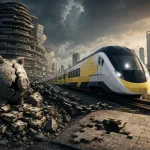
Think of it as Yoga for the brain, we are going to stretch a bit.
What the Hell Is Going On in Venezuela?
Venezuela has oil, gold and refineries worth billions—but nobody can agree on who has the legal authority to control them -- YNOT!
Venezuela may be one of the strangest financial and political disasters in modern history.
The country has the largest proven oil reserves on Earth. It owns billions of dollars in gold stored in London. It built one of the largest refining companies in the United States. It has produced roughly $13 billion in oil revenue since January.
Yet Venezuela cannot freely use most of this money.
Its oil revenue is being controlled by the United States. Its gold is trapped in the Bank of England. CITGO is caught in a court-ordered sale in Delaware. Creditors are trying to collect old judgments. Terrorism victims are trying to seize blocked assets. The Venezuelan opposition claims political legitimacy, while the people still controlling the ministries, military and police come largely from the old regime.
Then, on June 24, 2026, Venezuela was struck by two catastrophic earthquakes measuring 7.2 and 7.5.
Now thousands are dead, entire communities need to be rebuilt, and Venezuela desperately needs money that everyone agrees belongs to Venezuela—but almost nobody is willing to hand directly to the people presently running the country.
That is what the hell is going on in Venezuela.
The Earthquakes Made Everything Worse
The two earthquakes devastated Venezuela’s northern coast, including La Guaira and areas surrounding Caracas. Around 5,000 people are believed to have died, thousands more were injured, and nearly 18,000 people were displaced. The World Bank has estimated approximately $19.6 billion in direct physical damage, while total rebuilding costs could approach $50 billion. (Reuters)
The immediate rescue effort has been international.
Tens of thousands of Venezuelan emergency workers, soldiers, volunteers and medical personnel were deployed. Thousands of rescuers arrived from other countries. The United States sent search-and-rescue teams, engineering equipment, aircraft, Marines and nearly 2,000 military personnel. American forces helped reopen and manage Simón Bolívar International Airport and established logistics operations at the Port of La Guaira so food, medicine, heavy equipment and rescue personnel could enter the country. (U.S. Southern Command)
The Pan American Health Organization says the emergency has now entered an early recovery phase. The work is shifting from pulling people out of rubble to restoring hospitals, rebuilding damaged health facilities, preventing disease and maintaining basic medical services. (Paho)
But emergency aid is not the same as reconstruction.
Rescue teams can arrive on airplanes. Rebuilding cities, hospitals, roads, ports, power systems and thousands of homes requires tens of billions of dollars.
Venezuela supposedly has that money.
It just cannot get to it.
Where Is the Oil Money?
Since the United States removed Nicolás Maduro in January 2026 and began controlling much of Venezuela’s oil exports, approximately $13 billion worth of Venezuelan oil has reportedly been sold.
A public Venezuelan government ledger examined by the Financial Times, however, showed only one recorded transfer of $300 million. U.S. officials had previously said that all $500 million from the first oil sale had been returned for Venezuelan expenses, but the accounting for the much larger pool of money remains unclear. Members of Congress from both parties are now demanding detailed records and independent audits. (Financial Times)
The United States says the money has not been confiscated.
Executive Order 14373, signed on January 9, specifically states that the oil revenues remain the sovereign property of Venezuela. The money is being held in U.S. custody and protected from attachment by creditors so that it can supposedly be used to stabilize and rebuild Venezuela. (The White House)
That sounds reasonable.
The problem is transparency.
A legal trust or custodial account only works when everyone can see the books. Who authorized each payment? Who received it? Was it used for salaries, infrastructure, oil production, humanitarian relief or something else? Where are the promised audits?
The government says billions have been dispersed. The Venezuelan economy does not appear to reflect billions of dollars in new spending. The public accounting does not show it, and Congress has not received a satisfactory explanation.
The money may be protected, but protected from whom—and controlled by whom?
CITGO: Venezuela’s Crown Jewel in America
CITGO is not a small chain of gas stations.
It operates three major American refineries in Texas, Louisiana and Illinois, with combined processing capacity of more than 800,000 barrels per day. It also controls pipelines, terminals, storage facilities and a large fuel-distribution network.
CITGO was Venezuela’s most valuable foreign asset. It was especially important because its Gulf Coast refineries were designed to process the heavy, sulfur-rich crude produced in Venezuela.
But for years, the governments of Hugo Chávez and Nicolás Maduro treated Venezuela’s state oil company, PDVSA, as if it were simply another government checking account.
The government appointed its directors, ordered it to fund political programs, forced it to provide discounted oil to allies and used its money to cover government obligations. That became important when creditors argued in American courts that PDVSA was not truly independent from the Venezuelan state.
A Delaware court eventually accepted the argument that PDVSA functioned as Venezuela’s “alter ego.” That allowed creditors holding judgments against Venezuela to pursue shares in CITGO’s American parent company.
The first major creditor was Crystallex, a Canadian mining company whose Venezuelan gold operation had been nationalized without compensation. Once Crystallex succeeded, a long line formed behind it: bondholders, mining companies, oil companies and other businesses that had won judgments for unpaid debts and expropriated property.
A Delaware judge approved a roughly $5.9 billion bid from Amber Energy, an affiliate of Elliott Investment Management, to acquire CITGO’s parent. But the transaction has not been fully completed. A specific license from the Treasury Department’s Office of Foreign Assets Control is still required, and appeals and valuation disputes remain active. (Reuters)
Therefore, CITGO is not simply “gone,” but it is dangerously close to being lost.
This is what happens when a government confiscates foreign investments, refuses to pay its debts and ignores judgments for years. Eventually, creditors stop asking politely and start taking whatever valuable property they can reach.
The Gold Trapped in England
Under the Bank of England sit approximately 31 metric tons of Venezuelan gold.
The gold is unquestionably Venezuelan property. The Bank of England is not claiming ownership. Britain is not claiming that the gold belongs to Britain.
The problem is determining who has the authority to give instructions on Venezuela’s behalf.
In 2019, the British government recognized opposition leader Juan Guaidó as Venezuela’s legitimate interim president. Guaidó appointed an alternative board to Venezuela’s central bank and instructed the Bank of England not to release the gold to Maduro’s officials.
Maduro’s central-bank board then sued, arguing that it controlled the country’s institutions and needed the gold to purchase food and medicine.
The dispute reached the United Kingdom Supreme Court. Under Britain’s “one voice” doctrine, British courts generally accept the British government’s determination of who is recognized as the legitimate leader of a foreign state. Because Britain recognized Guaidó, the courts treated actions taken by his appointed central-bank board as valid. (Supreme Court)
Then Guaidó’s interim government was abolished by Venezuela’s own opposition-led National Assembly.
That created a nearly impossible situation.
The Maduro-appointed board could not control the gold because Britain had not recognized Maduro. The Guaidó-appointed board had been legally recognized when it was created, but the political office that created it later ceased to exist.
The gold remained in the vault.
After the earthquakes, interim President Delcy Rodríguez wrote to King Charles III requesting its release for reconstruction. But the King cannot simply order the Bank of England to turn over gold involved in litigation. That authority belongs to the courts, the bank and the British government’s recognition policy—not the monarch. (EFE Noticias)
Venezuela owns several billion dollars’ worth of gold and still cannot find anyone who is legally authorized to sign the withdrawal form.
The Anti-Terrorism Law Nobody Expected to Become a Venezuelan Oil Problem
The United States has another legal problem.
Congress passed the Terrorism Risk Insurance Act after the September 11 attacks. Section 201 allows people who have obtained judgments against terrorist parties to seize blocked assets belonging to those parties—and in some cases assets belonging to their agencies or instrumentalities.
The law begins with the words “notwithstanding any other provision of law.”
In ordinary English, that means: this law overrides conflicting protections found elsewhere.
American courts have allowed some victims holding judgments connected to organizations such as FARC to pursue blocked PDVSA assets. Courts have applied broad definitions of an agency or instrumentality when determining whether an entity materially assisted a terrorist organization. (Legal Information Institute)
Therefore, placing Venezuelan oil money in an ordinary American bank could expose it to immediate attachment proceedings.
The moment the funds arrived, lawyers representing judgment creditors could ask a federal court to freeze them.
Executive Order 14373 was designed to protect Venezuelan oil revenue from many ordinary creditors. But the administration still faced uncertainty about whether the terrorism statute—with its “notwithstanding” language—could override that protection.
That is where Qatar entered the story.
Qatar: The Temporary Back Door
The first major oil sale generated approximately $500 million.
Instead of depositing that money directly into the U.S. Treasury, the administration placed it in an account at Qatar National Bank. The account reportedly belonged to Venezuela but remained under American supervision. Secretary of State Marco Rubio described it as a temporary solution to an immediate problem. (Chris Van Hollen)
The immediate problem was physical as well as legal.
Tankers loaded with Venezuela’s extra-heavy oil were sitting offshore. Storage capacity was disappearing. If the oil could not be moved, wells might have to be shut down, potentially damaging them and making future production more difficult or expensive.
Qatar offered a jurisdictional side door.
Money held in Doha was outside the direct reach of an American attachment order. Qatar also did not have the same American recognition problem concerning which Venezuelan faction controlled state property.
The arrangement was similar to the system previously used for frozen Iranian oil revenue. Money could be held in Qatari accounts and released only for approved purchases under outside supervision.
It solved the immediate problem temporarily.
It did not solve the larger problem.
Qatar does not determine who legitimately governs Venezuela. It cannot settle Venezuela’s debts. It cannot resolve the CITGO litigation. It cannot select a Venezuelan central-bank board. It cannot produce the missing audits for billions of dollars in oil revenue.
Qatar is an escrow room, not a political solution.
María Corina Machado and Diosdado Cabello
Nothing illustrates the absurdity of Venezuela’s situation better than the contrast between María Corina Machado and Diosdado Cabello.
Machado was barred from running in the 2024 presidential election. She then helped unite the opposition behind Edmundo González Urrutia and became Venezuela’s most internationally recognized democratic opposition leader. In 2025, she received the Nobel Peace Prize for her struggle for democratic rights and a peaceful transition from dictatorship. (Nobel Prize)
After the earthquakes, Machado attempted to return to Venezuela. Her plan was reportedly discouraged and obstructed because American officials feared that her arrival could destabilize the interim arrangement with Delcy Rodríguez during the emergency response. (The Wall Street Journal)
Diosdado Cabello, meanwhile, remains Venezuela’s powerful interior minister and a central figure in the security establishment inherited from the Maduro government.
Cabello is under American indictment on narcotics-related charges. The United States continues to offer a reward of up to $25 million for information leading to his arrest or conviction. Yet he remains part of the governing structure with which American diplomats and disaster-relief officials must cooperate. (Financial Times)
Think about that.
The Nobel Peace Prize-winning democratic opposition leader is being discouraged from returning because she might create instability. The hardline interior minister wanted by the United States is still inside the government because removing him might create instability.
That tells us what American policy currently prioritizes: not necessarily democracy, but immediate control, oil production and avoidance of governmental collapse.
Nobody Wants to Give the Present Regime the Money
There is a legitimate reason foreign governments are reluctant to hand billions of dollars directly to the existing Venezuelan power structure.
Many of the same officials, institutions and political networks that helped destroy the economy remain in place. The state oil company was looted and politicized. Foreign property was expropriated. Creditors were ignored. Opposition activists were imprisoned or driven into exile. Public institutions were stripped of independence.
Giving that system billions of dollars with minimal supervision would require an extraordinary amount of faith.
But the alternative is not morally clean either.
The United States controls the oil money. American courts control CITGO’s future. British institutions control access to the gold. Foreign creditors are positioned to collect. Outside governments decide which Venezuelan officials they recognize. Meanwhile, Venezuelan citizens are living among collapsed buildings and wondering why their supposedly wealthy country cannot pay to rebuild itself.
Everyone says the money is being held for Venezuela.
But Venezuela is not a person who can walk into a bank and present identification.
Someone must be legally authorized to represent it. That is the missing piece.
Venezuela Is Like Someone Who Died Without a Will or Trust
The easiest way to understand the whole situation is to imagine that a wealthy person dies without a will, without a trust and without naming an executor.
The person owned a house, businesses, bank accounts, gold and investments.
Nobody disputes that the property belonged to the deceased. But immediately, everything freezes.
One relative claims to be in charge because he lives in the house. Another relative produces an old power of attorney. Creditors arrive with unpaid bills. Business partners file lawsuits. Banks refuse to release money without a court order. A probate judge must decide who represents the estate, which debts are legitimate, which assets can be sold and who eventually receives what remains.
Meanwhile, the family needs money to pay for the funeral, repair the house and keep the business operating.
That is Venezuela.
The current government is the relative occupying the house.
The opposition is the relative claiming legitimate inheritance rights.
The oil money is the frozen bank account.
CITGO is the family business being sold to pay creditors.
The gold in London is the safe-deposit box for which nobody has a currently accepted key.
Qatar is the temporary escrow account used to keep essential bills paid while the estate remains tied up in court.
The earthquake victims are the family members who need help immediately but cannot access the estate’s wealth.
As the original source material correctly concludes, none of these assets became trapped because anyone seriously doubts that they belong to Venezuela. They became trapped because foreign institutions cannot determine whom they can legally recognize, trust and pay. Ownership has become a question answered by foreign judges, creditors and custodians rather than by Venezuelans themselves.
So, What the Hell Is Going On?
Venezuela has become a country-sized estate proceeding with no universally recognized executor. Its oil is being sold, but billions of dollars remain in accounts controlled by the United States.
CITGO is being pushed toward a court-ordered transfer because Venezuela refused for years to pay creditors and treated PDVSA as an extension of the government.
Thirty-one tons of Venezuelan gold remain trapped in London because British institutions cannot identify a presently recognized authority entitled to control it.
American anti-terrorism laws make it dangerous to place blocked Venezuelan money in American banks, so Qatar was used as a temporary jurisdictional back door.
María Corina Machado has democratic legitimacy but little operational authority inside Venezuela. Diosdado Cabello has operational power but faces an American indictment and a $25 million reward.
Delcy Rodríguez controls the interim government, but foreign governments do not trust her administration enough to hand it unrestricted billions.
And after catastrophic earthquakes, Venezuela needs access to its wealth more urgently than ever. The only lasting solution is not another offshore account, another executive order or another temporary political arrangement.
Venezuela needs an internationally recognized, democratically elected government with the uncontested legal authority to represent the country. It also needs a transparent, independently audited reconstruction trust, a negotiated process for dealing with legitimate creditors and public accounting for every dollar generated from Venezuelan oil.
Until then, Venezuela will remain enormously wealthy on paper and desperately poor in practice.
The oil will leave. The gold will sit in London.
The lawyers will argue. The creditors will collect.
And the Venezuelan people will continue waiting for someone, somewhere, to decide that they are finally entitled to their own country’s money.