Think of it as Yoga for the brain, we are going to stretch a bit.
THE ILLEGALS – THE CHILDREN OF GHOSTS
A Story of Russian Spies, American Families, and the Children Who Were Never Supposed to Know
The most successful spy isn't necessarily the one who steals the most secrets. Sometimes it's the one who raises a family, pays his taxes, and dies without anyone discovering who he really was. And sometimes, the most valuable thing he leaves behind isn't intelligence. It's his children.
The Photograph
Jack Calloway has been retired long enough to recognize trouble when it came disguised as ordinary mail. The envelope arrived on a Tuesday morning. No return address. No postage. Just his name, handwritten in block letters.
JACK CALLOWAY.
He found it beneath his front door.
That bothered him. Not because someone had delivered an envelope. People did that all the time.
Because someone had delivered it without being noticed by either of the two security cameras watching the entrance. Jack examined the envelope. Cheap paper. American manufacture. No identifying marks.
He carried it into the kitchen, placed it on the table, and poured himself another cup of coffee. Then he opened it. Inside was a photograph. An ordinary family photograph.
A man, a woman, and a young girl standing outside what appeared to be a suburban house somewhere in America.
The man wore khaki pants and a blue polo shirt.
The woman had dark hair and a pleasant smile.
The little girl looked about eight years old. A golden retriever sat at her feet.
The grass was green. A bicycle leaned against the garage.
Everything about the photograph suggested an ordinary American family.
Jack turned it over. Three words were written on the back.
THE SECOND GENERATION.
Below them was a telephone number.
Jack studied the photograph for another minute. Then he picked up his phone.
He didn’t call the number. He called Elena
The Americans
Special Agent Elena Ruiz arrived forty minutes later.
She brought Daniel Mercer.
Jack knew Elena for years, and met him recently, during an investigation involving Russian intelligence networks and a few men he had known in another lifetime.
Mercer looked at the photograph. “Do you recognize them?”
“No.”
“Then why call us?”
Jack pointed at the words on the back. “The second generation.”
Ruiz leaned forward. “What’s that supposed to mean?”
Jack sat back. “How much do you two know about the Russian Illegals Program?”
Mercer nodded. “Operation Ghost Stories. The 2010 arrests.”
“That’s one chapter.”
“Ten Russian intelligence operatives arrested in the United States,” Ruiz said. “Eventually exchanged for prisoners held by Russia.”
Jack nodded. “Good. You read the briefing.”
He looked at the photograph again.
“But what did you learn about their children?”
Neither answered.
Jack smiled. “That’s what I thought.”
He walked to the coffee machine.
“Most people think Russian spies look like Russian spies.”
Mercer shrugged. “What exactly does a Russian spy look like?”
“That’s the problem. They don’t.”
Jack returned to the table. “Let me explain how the business works.”
A Spy Who Doesn’t Look Like a Spy
During the Cold War, Soviet intelligence operated two broad categories of officers overseas.
The first worked under diplomatic cover.
Embassies. Consulates. Trade missions. Everyone knew who they probably were.
The CIA watched the Russians. The Russians watched the CIA.
Everybody attended the same diplomatic receptions, drank the same bad champagne, and pretended not to recognize one another.
Jack had attended a few of those receptions. He preferred the champagne to the conversation.
The second category was different. The Russians called them illegals.
They had no official connection to the Soviet government.
No diplomatic plates. No immunity. Sometimes not even a Russian name.
They might be Canadian. Argentine. German. American. Lots of Cubans.
Or at least that’s what their documents said.
“They invented people,” Jack explained.
Ruiz frowned. “False identities?”
“Much more than false identities.”
He pointed toward the photograph. “An identity is a driver’s license. A life is something else.”
A Russian intelligence officer might spend years learning a language, perfecting an accent, establishing a business, and creating an apparently ordinary existence.
He might marry another intelligence officer. They might purchase a house.
Raise children. Join the PTA. Pay property taxes. Complain about the neighbors. Buy a lawn mower. And spend twenty years becoming exactly what everyone expected them to be.
Ordinary.
Mercer looked unconvinced. “Twenty years? That’s an extraordinary investment.”
“Only if you measure it against what happens this year.”
Jack took a drink of coffee. “Suppose I give you ten million dollars and tell you to build a spy network that will be useful in 2045.”
Mercer shrugged. “I’d start recruiting people with access.”
“That’s because you’re American.”
“What’s that supposed to mean?”
“You’re thinking about access today. The Russians were sometimes thinking about access thirty years from now.”
Jack continued. “Suppose you identify a promising young college student. You spend years getting close to him. Eventually he joins the State Department. Ten years later he’s an ambassador. Twenty years later he’s advising the president.”
Ruiz interrupted. “That’s a long time to wait.”
“Certainly is.”
“Expensive.”
“Very.”
“And there’s no guarantee he’ll ever become important.”
Jack smiled. “Now you’re understanding why espionage is such a terrible business.”
He paused. “But imagine what happens if he does.”
Operation Ghost Stories
Jack turned his laptop toward the agents.
An old FBI report appeared on the screen. June 27, 2010. Ten arrests.
Years of surveillance. Russian intelligence officers living in American communities.
Some were married. Some had children. Some worked ordinary jobs.
Among them were Donald Heathfield and Tracey Foley, a couple living in Cambridge, Massachusetts.
Except Donald Heathfield wasn’t Donald Heathfield. He was Andrey Bezrukov.
And his wife wasn’t Tracey Foley. She was Elena Vavilova. Russian intelligence officers.
Their children had grown up believing they were Canadians.
Jack opened another document. “In Arlington, Virginia, there was another couple. Michael Zottoli and Patricia Mills.”
“Russian?” Mercer asked. “Mikhail Kutzik and Natalia Pereverzeva. They were raising children, too.”
Jack looked at Ruiz. “Now tell me something. What happens to a child when the FBI walks through the front door and arrests both parents?”
“Trauma,” she answered.
“That’s one word.”
He looked toward the photograph. “Imagine discovering that your father isn’t the man you thought he was.”
He paused. “Neither is your mother.”
Another pause. “Their names aren’t real. Their birthplace isn’t real. Your family history isn’t real.”
Mercer nodded. “But the children are real.”
Jack pointed at him. “Exactly.”
He let that settle. “The children are the one part of the story that doesn’t need to be invented.”
The Boy Who Became a Spy
Jack opened another file. “This one is older.”
A photograph of a man appeared on the screen. Rudi Herrmann.
Or at least that was the name he used. His actual name was Dalibor Valoušek.
A Czech intelligence officer working for the Soviet KGB.
He had spent years posing as a German immigrant in Canada and the United States.
He had a wife. Children. A house. A life. And a son named Peter.
In 1974, Peter was sixteen years old. His father took him on a trip to South America.
During that trip, he revealed the truth. Their family was not what Peter believed it to be.
His father was an intelligence officer. Their history was fabricated.
The family had been living under cover for years. Then came the question.
Would Peter join the operation?
Ruiz looked up. “He recruited his own son?”
“Yes.”
“At sixteen?”
“Sixteen.”
Mercer shook his head. “That’s extraordinary.”
“Not as extraordinary as what came next.”
Peter traveled to Moscow.
He received introductory intelligence training.
He learned how to recognize surveillance.
How clandestine communication worked.
How intelligence officers used covert exchanges.
He was eventually directed to observe fellow university students and report information potentially useful to Soviet intelligence.
Jack leaned back. “Think about what the Russians had accomplished.”
He pointed toward the photograph of Peter.
“His father had to pretend to be Western. The boy didn’t.”
“He grew up here,” Ruiz said.
“Exactly. Real schools. Real friends. Real childhood. A natural accent. Genuine experiences.”
Jack tapped the desk. “His father had spent years manufacturing an identity. Peter had one simply because he had lived it.”
Mercer considered that. “The perfect cover.”
“Potentially.”
“But he was still a child.”
“That’s what makes the story interesting.”
Peter’s recruitment was not a simple act of patriotic enthusiasm.
His father had enormous influence over him.
Soviet handlers reportedly made clear that rejecting the operation could mean remaining behind in the Soviet Union while his parents returned to America.
The boy’s apparent choice was constrained by the threat of losing his family and his life in the West.
Eventually the FBI discovered the operation. His father became a double agent.
The family entered witness protection.
Peter became Elliot Holar.
Decades later, he described the emotional cost of discovering that his father had drawn him into espionage.
Jack closed the file. “The Russians wanted a second-generation intelligence officer.”
Ruiz looked at the photograph on the table. “And they almost got one.”
“They got a teenager who cooperated for a time. That’s not the same thing as getting a successful lifelong intelligence officer.”
Jack finished his coffee. “Intelligence agencies have a habit of confusing those two things.”
The Problem With Children
Mercer returned to the original photograph. “So you think this family was part of the same program?”
“I don’t know.”
“Then why the second-generation message?”
“Because somebody wants me to think about it.”
Ruiz frowned.”That’s an important distinction.”
Jack nodded. “One of the few things I learned in this business.”
He continued. “There are two ways to raise children inside an intelligence operation.”
He held up one finger. “You keep them completely ignorant.”
A second finger. “Or you bring them inside.”
“Which works better?” Mercer asked.
“Depends what you mean by works.”
Jack explained. If children knew nothing, they could live convincingly normal lives.
They would tell ordinary childhood stories because, from their perspective, those stories were true.
They would make friends without worrying about compromising an operation.
They could become convincing evidence that their parents were exactly who they claimed to be.
But there was a problem. When the deception was discovered, the child might feel betrayed by everyone they had ever trusted.
The alternative was recruitment. Tell the child the truth. Explain the family’s mission. Give the teenager a sense of importance.
Make espionage a family responsibility.
That also had problems. Children talked. Children rebelled. Children fell in love.
Children questioned authority.
And unlike trained intelligence officers, they had not necessarily chosen the life their parents were living.
“There’s a third possibility,” Ruiz said.
Jack looked at her. “What?”
“The child knows something is wrong but doesn’t know what.”
Jack smiled. “Now you’re getting somewhere.”
He leaned forward. “Imagine growing up in a house where certain questions are never answered.”
Where photographs are missing. Where relatives never visit.
Where your father becomes nervous when someone asks about his childhood.
Where your mother tells you not to discuss family matters with strangers.
Where your parents disappear for several days and return with explanations that don’t quite make sense.
The child may not know about espionage. But the child learns something else. How to keep secrets. How to avoid questions. How to recognize when adults are lying.
And sometimes how to lie without feeling that anything unusual is happening.
“That’s training without calling it training,” Mercer said.
“Sometimes. Or it’s just what happens when a family lives inside a secret.”
Jack paused. “Don’t make the mistake of treating every child of a spy as a spy. Most of them are victims of circumstances they never chose.”
He looked again at the photograph. “But a government that spends twenty years developing an identity might eventually wonder what it can do with the child who inherited it.”
Ljubljana, 2024
Jack opened another article. A photograph showed a Russian family arriving in Moscow.
Artem Dultsev. Anna Dultseva. And their two children.
For years, the parents had lived in Slovenia under Argentine identities.
They operated businesses. Raised their children. Spoke Spanish at home.
Their son and daughter believed they were Argentine.
In December 2022, Slovenian authorities arrested the parents.
They were later convicted of espionage-related offenses.
In August 2024, the family returned to Moscow during a major prisoner exchange.
According to the Kremlin, the children learned they were Russian only when the plane carrying them to Moscow had taken off.
They reportedly did not speak Russian. They did not recognize Vladimir Putin when he greeted them. Putin spoke to them in Spanish.
Mercer stared at the article. “That’s unbelievable.”
“Apparently not,” Jack replied.
“But the children didn’t know?”
“According to the public accounts, they didn’t.”
“Then why raise them in the operation?”
Jack shrugged. “Maybe the parents wanted children. Maybe the children strengthened their cover. Maybe both.”
He paused. “And maybe the children were never supposed to become spies at all.”
Ruiz looked at him. “Then what’s your point?”
Jack pushed the family photograph toward her. “My point is that the parents and the children are not the same operation.”
“Explain.”
“The parents might be working for Moscow. The children might be innocent.”
“Or?”
“Or somebody might eventually decide the children are useful.”
He tapped the words written on the back of the photograph.
“The second generation.”
Madrid, 1998
Jack hadn’t told the agents everything. Not yet.
There was something about the photograph that bothered him.
Not the family. Not the house. The little girl. He had seen her before.
Or someone who looked remarkably like her. Madrid. 1998
Jack had been working with a European businessman whose shipping company was being used to move money through several countries.
The businessman was legitimate. At least mostly. The people moving the money were not.
One of them was a Russian Jack knew as Misha.
Jack had encountered Misha in Prague several years earlier.
The Russian spoke too many languages, knew too many people, and possessed the unnerving habit of asking questions that sounded unimportant until several days later.
They met at a restaurant in Madrid. Misha was not alone.
He had brought a woman and a young girl.
The woman spoke English with what sounded like a Canadian accent.
The child spoke English with no distinguishable foreign accent at all.
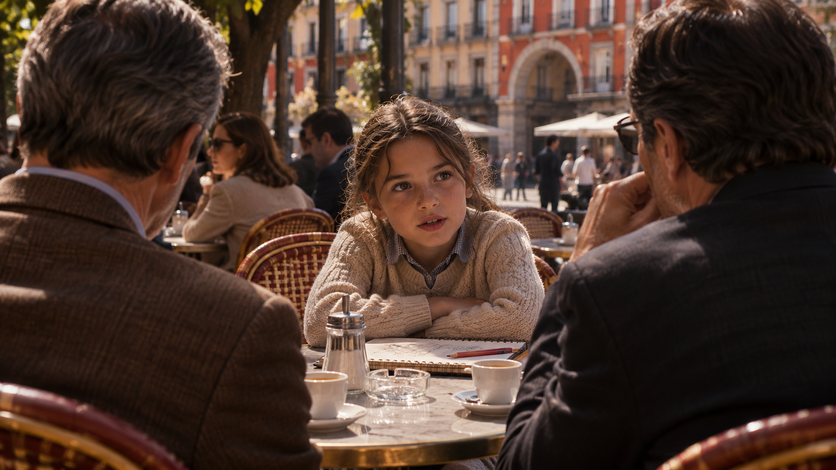
While the adults discussed shipping contracts and banking arrangements, the girl sat at another table drawing pictures.
Jack remembered the scene because the little girl had asked him a question. “Are you a spy?”
He had laughed. “What makes you think that?”
“My daddy says spies never tell people they’re spies.”
“Your daddy sounds like a smart man.”
She studied him. “Then if you say you’re not one, that doesn’t prove anything.”
Jack remembered laughing again. She was clever. Too clever for her age.
Later, while the adults were talking, Misha had approached Jack. “Children are interesting, aren’t they?”
Jack shrugged. “Depends on the child.”
Misha smiled. “They inherit things.”
“Usually money. Sometimes bad habits.”
“Sometimes something more valuable.”
Jack remembered looking toward the girl.
Misha followed his gaze. “Think about it, Jack. A man spends twenty years becoming someone else.”
“So?”
“His daughter doesn’t have to become someone else.”
Jack said nothing. Misha continued.
“She already is someone.”
Jack had understood the implication. He didn’t like it.
“You’re talking about recruiting children.”
Misha shook his head. “Not recruiting. Preparing possibilities.”
“That’s a nice way of saying the same thing.”
The Russian smiled. “Americans always want to define everything.”
“And Russians always want to explain why nothing means what it means.”
Misha laughed. They finished dinner.
Jack never saw the little girl again.
Until now. Twenty-eight years later.
In a photograph delivered to his front door.
The Woman in Florida
Jack turned toward Ruiz.
“I think I know who the girl is.”
Mercer immediately opened his notebook. “Name?”
“I don’t know her real name.”
“Where did you meet her?”
“Madrid. 1998.”
“What was she doing there?”
“Drawing pictures.”
Mercer frowned.
Jack continued.
“She was with a Russian I knew. An intelligence officer, or something close to one.”
“Was she his daughter?”
“I don’t know.”
“Do you remember her name?”
Jack thought about it.
“Anna. Possibly.”
Ruiz looked at the photograph.
“That would make her about thirty-six today.”
“Something like that.”
“And you think she’s in the United States?”
Jack looked at the envelope. “Someone wants me to.”
The agents took the photograph for examination.
Jack retained a copy.
That evening, he searched the public records he could lawfully access, looking for connections among old identities, addresses, and businesses.
Nothing.
Then an email arrived. No subject. One attachment.
A photograph of a woman standing outside a small office building in Fort Lauderdale.
Thirty-something. Dark hair. Brown eyes.
The resemblance to the little girl was unmistakable.
Below the photograph was a name.
ANNA BENNETT.
And a sentence. She knows nothing.
Jack stared at the screen.
Then another message arrived. Yet.
Anna Bennett
The FBI identified Anna Bennett the following morning.
She was thirty-six. Born in the United States. Educated in Virginia.
Married once. Divorced. No children.
She worked for a technology consulting company that provided cybersecurity and compliance services to private businesses.
Nothing remarkable. No criminal history. No unexplained travel.
No financial irregularities obvious from the initial review.
A completely ordinary American woman.
Mercer handed Jack the summary. “Doesn’t look like a spy.”
Jack didn’t bother reading the entire document. “Neither did her parents.”
Ruiz sat across from him. “We haven’t established that her parents were spies.”
“Correct.”
“Or even that the woman in the photograph is Anna Bennett.”
“Also correct.”
Mercer looked irritated. “Then what do we actually know?”
Jack pointed toward the email. “Somebody knows who I am. Somebody knows what happened in Madrid. And somebody wants us to look at this woman.”
“Could be a setup,” Ruiz said.
“Of course.”
“Could be disinformation.”
“Absolutely.”
“Could be someone trying to destroy her life.”
Jack looked directly at her. “That’s the part that worries me.”
He pushed the report back. “You’re looking for a spy. Someone else may be trying to create one.”
The Meeting
Anna Bennett agreed to speak with the FBI.
Jack was present only because Anna specifically requested him after being told that he might have encountered her family years earlier.
They met in a quiet conference room. Anna was nervous. Not frightened exactly.
More irritated than anything else. “Let me get this straight,” she said. “You think my parents were Russian spies?”
Ruiz shook her head. “We’re investigating information that might relate to your family’s history.”
Anna laughed. “My father sold industrial equipment. My mother taught music. We lived in Northern Virginia.”
Jack watched her carefully.
“Did your parents travel frequently?”
“My father did. Business.”
“Europe?”
“Sometimes.”
“Spain?”
She thought.
“Yes. We lived there briefly when I was little.”
Jack said nothing.
Anna continued.
“Why are you asking me these questions?”
Ruiz placed the old photograph on the table.
Anna stared at it. For several seconds, she didn’t move.Then she picked it up.
“Where did you get this?”
Jack answered. “Someone sent it to me.”
Anna turned the photograph over. She read the words. The second generation.
Her expression changed.
“Do you know what this means?” Ruiz asked.
Anna didn’t answer.
“Ms. Bennett?”
Anna looked at Jack.
“My father used to say something.”
“What?”
“That people weren’t born into countries. They were born into families.”
Jack felt something unpleasant move through him.
“What else did he say?”
Anna looked down.
“That one day I might have to decide which mattered more.”
The room became very quiet.
A Father’s Secret
Anna explained that her father had disappeared from her life when she was seventeen.
Her mother told her he had been killed overseas. There was no funeral. No body.
Only paperwork. Her mother died several years later.
Anna had spent much of her adult life believing she was the daughter of an ordinary American businessman.
But there had been peculiar things. Her father spoke several languages.
He had no childhood photographs. His relatives never visited.
Sometimes he received telephone calls late at night and disappeared for days.
Once, when she was fourteen, she found two passports in his desk.
Different names. The same photograph.
He told her they were business documents. She believed him.
Or wanted to.
“Did he ever tell you he worked for another government?” Ruiz asked.
“No.”
“Did he ever ask you to keep secrets?”
Anna smiled sadly. “All parents ask their children to keep secrets.”
Jack shook his head. “Not all secrets are the same.”
Anna turned toward him. “Do you think my father was a spy?”
Jack considered the question. “I think your father may have been involved in something he didn’t want you to understand.”
“That’s not an answer.”
“No.”
“Why not?”
“Because I don’t know.”
She studied him. “Then what do you know?”
Jack looked at the photograph. “I know someone went to considerable trouble to make sure we had this conversation.”
The Offer
Anna hesitated. Then she reached into her handbag.
“There was something else.”
She removed an envelope. A man had approached her three weeks earlier.
He claimed to have known her father.
He told her that the story of her father’s death was incomplete.
He offered to explain everything.
There was one condition. She had to meet someone. Not in America. In Europe.
“Where?” Mercer asked.
“Vienna.”
Jack closed his eyes. Of course.
Vienna. It was always Vienna.
The city had spent a century serving as a convenient meeting place for intelligence officers, defectors, diplomats, and people who couldn’t decide which category they belonged to.
Ruiz asked whether Anna had agreed.
“No.”
“Why?”
Anna looked at Jack. “Because I don’t know who these people are.”
Jack nodded. “Good decision.”
“But I want to know who my father was.”
“That’s understandable.”
“And now you’re telling me he might have been a Russian spy.”
“I’m telling you that possibility needs to be investigated.”
Anna stared at him. “What if I am Russian?”
Jack shook his head. “That’s not a question someone else gets to answer for you.”
“But if my parents were—”
“Your parents made their choices.”
He leaned forward. “You get to make yours.”
The Other Side of the Story
After Anna left, Mercer looked at Jack.
“Do you think she knows more than she’s telling us?”
“Maybe.”
“Do you think she’s been recruited?”
“I haven’t seen evidence of that.”
“But the invitation to Vienna—”
“Could be recruitment. Could be intimidation. Could be someone telling the truth.”
Ruiz folded her arms. “You’re being unusually cautious.”
Jack smiled. “Agent Ruiz, I spent enough years in intelligence to know how easy it is to destroy somebody’s life with a good theory and insufficient evidence.”
He looked at the door through which Anna had disappeared. “She’s not guilty because her father may have worked for Moscow.”
Mercer nodded. “Agreed.”
“Then investigate the facts. Don’t investigate the story you want to be true.”
Ruiz looked at her notes. “What about the second generation?”
Jack sighed. “That’s the question, isn’t it?”
He walked to the window. “In 2010, the FBI arrested Russian illegals living as Americans. Some had children.”
He continued. “In 1974, a KGB officer recruited his sixteen-year-old son.”
“In 2024, a Russian couple returned to Moscow from Slovenia with children who reportedly didn’t even know they were Russian.”
He turned around. “Those are documented cases. They tell us something about the program.”
Mercer asked what. “That families have been part of these operations for a very long time.”
“And the children?”
Jack shook his head. “Some knew. Some didn’t. Some were recruited. Some were used simply because their existence made the family believable.”
He paused. “Don’t confuse a pattern with proof about a particular person.”
The Telephone Call
Jack returned home shortly after sunset. The Atlantic was almost black.
A fishing boat moved slowly through the Intracoastal Waterway.
Somewhere nearby, a dog barked. Jack poured himself a glass of bourbon.
Then his telephone rang. Unknown number.
He answered without speaking.
A familiar voice came through.
“Hello, Jack.”
Misha.
Jack sat down. “You always did have terrible timing.”
The Russian laughed.
“You’re getting old.”
“So are you.”
“Unfortunately.”
Jack looked toward the photograph on his desk. “Why the girl?”
A pause. “Which girl?”
“Don’t do that.”
Another pause.
Then Misha spoke.
“Did you meet her?”
“Yes.”
“And?”
“She’s an American woman who wants to understand her family.”
“Of course.”
“What do you want from her?”
“Nothing.”
Jack didn’t believe him. “That’s never been your style.”
The Russian sighed. “You Americans always imagine the intelligence services are interested in the same things.”
“Such as?”
“Information. Documents. Secrets. Passwords.”
“Aren’t you?”
“Sometimes.”
“Then what?”
Misha was quiet. Finally he spoke. “Continuity.”
Jack looked at the photograph. “Explain.”
“A man has an identity. He can lose it. Governments can expose it. Passports can be cancelled. Operations can be terminated.”
“So?”
“Children are different.”
Jack said nothing.
“They belong to the world in which they grew up,” Misha continued. “They have authentic memories. Authentic relationships. Genuine citizenship. They don’t have to manufacture a history.”
“You’re talking about recruitment.”
“Not necessarily.”
“Then what?”
“Possibility.”
Jack frowned. “That’s a convenient word.”
“Governments invest in possibilities, Jack. They always have.”
“You sound like you’re selling life insurance.”
Misha laughed. “Perhaps we are.”
Jack was silent for several seconds. Then he asked the question that mattered. “Was Anna recruited?”
“I don’t know.”
“You’re lying.”
“Possibly.”
“Did her father work for you?”
“Not for me.”
“For Moscow?”
Misha waited. Jack could hear faint traffic in the background. Finally, the Russian answered. “Her father worked for people who believed they were building something that would outlive them.”
“An intelligence network?”
“Perhaps.”
“What happened to him?”
Another pause.
“That is a different story.”
Jack leaned forward. “Then why send me the photograph?”
Misha’s voice changed. For the first time, he sounded tired. “Because the people who created these families are dying.”
Jack listened. “And the people who inherited their secrets are still alive.”
The Second Generation
Jack didn’t sleep much that night. He kept thinking about Anna.
Not because she was particularly suspicious.
She wasn’t. She was ordinary. That was the problem.
For decades, intelligence agencies had invested enormous resources in creating people who appeared ordinary.
Some spent their entire careers accomplishing very little.
But their children were different. The children were real.
Jack remembered something Misha had said in Madrid.
A man spends twenty years becoming someone else.
His daughter doesn’t have to. Jack had dismissed it at the time.
He had thought Misha was describing an intelligence officer’s fantasy.
A second generation that could inherit the benefits of its parents’ elaborate cover.
But now he understood something else.
Even if the child never became an intelligence officer, the family created a problem that could last decades.
Who knew the truth? Who had been told part of it?
Who had been recruited? Who had resisted?
Who had been approached years later by someone claiming to represent the past?
And who might simply be an innocent person whose life had become useful to people they had never met?
Jack understood intelligence networks. He had spent decades around them.
Networks were not just organizations. They were relationships.
Families. Business partners. Old friends.
People who owed favors. People who remembered secrets.
And sometimes children who had inherited questions they never asked.
He looked again at Anna’s photograph.
The danger wasn’t necessarily that she was a Russian spy.
The danger was that someone might still believe she could become one.
The Last Envelope
Three days later, another envelope appeared.
This time it arrived through the ordinary mail.
Postmarked Washington, D.C. Inside was a photograph.
An old photograph. Madrid. Jack recognized the restaurant immediately.
There was Misha. There was the woman. There was the little girl.
And standing beside them, smiling at the camera, was Jack Calloway.
He had forgotten the photograph. Or perhaps he had chosen to forget it.
He turned it over. A sentence was written in English.
You were there when we began. Below it was another.
You will be there when we finish. Jack stared at the words.
Then he noticed something else.
A second photograph was tucked behind the first.
It showed Anna Bennett leaving the FBI office in Miami.
Taken three days earlier. Someone had been watching.
Jack studied the background. A parked car.
A man standing near the entrance.
Nothing unusual. Then he noticed the license plate of a vehicle across the street.
He recognized the car. He had seen it parked outside his own house the previous week.
Jack put the photographs down. He reached for his telephone.
This time he didn’t call the FBI.
He called a number he hadn’t used in years. It rang four times.
A man answered. “Who is this?”
“Calloway.”
Silence. Then the man spoke. “I thought you were retired.”
“So did I.”
“What do you need?”
Jack looked at the photograph. “Tell me something.”
“What?”
“How many children did the Russians raise in America?”
The man laughed. “Nobody knows.”
“How many did they recruit?”
Another silence. “Why are you asking?”
Jack considered the question. “Because I think somebody is trying to finish an operation that started before some of the people involved were born.”
The man became serious. “Jack.”
“Yeah?”
“Stay away from it.”
“Why?”
The answer came slowly. “Because the parents were trained to survive being discovered.”
A pause. “The children weren’t.”
The telephone went dead. Jack sat alone in his kitchen.
Outside, ordinary families were returning home from work.
Children were riding bicycles. Parents were preparing dinner.
Neighbors were arguing about property lines and parking spaces.
The little rituals of American life.
Somewhere among millions of ordinary people, there might be children whose parents had spent their lives pretending to be someone else.
Some might know. Some might suspect. Most might never discover the truth.
Jack looked at the family photograph one last time.
The man. The woman. The little girl. The golden retriever. The bicycle.
The lawn. A perfectly ordinary American family.
He picked up a pen and wrote a note beneath the photograph.
THE CHILDREN ARE NOT THE EVIDENCE.
Then, after thinking about it, he added another sentence.
THEY ARE THE PEOPLE LEFT TO LIVE WITH IT.
He closed the file.
For the first time in years, Jack wasn’t particularly interested in finding the spy.
He wanted to find the person who had sent the photographs.
Because someone had deliberately placed an innocent woman in the middle of an intelligence operation.
And Jack suspected the person responsible wasn’t interested in the truth.
He was interested in what Anna might do after learning it.
Jack picked up his coat. Retirement was becoming increasingly inconvenient.
In the intelligence business, everybody talks about protecting sources and methods. Nobody talks much about protecting the children.And sometimes the longest-running intelligence operation isn't the one that survives for fifty years. It's the lie that survives after the operation ends. — Jack Calloway
Author’s Note
This story is fictional but incorporates documented historical events. I have purposely mix fact with a little fiction to keep the readers a little off.
The Soviet and Russian Illegals Program is real. The FBI’s Operation Ghost Stories resulted in the arrest of ten Russian operatives in June 2010, some of whom had raised children while living under false identities.
The recruitment of sixteen-year-old Peter Herrmann by his father, a KGB illegal, is also documented. His experience was investigated by journalist Shaun Walker and described in his 2025 reporting and book, The Illegals.
The 2024 prisoner exchange involving the Russian Dultsev family is another documented case in which children were raised under their parents’ assumed identities.
The fictional characters Anna Bennett and the individuals associated with her alleged intelligence operation are inventions. Jack Calloway’s conversations and investigation are fictional but based on real Cuban spies I met, had lunch with and watch their children play until one day they went to jail. Funny thing, they had a good life here but you just can’t leave the business when decide to retire. Cuban spies are top notch and well trained, back then by the KGB Directorate S and DGI. Many came in as fake ex-prisoners during Mariel Boat lift. In April 1983, a former Cuban intelligence operative named Mario Esteves testified that an estimated 3,000 Cuban government agents had entered during the boatlift.He claimed they had received training for different assignments, including intelligence work and drug trafficking.
Who know how many went to Canada?… but that is for another story.
The underlying question, however, is real: What happens to the children when their parents have spent an entire lifetime pretending to be someone else? The answer is we don’t know and there are many of them in US, Canada and Europe.