Think of it as Yoga for the brain, we are going to stretch a bit.
Something to Think About — Where Would You Rather Grow Old?
The true value of healthcare is not necessarily measured by what it costs when you are healthy, but by what it can deliver when you are not. --YNOT!
An Ordinary Day in South Florida
I’ve been talking to several friends who insist that we would be much better off living in another country than in the United States, particularly as we get older.
They tell me about cheaper healthcare, lower living expenses, inexpensive prescription drugs and all the wonderful benefits of retiring abroad.
Today, however, I witnessed something that put that entire conversation into a different perspective. I happened to be at Home Depot near State Road 7. Across the street, near an Aldi supermarket, there had apparently been a serious accident. From what I was told, a man riding a bicycle had been struck, although I cannot independently confirm the circumstances.
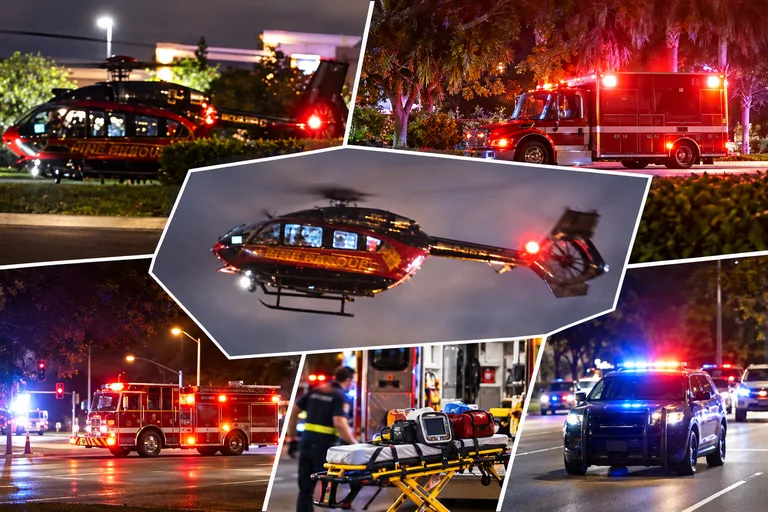
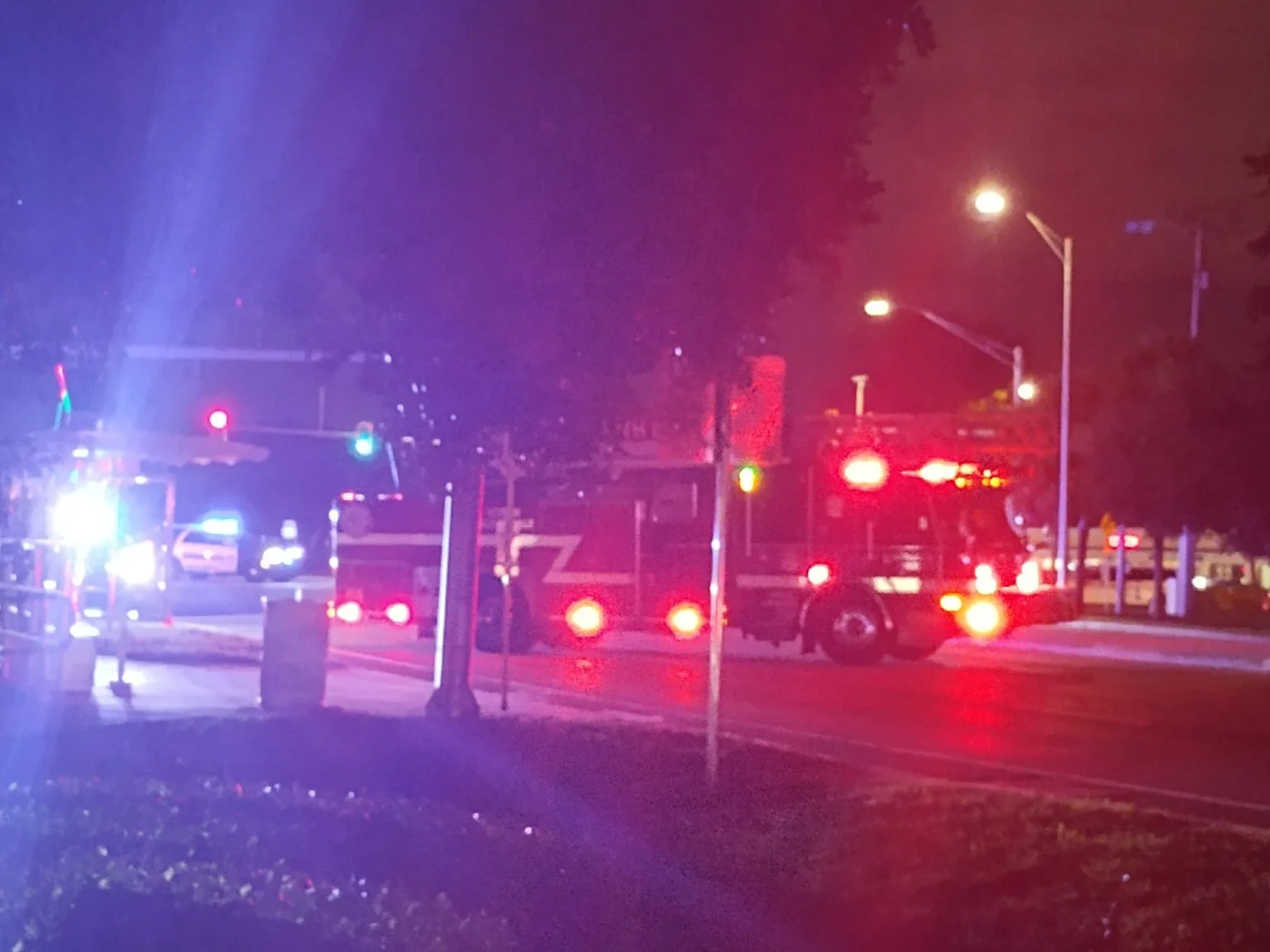
What I can confirm is what I saw with my own eyes. Seven or eight police vehicles. Several fire trucks. Emergency medical personnel. Streets being closed. Traffic being redirected.
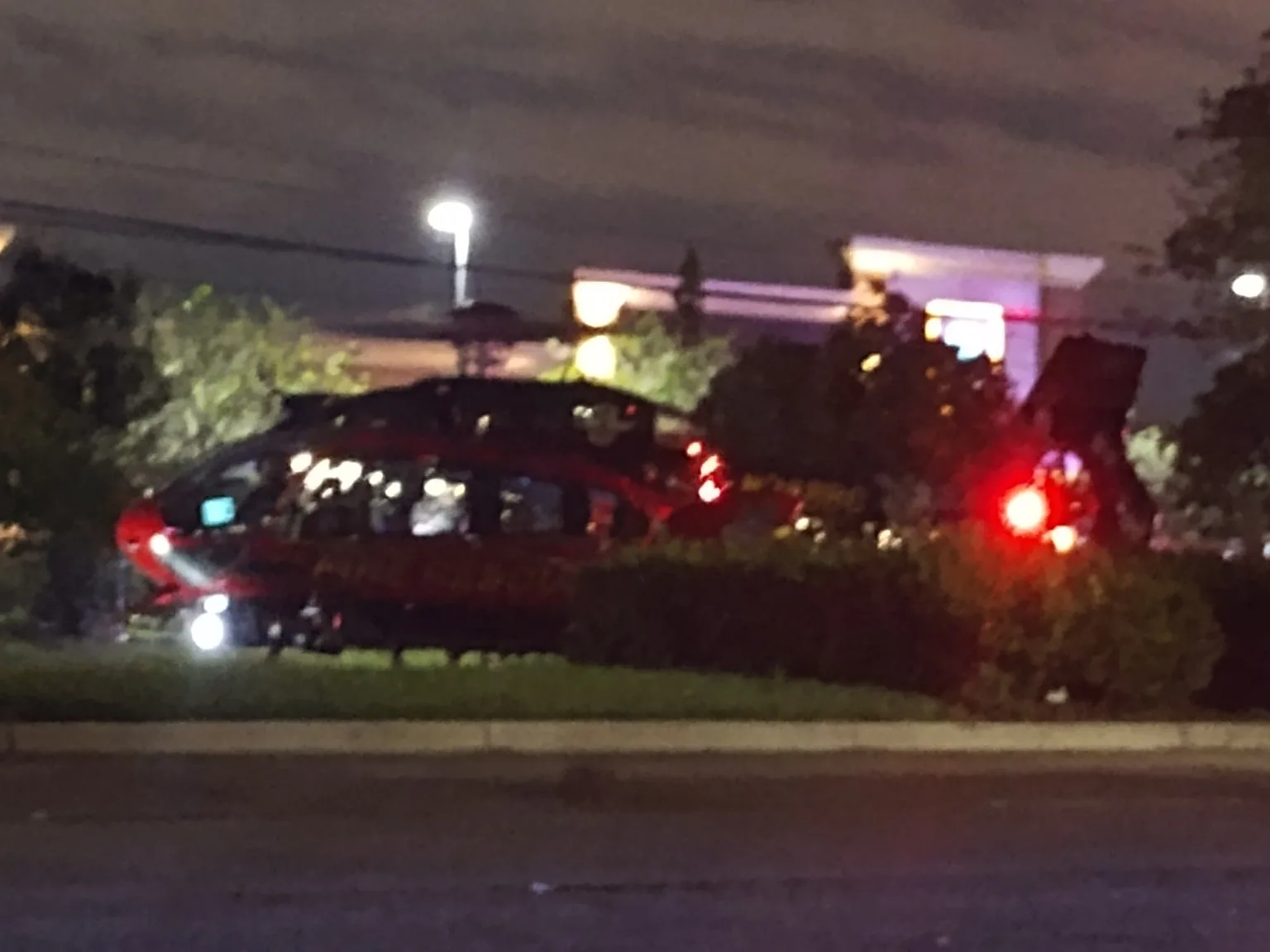
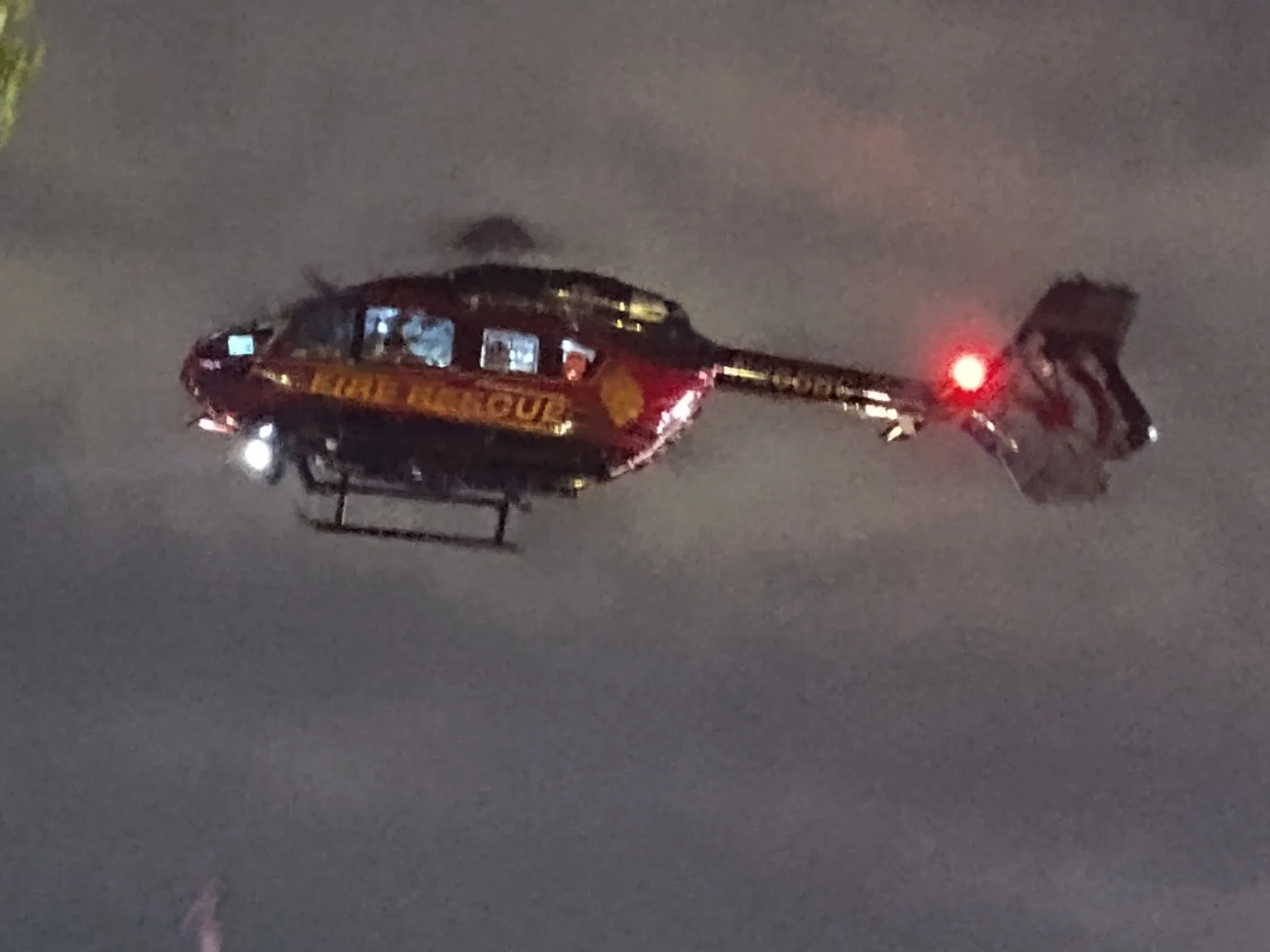
And finally, a medical rescue helicopter landing right in the middle of State Road 7.
An extraordinary mobilization of personnel, equipment, technology and resources, apparently for the purpose of saving one human life. Think about that for a moment.
This wasn’t the president of the United States. There was no indication that the injured person was a millionaire, a celebrity, a politician or someone of extraordinary importance.
Apparently, it was simply an ordinary human being who had the misfortune of being in the wrong place at the wrong time.
And suddenly, an entire emergency response system was mobilized on his behalf.
This wasn’t Manhattan, Washington, London or Paris – This was a little town in Florida.
The Healthcare Nobody Talks About
When people compare healthcare systems around the world, the conversation almost always revolves around money.
How much does it cost to see a doctor? How much does a prescription cost? How much does health insurance cost? How much does a hospital stay cost?
All legitimate questions. But there is another question that seems to get considerably less attention:
What happens when you are thirty minutes away from dying?
At that particular moment, I suspect your interest in the comparative price of prescription medication in Portugal will diminish considerably.
You will be far more interested in whether somebody can get to you, stabilize you, transport you and deliver you to a medical facility capable of saving your life.
There is a considerable difference between a healthcare system that is affordable and one that is capable. Ideally, a society should strive to achieve both.
The Invisible Infrastructure of American Healthcare
Consider what was required to make what I witnessed today possible.
A functioning emergency dispatch system.
Trained police officers and firefighters.
Advanced life-support paramedics.
Specialized emergency medical vehicles.
Medical rescue helicopters.
Experienced pilots and medical flight crews.
Advanced communications infrastructure.
Regional trauma centers.
Specialized surgeons, nurses and physicians.
Sophisticated diagnostic and surgical equipment.
Blood banks and intensive care facilities.
Personnel available around the clock.
All of this infrastructure must exist, be maintained, be funded and be operational long before somebody needs it.
A rescue helicopter cannot be ordered from Amazon after an accident occurs.
The pilot cannot begin his training after the emergency call comes in.
The trauma surgeon cannot be sent to medical school while the patient waits in the emergency room.
We pay not only for the services we receive but also for the readiness of services we hope we will never need.
That readiness has a cost, regardless of whether the healthcare system is public, private or a combination of both.
The Difference Between Being Young and Growing Old
When you are thirty years old, relatively healthy and physically active, retiring somewhere with inexpensive healthcare might sound like a wonderful idea.
When you are seventy-five, the equation changes considerably.
Your medical concerns are increasingly likely to include heart attacks, strokes, falls, fractures, cancer, respiratory problems and other serious medical conditions.
Time becomes a far more important factor.
A beautifully furnished retirement condominium overlooking the Caribbean is a wonderful thing, provided that the nearest properly equipped hospital isn’t three hours away.
An inexpensive country doctor may be perfectly adequate for treating a cold, but considerably less useful when you need emergency neurosurgery.
As we grow older, the availability of sophisticated medical services becomes increasingly important.
Your retirement destination should be evaluated not only by how comfortably you can live there, but also by how effectively you can be treated there.
Is Healthcare Really Better in Other Countries?
Certainly, some countries have excellent healthcare systems.
Germany, Switzerland, Canada, Australia, Japan, France and the United Kingdom all possess sophisticated medical infrastructure. Some operate extensive air ambulance networks, and many provide broader financial protection against medical expenses than the United States.
It would be ridiculous to suggest that America has a monopoly on medical excellence.
It would be equally ridiculous, however, to assume that every country offering inexpensive healthcare offers comparable emergency response capabilities.
Even within the United States, there are substantial differences between urban, suburban and rural healthcare access.
The important questions are not simply whether a country has universal healthcare or whether a visit to the doctor is inexpensive.
The important questions include availability, accessibility, response times, specialist coverage, equipment, medical expertise and affordability.
A national healthcare ranking tells you very little about whether an ambulance can reach your particular retirement home in time.
The American Healthcare Paradox
America has one of the most expensive healthcare systems in the world.
There are legitimate criticisms of insurance companies, administrative expenses, prescription drug prices, medical debt, hospital billing practices and the difficulty some Americans experience obtaining routine medical care.
There is no reason to pretend these problems do not exist.
But acknowledging the shortcomings of American healthcare does not require us to ignore its achievements.
The United States possesses extraordinary medical capabilities, advanced research facilities, sophisticated trauma networks and highly specialized medical institutions.
Unfortunately, access to those resources is not equally available or affordable to everyone.
Both realities can exist simultaneously.
We should be working toward correcting the financial shortcomings of American healthcare while preserving and improving its lifesaving capabilities.
Making healthcare less expensive is an admirable objective. Making healthcare less capable in the process would be a questionable accomplishment.
Before You Retire Abroad
Before deciding to spend the remaining years of your life in another country simply because everything is cheaper, investigate what happens when something goes seriously wrong.
Ask yourself:
How quickly can emergency medical personnel reach my home?
Is emergency helicopter transportation available?
Where is the nearest advanced trauma center?
Can the local hospital perform emergency cardiac surgery?
Does it have advanced stroke intervention capabilities?
Are intensive care facilities readily available?
Are specialists available outside normal business hours?
Will my insurance cover emergency treatment?
Would I need to be medically evacuated to another country?
What happens if I become permanently disabled and require long-term care?
Remember that American Medicare generally does not cover medical treatment outside the United States, except in limited circumstances.
These considerations may be considerably more important than the price of groceries, electricity or a beachfront apartment.
The cheapest place to live is not necessarily the best place to survive.
The Value of One Human Life
What impressed me most about today’s events was the sheer amount of effort being expended on behalf of one individual.
Police officers were mobilized. Roads were closed. Traffic was interrupted. Firefighters and paramedics responded. A helicopter was dispatched.
For a few moments, the normal operation of an entire section of a community was interrupted because one human being apparently needed help.
Most motorists probably complained about the traffic.
I looked at the situation somewhat differently.
One day, that person could be me. Or you.
Or your spouse, your children, your grandchildren or somebody you love.
Suddenly, the inconvenience of waiting in traffic seems rather insignificant.
We spend so much time criticizing the things that don’t work in America that we sometimes forget to appreciate the things that do.
Today, I had the opportunity to witness one of them.
Final Thoughts
There are many beautiful countries in the world. There are many inexpensive places to retire. There are countries with excellent healthcare systems and countries where a retirement dollar will stretch considerably further than it will in the United States.
But retirement is not simply an exercise in accounting.
Personally, as I grow older, I place considerable value on living somewhere that has the resources, infrastructure, technology and trained personnel to respond when my life is in danger.
What I witnessed today did not prove that American healthcare is superior to every other healthcare system in the world.
What it did demonstrate was something considerably more tangible than a statistical ranking: the extraordinary emergency medical capabilities available in my own community.
I would rather have access to a rescue helicopter that I never need than desperately need a rescue helicopter that does not exist.
There are many things in life worth buying at a discount.
Your chances of survival should not necessarily be one of them.
Something to think about.
The accompanying photographs were taken during the emergency response on State Road 7 from across the street looking at the Aldi where apparently someone got run over in a bike. The precise circumstances of the accident and the condition of the injured individual have not been independently confirmed.
Helicopter landed in Front of Aldi on State Road 76
They close the street on both sides and redirected traffic, I was stuck at Home Depot.
Hard to believe they landed the helicopter in a very small space surrounded by trees and power cables at night. Broward Sheriff did an amazing job in coordination with Margate FD and police.