Think of it as Yoga for the brain, we are going to stretch a bit.
The Price of the Canoe
Dylan and his friend Dorian pulled into Uncle Bob’s driveway a little after nine on Saturday morning.
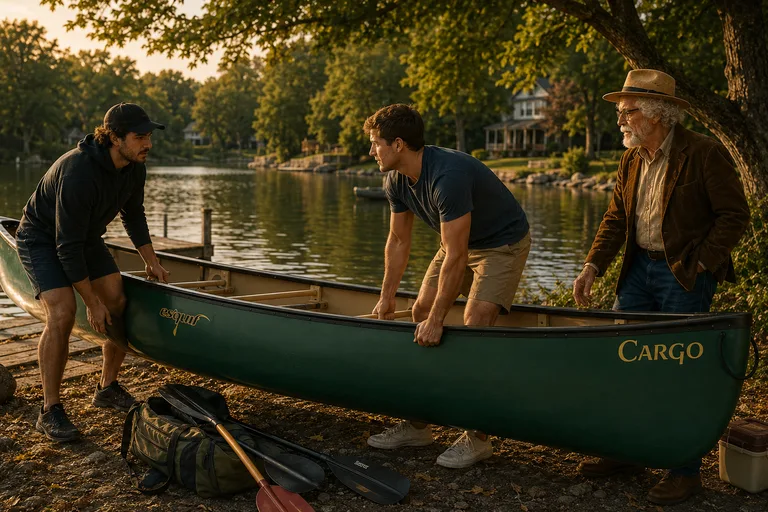
The canoe was already resting on two wooden stands beside the garage. Uncle Bob had placed the paddles, life jackets, cushions, and a small waterproof box next to it.
Dylan climbed out of the truck. “Morning, Uncle Bob.”
Uncle Bob looked over his coffee cup. “You’re late.”
Dylan checked his phone. “It’s nine-oh-three.”
“Exactly. Three minutes late.”
Dorian laughed nervously. He had heard plenty of stories about Uncle Bob, but this was the first time he had met him.
Dylan pointed toward his friend. “Uncle Bob, this is Dorian. Dorian, this is my uncle.”
Dorian held out his hand. “Nice to meet you, sir.”
Uncle Bob shook it firmly. “Nobody calls me sir unless they’re trying to sell me something or arrest me. Uncle Bob will do.”
“Uncle Bob, then.”
Uncle Bob studied him for a moment. “Dorian? Like The Picture of Dorian Gray?”
Dorian smiled. “Yes. My mother liked the name, so I was stuck with it.”
Uncle Bob nodded approvingly. “Good movie.”
As they walked toward the canoe, Dorian stopped beside the red convertible parked near the garage. “Wow. Is this yours?”
Uncle Bob looked at the car. “Unless someone dropped it off during the night.”
“What year is it?”
“Old enough to have character and new enough to still start most mornings.”
Dorian walked around it slowly. “This thing is beautiful.”
Dylan grinned. “You should see him driving it. He thinks he’s twenty-five.”
“I don’t think I’m twenty-five,” Uncle Bob said. “I just remember being twenty-five. There’s a difference.”
Dorian looked past the car toward the house, the garden, and the wide canal behind the property.
“This is a really nice place.”
Uncle Bob nodded toward the canoe. “It’s even nicer when people arrive on time.”
Dylan rolled his eyes. “Here we go.”
They began moving the equipment toward Dylan’s truck. Dorian picked up one of the paddles, then noticed the open garage.
Inside were shelves of tools, fishing equipment, old radios, neatly labeled storage containers, and several framed photographs. Along one wall stood a locked glass cabinet containing part of Uncle Bob’s gun collection.
Dorian stopped again. “Are those real?”
Uncle Bob followed his eyes. “No, they’re chocolate. Of course they’re real.”
“That’s an incredible collection.”
“Some are historical. Some belonged to people in the family. A few I bought because I appreciated the craftsmanship.”
Dorian leaned closer to the cabinet. “You have the coolest stuff.”
Uncle Bob studied him for a moment.
“The convertible, the house, the boats, the tools, the guns—you like all that?”
“Who wouldn’t?”
“Plenty of people. Especially the ones who have to maintain it.”
Dylan laughed. “He’s not kidding. Borrowing anything from him usually comes with a maintenance lecture.”
“It is not a lecture,” Uncle Bob said. “It is the instruction manual for not destroying my property.”
Dorian looked around again. “Still, you must have done pretty well.”
“I did all right.”
“I’d love to have a place like this someday.”
Uncle Bob set down his coffee.
“There’s nothing wrong with that. But let me ask you something. What exactly do you want?”
Dorian pointed around the property. “This. A nice house. A good car. Enough money that I don’t have to worry all the time.”
“Those are three different things,” Uncle Bob said. “A house is a possession. A car is a possession. Not worrying is a state of mind. Don’t confuse them.”
Dorian looked uncertain. “But money helps.”
“Of course it helps. Anyone who says money doesn’t matter has either never been broke or is trying to sell you something. Money pays the mortgage. It fixes the roof. It puts food on the table. It gives you choices. It can buy comfort, privacy, safety, education, and time.”
He paused. “But money cannot crawl inside your head and make peace with you.”
Dylan leaned against the truck. He recognized the tone. They were no longer there merely to collect a canoe.
Uncle Bob pointed toward the convertible.
“You see that car and think it represents success. You don’t see the years I drove old cars because I was putting money into the business. You don’t see the nights I worked while my friends were out having fun. You don’t see the bad investments, the broken equipment, the clients who didn’t pay, or the months when every dollar already had a job before it arrived.”
He pointed toward the house. “You see the finished house. You don’t see the years of payments, repairs, insurance, taxes, hurricanes, plumbing problems, and weekends spent fixing things.”
Then he nodded toward the gun cabinet. “You see a collection. You don’t see the research, preservation, responsibility, security, cleaning, recordkeeping, and expense behind it.”
Dorian glanced back at the display.
“So everything has a price.”
“Everything,” Uncle Bob said. “And the purchase price is often the smallest part.”
Dylan lifted one side of the canoe. “Can we discuss the meaning of life after we load this?”
“No. The canoe is part of the lesson.”
“Of course it is.”
Uncle Bob took the other end, and together they carried it toward the truck.
“You boys want to enjoy the canal today,” he continued. “That means somebody had to buy the canoe, store it, repair it, clean it, and make sure the equipment was ready. What looks like a carefree Saturday afternoon is supported by work somebody did earlier.”
They slid the canoe into place.
“People like to talk about passive income,” Uncle Bob said. “Most of what they call passive is work that happened before they arrived. Someone built the business. Someone bought the property. Someone created the system. Someone is maintaining it. Money may eventually arrive while you sleep, but first you usually lose sleep building the machine.”
Dorian helped secure one of the straps.
“Then how do you know whether something is worth working for?”
“That is the important question.”
Uncle Bob pulled the strap tight and checked the knot.
“Imagine nobody could see what you owned. No neighbors, no social media, no friends to impress. You live on an island with the people you care about. Nobody sees your watch, your car, your house, or your clothes.”
He looked at Dorian.
“What would you choose then?”
Dorian thought for a moment. “Probably a comfortable house. Something reliable to drive. A boat, maybe.”
“A canoe?”
“A canoe would be good.”
“Exactly. When nobody is watching, people tend to choose usefulness, comfort, and peace. When everybody is watching, they start choosing trophies.”
Dylan said, “So the convertible is a trophy?”
“The convertible is fun. I bought it because I enjoy driving it. That is different.”
“How?”
“If everyone else suddenly decided the car was ugly, I would still enjoy it. If you only enjoy something because other people admire it, you don’t own it. Their opinion owns you.”
Dorian nodded slowly.
“That makes sense.”
“The problem is not owning nice things,” Uncle Bob continued. “The problem begins when the things become your personality. A good watch can tell time. A fine car can be enjoyable. A beautiful house can become a gathering place for family and friends. But none of them can tell you who you are.”
Dylan rested his arms on the side of the truck.
“What if having those things motivates you?”
“That can be useful for a while. Young men often need something visible to chase. A car. A house. A certain number in the bank. There is nothing shameful about ambition.”
Uncle Bob looked toward the canal.
“But ambition needs direction. Otherwise, you spend your entire life climbing a ladder only to discover it was leaning against the wrong building.”
Dorian glanced at the house again. “Were you happy when you first bought this place?”
“Yes.”
“Because of the house?”
“Partly. It represented security. It gave the family a place to gather. I liked waking up near the water. But the excitement of buying it faded. It always does.”
“How long did it last?”
“Not as long as the mortgage.”
Dylan laughed.
Uncle Bob smiled. “That’s how possessions work. First you own them. Then the newness disappears, and they become normal. Eventually, some of them begin owning you.”
“So what does make a person happy?” Dorian asked.
Uncle Bob sat on the edge of the truck bed.
“That answer is different for everyone, but it usually starts inside. You need a reason to get up in the morning. You need people you care about and people who care about you. You need enough self-respect to keep promises to yourself. You need some control over your time. You need work that gives you a sense of progress.”
He tapped his chest.
“If you are miserable in here, money may give you a more comfortable place to be miserable. That is still an improvement, but it is not happiness.”
Dylan became quieter.
“So you’re saying we should forget about money and follow our dreams?”
“No. That is the kind of advice usually given by people with money.”
Dorian laughed.
“You have to be practical,” Uncle Bob said. “Earn. Save. Invest. Build useful skills. Avoid foolish debt. Learn to solve problems people will pay to have solved. But do not postpone your entire life until some imaginary day when you become rich.”
He motioned toward the canal.
“You’re borrowing my canoe today. You’ll spend time on the water. You’ll talk, laugh, fish, and probably get sunburned because neither one of you remembered sunscreen.”
Dylan and Dorian looked at each other.
Uncle Bob reached into a storage box and tossed them a bottle.
“That afternoon may bring you more happiness than someone else gets from a hundred-thousand-dollar boat.”
“Then why would anyone buy the expensive boat?” Dorian asked.
“Because perhaps he genuinely loves boating. Or perhaps he wants everyone at the marina to know he can afford it. Only he knows the answer.”
Uncle Bob handed Dylan two life jackets.
“The same purchase can be wise for one person and foolish for another. The difference is why they bought it, what it cost them, and whether they can carry that cost without damaging the rest of their life.”
Dorian looked thoughtful. “People usually only show the result.”
“Exactly. You see the successful businessman, but you don’t see what he traded for the business. You see someone’s big house, but you don’t see whether he enjoys living there or lies awake worrying about the payments. You see the expensive vacation, but not the credit-card bill that follows them home.”
Dylan said, “Social media makes everybody look rich.”
“Social media lets people display the dessert and hide the vegetables.”
Dorian laughed. “That’s a good one.”
“You boys compare your entire lives to carefully selected moments from someone else’s life. That is a game you cannot win.”
He picked up one of the paddles and examined it.
“At your age, you worry about what everyone thinks of you. A little later, you’ll proudly announce that you no longer care what anyone thinks. Eventually, you may realize that most people were too busy worrying about themselves to think much about you at all.”
Dylan smiled. “That sounds depressing.”
“It is liberating.”
Uncle Bob handed him the paddle.
“You do not have to impress everybody. Decide whose respect matters. Your family? Your closest friends? The person you see in the mirror? Build a life those people can respect.”
Dorian looked toward the gun cabinet again, then the convertible, then the house.
“So, if I want all this, I should be willing to do the work.”
“Yes—but understand the entire bargain. Do not just want the reward. Decide whether you are willing to pay its price.”
“And if I am?”
“Then work. Learn. Be patient. Make yourself useful. Spend less than you earn. Invest the difference. Take intelligent risks. Keep going when the excitement disappears.”
Uncle Bob pointed toward him.
“But don’t say, ‘I’ll be happy after I make money.’ That sentence has destroyed a lot of lives.”
“What should I say instead?”
“Say, ‘I’m going to build a good life, and I’m going to become financially strong enough to protect it.’”
Dylan nodded. “Happiness first. Money later.”
“Not exactly. You work on both at the same time. Happiness is not a prize waiting at the finish line. It is a way of traveling.”
Uncle Bob stepped back and inspected the canoe straps.
“There. That should hold.”
Dylan opened the driver’s door. “Anything else?”
“Yes. Wear the life jackets.”
“We know.”
“Bring everything back.”
“We will.”
“Clean the canoe.”
“Yes.”
“Do not drag it across concrete.”
“Uncle Bob—”
“And no standing up in it.”
Dorian grinned. “I thought the sermon was over.”
“The sermon is over. Now we are back to the instruction manual.”
Dylan climbed into the truck. Dorian opened the passenger door but stopped before getting in.
“Uncle Bob?”
“What?”
“Thanks. Not just for the canoe.”
Uncle Bob picked up his coffee.
“You’re welcome.”
Dorian looked at the house one more time.
“I still want the convertible, though.”
Uncle Bob smiled.
“Good. Wanting something is allowed. Just make sure you want the life required to earn it—and not merely the attention you imagine it will bring.”
Dylan started the engine.
As they pulled away, Dorian looked back at Uncle Bob standing beside the driveway, coffee in hand, surrounded by the house, the tools, the cars, and the collection that had first impressed him.
But now the possessions looked different.
They no longer appeared to be proof of happiness.
They were evidence of choices, work, responsibility, and time.
And Dorian understood something he had not understood when they arrived:
The canoe might have been the least expensive thing Uncle Bob owned.
But on that particular Saturday, it was probably the one most capable of making them happy.