Think of it as Yoga for the brain, we are going to stretch a bit.
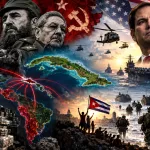
CUBA — HOW A CONTROLLED ECONOMY DOES NOT WORK
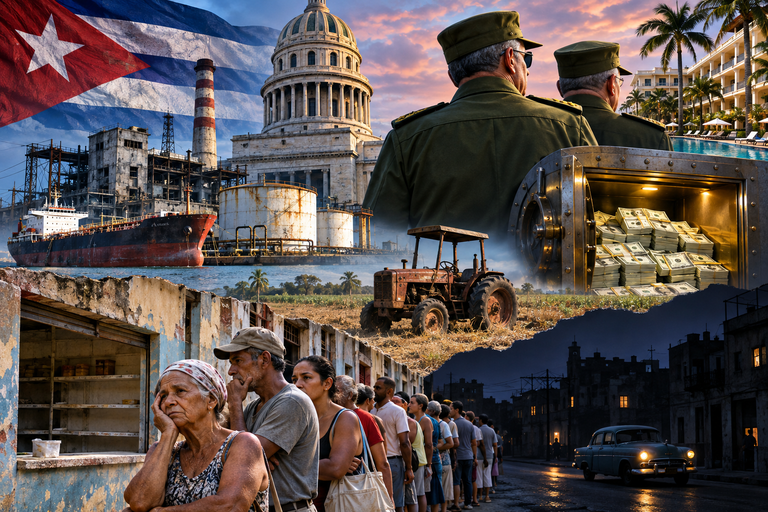
CUBA - The Great Socialist Experiment: Where Everybody Owns Everything, Nobody Owns Anything, and Somehow the Government Ends Up With It All. -- YNOT!
There is an old problem with socialism that its most enthusiastic supporters never seem able to explain.
If the government owns the farm, controls the factory, sets the prices, distributes the food, determines the wages, and decides who gets what, then who is responsible when nothing works?
Apparently, nobody. And that, my friends, is the genius of the Cuban economic system.
In capitalism, when a business fails, somebody usually loses money, customers, or eventually the business itself.
In Cuba, when a government enterprise fails, the government holds a meeting, announces another revolutionary economic plan, blames somebody else, and puts the same people in charge of the next disaster.
After more than six decades, Cuba has managed to demonstrate something that economists have been explaining for generations:
YOU CANNOT DISTRIBUTE WEALTH THAT YOU HAVE FAILED TO PRODUCE.
And you certainly cannot create prosperity by making productivity a government-controlled activity.
THE SIMPLE PROBLEM WITH GOVERNMENT CONTROL
Imagine you have a family. You work, earn money, buy groceries, maintain your house, repair your car, and hopefully save something for tomorrow.
Now imagine your neighbor decides he should control all those decisions.
He tells you where you can work, how much you can earn, what you can sell, how much you can charge, and where you must purchase your supplies.
He also decides how much food your family needs.
When you complain that the refrigerator is empty, he assures you the distribution system is working perfectly.
When the electricity fails, he explains that your expectations are unreasonable.
When the roof leaks, he promises to establish a committee.
And when you finally ask where all your money went, he accuses you of being selfish.
Congratulations!
You have just experienced the basic frustrations of a centrally controlled economy.
Except in Cuba, your neighbor has a military, a police force, and the authority to make the rules.
THE ECONOMIC PROBLEM NOBODY CAN ESCAPE
Every economy depends on a few simple things.
People must produce something. Someone must pay them. Goods must reach customers. Businesses must earn enough to maintain their equipment, replace worn-out machinery, and invest in tomorrow.
And workers must have some reason to improve their productivity.
None of these things disappears simply because the government declares itself socialist.
A tractor still needs fuel. A factory still needs replacement parts. A farmer still needs fertilizer.
And a worker still needs enough compensation to justify getting out of bed in the morning.
The problem begins when the people making economic decisions are separated from the consequences of those decisions.
When a farmer produces more but cannot benefit from the additional production, why should he work harder?
When a factory manager receives instructions from a ministry instead of responding to customers, why should he innovate?
When a business cannot freely adjust prices, purchase supplies, or reinvest its profits, how does it adapt?
And when an inefficient enterprise can survive indefinitely through government assistance, what incentive does it have to become efficient?
A committee can order a thousand tractors.
It cannot order them to become productive.
THE CUBAN OIL EXAMPLE — FOLLOW THE MONEY
Let’s make this simple enough that even a Canadian tourist enjoying a cheap Cuban vacation can understand it.
Cuba needs oil.
Oil generates electricity, moves trucks, powers machinery, and helps keep food moving around the island.
Cuba produces some oil, but not nearly enough to satisfy its needs.
So it must import fuel.
Now suppose Cuba wants to purchase $100 million worth of oil.
Where does the money come from?
Cuba needs foreign currency earned through tourism, exports, medical services, investment, credit, or assistance from other countries.
The government cannot simply print Cuban pesos and expect an international oil supplier to accept them.
A foreign supplier wants money it can actually use.
That creates the first problem.
Cuba has a limited ability to earn foreign currency, a history of unpaid debts, declining domestic production, and an economy that struggles to generate sufficient exports.
And American sanctions make international trade, financing, and fuel purchases more difficult.
Now assume Cuba manages to purchase the oil.
The government distributes it through state-controlled institutions and authorized businesses.
Some goes to power plants.
Some goes to transportation.
Some goes to factories.
Some goes to businesses and fuel stations.
The government controls much of this process, including allocation, pricing, and distribution.
Suppose the oil costs $100 million and ultimately generates $130 million in domestic sales.
That additional $30 million is not necessarily profit. There are transportation costs, storage expenses, salaries, maintenance, and other obligations.
But here’s the important question.
Who controls the revenue?
Who decides how it gets spent?
And who is responsible for making certain the money is reinvested in the productive economy?
Because if you continually consume the money needed to maintain your machinery, eventually the machinery stops working.
You can postpone maintenance.
You can postpone investment.
You can postpone paying suppliers.
But you cannot postpone the consequences forever.
Eventually, the lights go out.
And in Cuba, they frequently do.
THE GREAT CUBAN ELECTRICITY MIRACLE
Cuba has experienced repeated nationwide blackouts, deteriorating generating equipment, and severe shortages of fuel and replacement parts.
American restrictions on oil supplies have made the crisis considerably worse in 2026.
But Cuba’s power infrastructure was deteriorating long before the latest fuel restrictions.
Decades of underinvestment, aging power plants, inadequate maintenance, and poor economic performance created a system increasingly vulnerable to disruption.
Consider the economic consequences.
Without electricity, factories cannot operate reliably.
Without factories, production falls. Without production, exports suffer.
Without exports, foreign currency becomes scarce.
Without foreign currency, Cuba struggles to purchase fuel and replacement parts.
Without fuel and replacement parts, electricity becomes even less reliable.
And around and around we go.
It is an economic circle so beautifully designed that the only thing it consistently produces is another shortage.
At some point, one must ask whether the system is suffering from a temporary problem or whether the temporary problem has become the system.
THE FARMER WHO CANNOT FEED THE COUNTRY
Now let’s talk about food.
Cuba has fertile agricultural land, experienced farmers, a favorable growing climate, and a long history of agricultural production.
Yet it struggles to feed its own population.
Why?
Because growing food involves more than planting seeds.
Farmers need equipment, fuel, fertilizer, transportation, financing, functioning markets, and predictable prices.
And above all, they need economic incentives.
If a farmer increases production, he should have an opportunity to improve his own life.
If he invests in better equipment, he should be able to benefit from the investment.
If he discovers a more efficient method, he should be rewarded for using it.
But when government controls restrict production decisions, purchasing, distribution, and prices, those incentives become distorted.
Cuba has permitted private farming and business activity in various forms, but restrictions and inconsistent reforms have repeatedly limited what producers can accomplish.
A farmer cannot eat a government promise.
Nor can he repair a tractor with revolutionary speeches.
THE GOVERNMENT DOES NOT CREATE WEALTH BY DECLARING ITSELF THE OWNER
Here is a distinction people frequently overlook.
Ownership and production are not the same thing.
If I confiscate your bakery, I become the owner of a bakery.
That does not make me a baker.
If I nationalize your farm, I become the owner of a farm.
That does not mean I know how to grow tomatoes.
And if I take control of every business in the country, I have not magically acquired the knowledge required to operate them.
I have merely concentrated an enormous number of economic decisions into the hands of bureaucrats.
Some may be competent. Some may be honest.
Some may even understand economics.
But no central office can possess all the information, experience, and changing preferences that millions of individual producers and consumers generate every day.
Remove or distort enough of those signals, and the economy gradually loses its ability to correct itself.
The government can decree that bread must cost a certain amount.
It cannot decree that the flour, electricity, labor, transportation, and equipment required to produce that bread will cost less.
And when the official price becomes economically impossible, the bread eventually disappears from the official shelves.
Only to reappear somewhere else, at a considerably higher price.
Which brings us to another Cuban institution.
THE BLACK MARKET — CAPITALISM’S UNINVITED GUEST
One of the great ironies of centrally controlled economies is that markets have a peculiar habit of surviving their own abolition.
When the government cannot supply something, somebody eventually finds a way to supply it.
When official prices do not reflect scarcity, unofficial prices emerge.
When the state cannot distribute goods efficiently, informal distribution networks develop.
People barter. They trade. They repair. They improvise.
They buy and sell outside authorized channels.
The government calls some of this illegal economic activity.
The people call much of it survival.
A government may outlaw an economic transaction.
It cannot outlaw the human need that created the transaction.
And so Cuba has spent decades struggling with the contradiction of restricting the very entrepreneurial activity its citizens often depend upon.
When ordinary people do it without permission, they may face punishment.
When authorized businesses do it, the government calls it economic reform.
And when the military does it?
Well, now we arrive at the most interesting part of the entire Cuban economy.
GAESA — THE MILITARY’S BUSINESS EMPIRE
Meet GAESA. Its full name is Grupo de Administración Empresarial, S.A.
It is a massive conglomerate controlled by Cuba’s military establishment.
Its network has interests in hotels, tourism, retail, financial services, construction, transportation, logistics, and other important economic sectors.
In other words, while ordinary Cubans operate under extensive economic restrictions, the military controls an enormous commercial empire.
Consider a Canadian tourist.
He arrives in Cuba, enjoys the beaches, purchases drinks, visits stores, and spends $2,000 at a hotel.
If that hotel belongs to a GAESA-controlled business, the revenue enters the military conglomerate’s commercial network.
The same principle applies to purchases through other GAESA-controlled enterprises.
Now here comes the important part.
That money does not automatically become revenue in the ordinary Cuban government budget.
According to economist Pavel Vidal, who examined leaked GAESA financial statements in a December 2025 analysis published through Columbia University’s Cuba Capacity Building Project, the conglomerate does not transfer dividends to the state budget or pay taxes in the manner expected of ordinary economic actors.
The analysis also describes substantial foreign-currency reserves and extraordinarily limited public financial oversight.
These findings rely on leaked records rather than a complete set of publicly audited financial statements.
Nevertheless, they raise an enormous question.
HOW CAN THE COUNTRY BE SO POOR WHILE ITS MILITARY BUSINESS EMPIRE CONTROLS SUCH SUBSTANTIAL RESOURCES?
CUBA’S TWO POCKETS
Imagine the Cuban economy has two pockets.
POCKET NUMBER ONE — THE GOVERNMENT
This is the ordinary state budget.
It receives taxes, transfers from state enterprises, and other government revenues.
It is supposed to finance public services, infrastructure, education, healthcare, administration, and government obligations.
POCKET NUMBER TWO — GAESA
This is the military-controlled commercial empire.
It participates in some of the country’s most important foreign-currency-generating activities.
Its finances operate with limited transparency, and independent economists have questioned why such substantial economic resources remain outside normal public-budget oversight.
Now imagine an ordinary Cuban family sitting in darkness.
The electricity is off.
The refrigerator is empty.
The medicine is unavailable.
The public transportation system barely functions.
And the government announces that the country lacks sufficient resources.
Perhaps it does lack resources.
But wouldn’t it be reasonable to demand a complete accounting of the money controlled by the country’s most powerful military businesses?
Wouldn’t it be reasonable to ask why commercial investment receives funding while essential infrastructure deteriorates?
Wouldn’t it be reasonable to ask who decides which pocket gets the money?
I call this arrangement an elite-controlled economic slush fund.
That is my characterization, not an independently established accounting of personal fortunes.
But the underlying question is legitimate.
Who controls the money, and to whom are they accountable?
THE GREAT EQUALITY CONTRADICTION
Socialism is frequently presented as a system designed to eliminate economic privilege.
Yet Cuba demonstrates how concentrating political and economic authority can create privileges of another kind.
In a competitive market, wealth can certainly create power, and corruption can exist.
But in a centralized political economy, access to government authority can determine who receives permission, resources, contracts, and economic opportunity.
The person who controls the permits may become more important than the person who knows how to produce the goods.
The person who distributes scarce supplies may become more powerful than the person who manufactures them.
And the official who decides which enterprise receives foreign currency can wield extraordinary influence over the economy.
The danger is not simply that the government owns businesses.
It is that political power, economic power, and the authority to enforce the rules become concentrated in the same hands.
When those hands make mistakes, who corrects them?
When those hands abuse their authority, who investigates them?
And when the people demand accountability, who protects their right to ask?
A system that promises equality but places enormous economic power beyond ordinary public scrutiny has a serious contradiction to explain.
BUT WHAT ABOUT THE AMERICAN EMBARGO?
No serious discussion of Cuba should pretend American sanctions have no economic consequences.
They do.
Restrictions on trade, banking, credit, and particularly oil shipments have made Cuba’s economic problems substantially worse. But sanctions are not the complete explanation for six decades of economic dysfunction.
Cuba’s own restrictions on private enterprise, distorted prices, poor investment decisions, weak productivity, debt problems, and deterioration of infrastructure have also contributed.
An economic system can suffer from both external pressure and internal failure.
Recognizing one does not require denying the other. And the existence of sanctions does not relieve Cuba’s government of responsibility for the decisions it controls.
THE LESSON THAT SHOULD BE OBVIOUS
A successful economy cannot be built merely by distributing money.
Somebody must first create the products and services that give money value.
Somebody must grow the food. Somebody must repair the machinery.
Somebody must maintain the electrical grid.
Somebody must manufacture, transport, build, innovate, invest, and take risks.
Government has legitimate economic responsibilities.
It can establish laws, protect property, provide infrastructure, finance public services, regulate harmful conduct, and maintain institutions necessary for commerce.
But there is an enormous difference between government establishing the rules of an economy and government attempting to make nearly every important economic decision.
The first can support productive activity.
The second risks replacing the judgment of millions of individuals with the decisions of a relatively small political bureaucracy.
And when that bureaucracy makes mistakes, the consequences spread across the entire country.
THE FINAL IRONY
Cuba’s revolution promised ordinary people greater economic security and equality.
Yet generations later, ordinary Cubans still struggle with shortages, unreliable electricity, inadequate purchasing power, and limited economic opportunity.
Meanwhile, the military controls a commercial empire whose financial operations remain remarkably opaque.
The government has periodically allowed more private activity, including significant reforms announced in 2026.
Perhaps that tells us something.
When a controlled economy begins permitting individuals to make more economic decisions, it is acknowledging that centralized decision-making has limitations.
And perhaps the greatest tragedy is that Cubans have never lacked intelligence, ambition, creativity, or willingness to work.
Cuban entrepreneurs have established successful businesses across the world.
Cuban professionals have contributed to medicine, engineering, science, commerce, and countless industries.
The problem is not that Cubans are incapable of creating wealth.
The problem is that the economic and political institutions governing their country have repeatedly restricted their ability to do so.
A nation cannot become prosperous merely by promising prosperity.
It must permit the activities that make prosperity possible.
You cannot create abundance through rationing.
You cannot repair machinery with ideology.
You cannot manufacture productivity through government decrees.
And you cannot build a thriving economy by treating individual economic initiative as a threat to political authority.
HERE IS MY FINAL QUESTION.
If the Cuban economic system is designed to benefit the people, why must the people continually sacrifice to preserve the system?
Shouldn’t the system be the thing that changes when it fails to serve the people?
After all, the purpose of an economy is not to protect the government that controls it.
The purpose of an economy is to improve the lives of the people who participate in it.
And if a government must control nearly everything to preserve its authority, perhaps the thing it fears most is discovering what its own people could accomplish without asking permission.
A government can control the price of bread. It can control the bakery.
It can control the farmer who grows the wheat. It can even control the newspaper that reports the bread shortage.
BUT IT CANNOT MAKE AN EMPTY SHELF FULL BY ORDERING PEOPLE TO CALL IT FULL.
And that, my friends, is the fundamental problem with Cuba’s controlled economy.
It has spent decades trying to control the creation and distribution of wealth.
Perhaps it is time to give ordinary Cubans a greater opportunity to create some of their own.
FINAL THOUGHT:
When the government controls everything, it also controls who gets blamed when nothing works. The only options is to blame the embargo.
And strangely enough, it is almost never the government.